
TAMPA, Fla. — Kratom is a Southeast Asian tea leaf used for its stimulating effects, but it is becoming more than a popular product found in smoke or vape shops.
It is also leading users to seek recovery.
Kratom is advertised to help with pain, anxiety and depression, but the state has labeled its key ingredient, 7-OH, as a Schedule I substance. That is the same category as heroin and fentanyl.
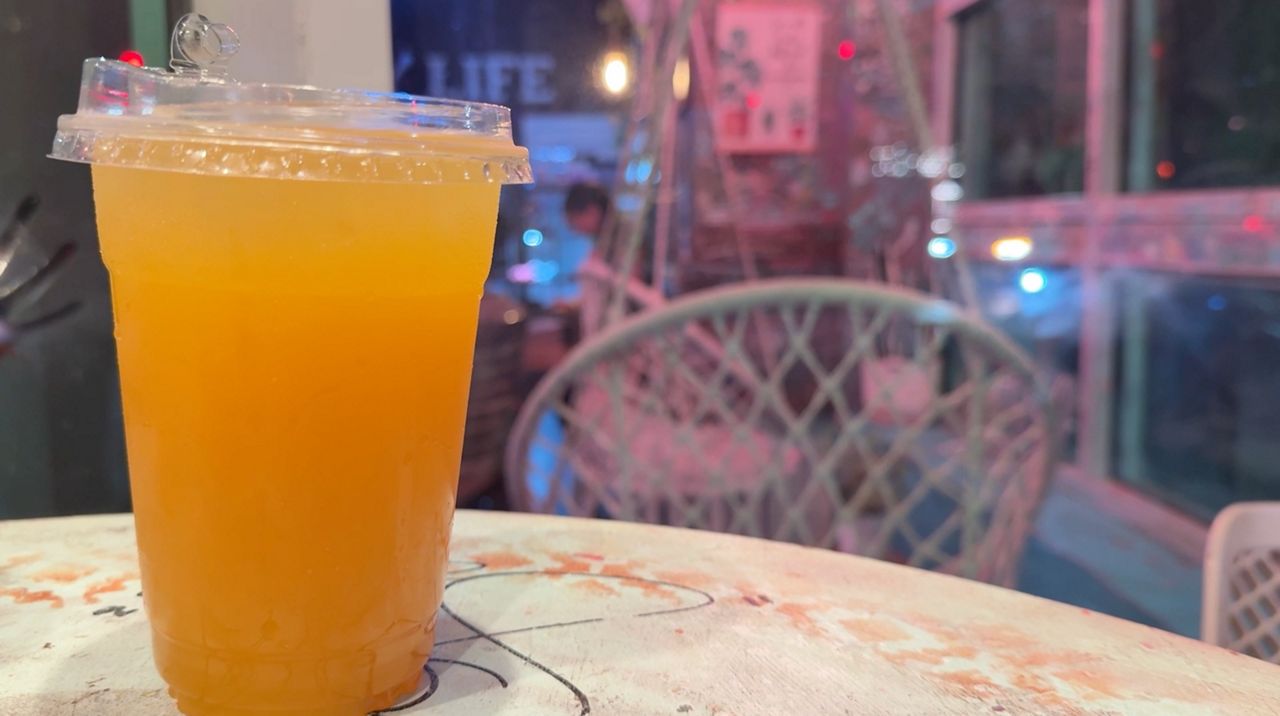
What may look like a refreshing drink has something Scott Samuels says is as addicting as alcohol: kratom.
“So my first introduction to it was my wife and I were on a trip here in Tampa. We lived in Jacksonville at the time, and we managed to find our way into a kratom bar, not knowing anything about it,” he said.
One kratom drink later, and he was hooked. Samuels said he would buy up to five kratom drinks a day, and when he tried to stop, the withdrawal would make him sick.
“I could not sleep. I was sweating, shaking a little bit, and had nausea. I would sneak out in the middle of the night to get small bottles of kratom to help fight off the withdrawals,” Samuels said.
He sought help at Sophros Recovery, and CEO Nick Padlo says he is not the only one. Over the past six months, he has seen the number of people struggling with kratom grow from one to two new patients a month to now five to 10.
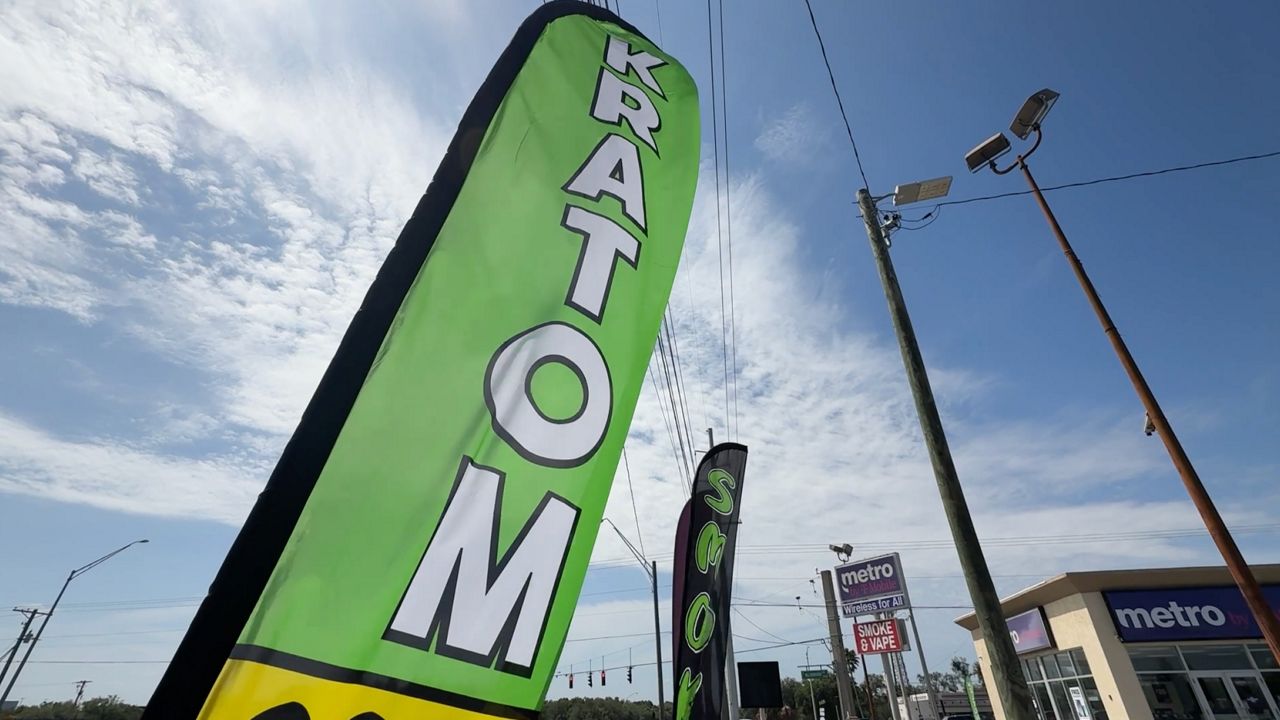
Kratom is advertised to help with pain, anxiety and depression, but the state has labeled its key ingredient, 7-OH, as a Schedule I substance. That is the same category as heroin and fentanyl. (Spectrum News/Claire Alfree)
“Kratom started out as a leaf with a mild psychoactive effect,” Padlo said. “What we have seen over the last several years is that people are starting to extract the alkaloids, the components that produce effects within the plant. Now we are concentrating it, and we do not know when we are buying something whether it has a mild effect or something much stronger, like morphine or a strong opiate.”
The increase in kratom usage is happening despite the state of Florida banning 7-OH products with more than a 0.04 percent concentration last August. But that ban is set to expire at the end of June.
A state bill that would have banned 7-OH products completely did not pass during the last legislative session.
Padlo explains why restrictions on kratom may be needed, especially considering how manufacturers responded to the initial ban.
“As the temporary ban on 7-OH went into place, manufacturers started creating other versions that were very similar but did not meet the requirements for the ban. The problem is that it did not ban what we were trying to restrict, and it also made labeling less clear. Now it is not obvious that it is 7-OH, but it is something very similar, which can create an even bigger problem,” he said.
Advertised as a natural, low-risk supplement, Sophros Recovery says many of its clients are using kratom to manage opioid withdrawal and are ending up trading one dependency for another.
“We had an emergency here about a month ago where a client overdosed on a kratom alkaloid that he bought at a gas station. The client was unresponsive. We had to administer two doses of Narcan to revive him. This is not a mild problem. We are seeing overdoses and deaths,” Padlo said.
From gas stations and smoke shops to places that look like a bar or coffee shop, as long as you appear to be 21, you can leave with a kratom drink in hand. Samuels says that while kratom helped him stop drinking alcohol, he ended up swapping one addiction for another.
“If you are going to give someone something that could potentially change their life as it did mine, you should at least know what it is and what the risks are. It is not just about making money. It hurts people. It hurt me,” he said.
Samuels depended on kratom drinks for nearly three years, but now he is proud to be kratom free for a full year.
Kratom is sold throughout the state of Florida, except in Sarasota County. The county banned what it calls designer drugs in 2014. Anyone selling or possessing kratom products faces misdemeanor penalties, including up to 60 days in jail or a $500 fine.