
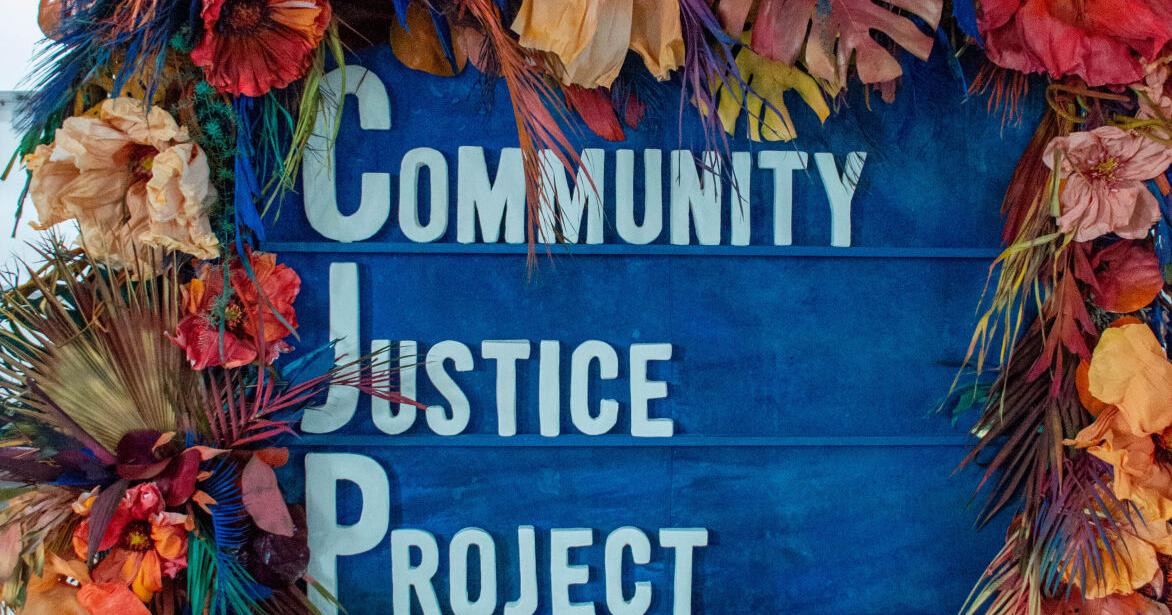
When you think of lawyers, you might picture suits, courtrooms and legal briefs. But for the Community Justice Project (CJP), lawyering looks a little bit different: standing beside tenants fighting evictions, helping teachers bring concerns over classroom censorship to the United Nations, and supporting organizers defending the right to protest.
The Miami-based nonprofit is celebrating 10 years of “community lawyering,” a model rooted in partnership with those closest to the issues being litigated.
“For ten years, Community Justice Project has stood with communities across Florida, not only in the courtroom, but in classrooms, neighborhoods and public spaces where the fight for dignity and democracy is being waged,” said Alana Greer, CJP’s director and co-founder. “This anniversary is a moment to reflect on what collective struggle has made possible and to recommit to the work that continues.”


The Community Justice Project (CJP) team made up of lawyers, researchers and artists.
(Amelia Orjuela Da Silva for The Miami Times)
Founded in 2015 by Greer and Meena Jagannath, CJP was designed as a multidisciplinary hub of lawyers, researchers and artists. Here are some key highlights from the organization’s achievements over the past decade.
Defending Black history
One of CJP’s most visible efforts took a local education fight to the global stage.

People gathered to celebrate 10 years with CJP.
(Amelia Orjuela Da Silva for The Miami Times)
In October 2023, Miami Norland Senior High School teacher Renee O’Connor traveled to Geneva with the CJP to speak before the UN Human Rights Committee about what she described as the “whitewashing” of African American history in Florida classrooms.
The trip followed the release of the Florida State Board of Education’s 2023 standards, which included language requiring instruction on “how slaves developed skills which, in some instances, could be applied for their personal benefit.” O’Connor first learned of the change while attending a seminar on slavery in Alabama.
Renee O’Connor continues teaching global and multicultural studies and African American history.
(splcenter.org)
“It stopped me dead in my tracks,” she said. “I was floored and disgusted.”
After returning to Miami, she took a sabbatical to speak freely on the subject. She was soon contacted by CJP for an interview, later testifying in Geneva alongside the nonprofit.
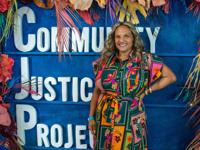
Miami Norland Senior High School teacher Renee O’Connor at the CJP celebration.
(Amelia Orjuela Da Silva for The Miami Times)
“Students in Miami, students in Florida, students in America must be taught the truth of what happened in this country,” O’Connor said. “It doesn’t matter if the truth is uncomfortable. It should not be whitewashed, nor should it be erased.”
While the testimony did not immediately change policy, O’Connor said it showed educators that their voices can reach beyond the classroom. Back at Miami Norland, O’Connor continues teaching global and multicultural studies and African American history using primary sources, despite restrictions on AP African American Studies.
“I use all the elements of the AP class, and I still teach it in my elective class,” O’Connor said. “My kids can make their own decision about what really happened in this country.”

Renee O’Connor at the United Nations in Geneva.
(Renee O’Connor)
She added that the controversy has increased student curiosity.
“Anytime a book is banned, I buy it and put it on my shelf,” she said. “When you tell somebody they can’t do something, they want to do it.”
“Students in Miami, students in Florida, students in America must be taught the truth of what happened in this country. It doesn’t matter if the truth is uncomfortable. It should not be whitewashed, nor should it be erased.” – Renee O’Connor, Teacher
(M-DCPS)
The legal landscape, however, remains uncertain. In April 2026, Gov. Ron DeSantis signed legislation limiting public funding for diversity, equity and inclusion initiatives, expanding the state’s efforts to restrict DEI in colleges and universitiesand further promoting the “Stop WOKE Act.”
“I think pretty soon he’s going to come back for the African American history classes, and we’re just here ready for the fight,” O’Connor said.
She credits CJP with amplifying educators’ voices.
“Community Justice Project has its finger on every pulse point happening in Miami,” she said. “I’m so grateful for the fact that they value education, that they value African American history education, and that they value what teachers who are determined to teach the truth are doing in this city, in this state.”
For CJP, the goal is to create space for those voices.

Alana Greer, CJP’s director and co-founder.
(Amelia Orjuela Da Silva for The Miami Times)
“We are always so privileged when we can not only share people’s stories, but actually have those forums directly confronted by the folks that are being impacted,” Greer said.
Fighting displacement
CJP’s anniversary also underscores its work toward housing justice. A recent WalletHub report ranked Miami as the most unaffordable U.S. city for renters. Since 2022, CJP has partnered with the Miami Workers Center (MWC) on an eviction diversion pilot program, testing what happens when low-income renters have access to legal counsel and community support.
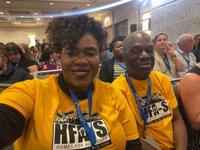
Santra Denis, executive director of Miami Workers Center, and Brian Douglas.
(Courtesy of Brian Douglas)
For Brian Douglas, that support was a lifeline. After moving to Miami in 2019, he found housing in an Overtown rooming house. In April 2024, residents were told the building had been sold and that they had to leave immediately — without legal notice.
“It was the worst day of my life,” Douglas said. “They said all you need to do is leave tomorrow, which is illegal.”
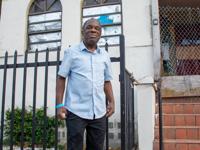
Brian Douglas is standing in front of the rooming house in Overtown, where he once lived.
(Amelia Orjuela Da Silva for The Miami Times)
Under Florida law, tenants cannot be evicted without notice and a court order. MWC canvassers connected Douglas to CJP attorneys, who raised defenses in court. Instead of leaving in 24 hours, he secured six months to plan his move.
The disparity in representation is stark: according to MWC, only 3% of tenants have access to an attorney, compared to 98% of landlords filing evictions.
“Without their help, I would have been evicted,” Douglas said of CJP and MWC. “They would have thrown my belongings on the street.”
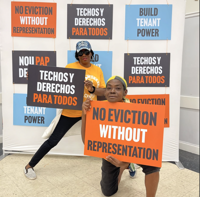
Organizers hold up signs that read “No eviction without representation.”
(Miami Workers Center)
He eventually secured housing at a senior complex in Overtown and joined MWC as an organizer.
Greer noted that these individual cases often shape broader policy. Strategies developed during tenant organizing in Little Haiti laid the groundwork for emergency eviction moratoriums used during the COVID-19 pandemic.
“There’s so many of those stories of directly impacted people forging the way right here in our own backyard,” Greer said.
Protecting the right to protest
CJP has also played a key role in challenging Florida’s 2021 anti-protest law, HB 1, passed after nationwide demonstrations against police violence.

“Community Justice Project has stood with communities across Florida, not only in the courtroom, but in classrooms, neighborhoods and public spaces where the fight for dignity and democracy is being waged.” -Alana Greer, CJP
(Echoing Green Fellows Directory)
CJP, alongside the Legal Defense Fund and the ACLU of Florida, represented groups including Dream Defenders and the NAACP in alawsuitarguing that the law violated the First and Fourteenth Amendments by chilling protected speech and criminalizing protest activity.
“We knew before it was passed that we wanted to file,” said Nailah Summers-Polite, co-executive director and founding member of Dream Defenders. “There was a legal challenge for this because it was an overreach, and it was really extreme in nature. CJP let us know that there was an avenue and that there were grounds to do this.”
Organizers had already begun preparing and monitoring the bill as protests spread nationwide following the killings of George Floyd and Breonna Taylor. In Florida, organizers were also mobilizing in cities like Miami, Tallahassee and St. Petersburg.
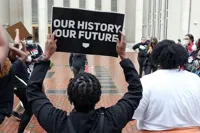
Dream Defenders protesting.
(Dream Defenders)
The legal challenge yielded victories. In 2021, a federal judge blocked part of the law redefining the term “riot,” and in 2024, the Florida Supreme Court confirmed the law could not be used to prosecute nonviolent protesters or bystanders.
Summers-Polite believes these victories limited the law’s most draconian consequences.
“Young people and working people are still protesting,” she said.
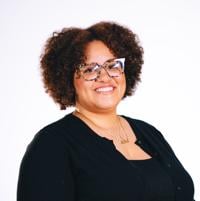
Nailah Summers-Polite, co-executive director and co-founder of Dream Defenders.
(Courtesy of Nailah Summers-Polite)
However, she warns that the political climate remains hostile, with persistent efforts to weaken unions and limit dissent.
“The mechanisms that we have for change in Florida are constantly under attack,” Summers-Polite said. “A lot of the legislators that go up to Tallahassee absolutely are trying to make sure that Floridians don’t have channels to express themselves and express dissent.”
She compares CJP’s role to the legal partnerships of the Civil Rights Movement.
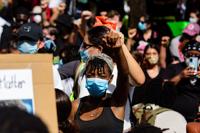
Dream Defenders during protests.
(Dream Defenders)
“We don’t have Brown v. Board without legal challenges accompanying community work,” Summers-Polite said. “CJP follows in that tradition.”
For Greer, the next decade of CJP’s work will require both protection and imagination.
“I am audaciously hopeful about the future of Florida because of the people that we work with,” Greer said. “The future looks like a rejection of oppression, an embracing of equality and justice.”