
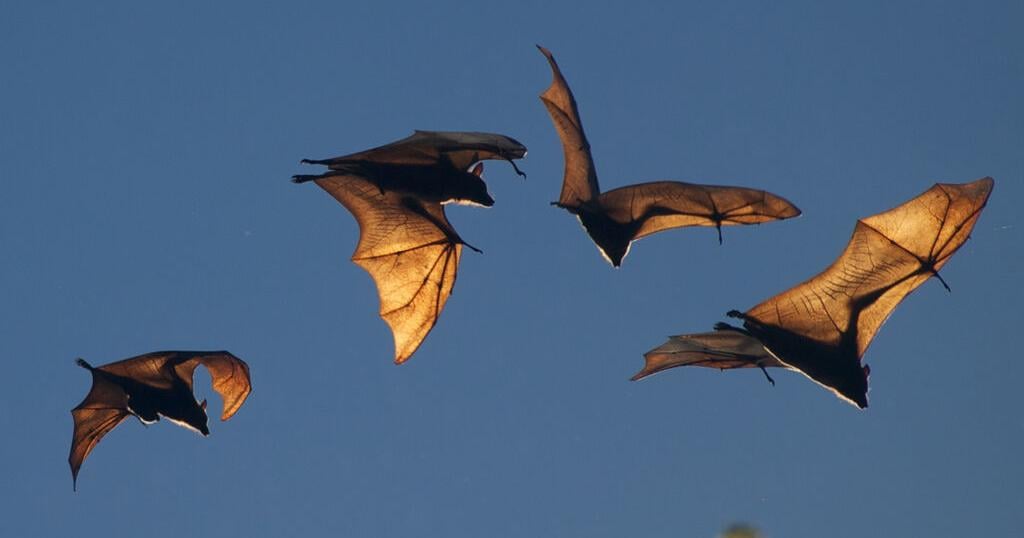
SANIBEL, Fla. (WINK)—The impact of recent hurricanes is still being felt in ways you may not expect, and it involves bats.
After powerful hurricanes tore through Southwest Florida’s islands over the years, the damage left wasn’t just what we saw on the ground—it reached high into the canopy, wiping out critical habitats. These trees are home to bats, and even years after a storm, some still haven’t recovered.
That’s where groups like the Sanibel Captiva Conservation Foundation step in, building bat houses to replace what was lost. A wildlife biologist explained the purpose of the structures.
“It just kind of gives mothers a stable spot to come and roost,” the biologist said. “This one has a predator guard on it as well.”
As summer approaches, bats play a very important role in helping keep mosquito populations in check. A pregnant female can eat its whole-body weight every night in mosquitoes.
That’s 2,400-4,800 mosquitoes per bat, per night. Bats are also a sentinel species, so how they’re doing tells us a lot about the state of the environment.
“They’re here to help you,” the biologist said. “Bats are our friends, is what I like to tell people.”
Experts say bats are more scared of us than we are of them, so keep your distance and let them do their thing. Helping them can be just as easy.
“Limiting your palm frond cutting or leaving the dead palm fronds, that’s a great way to allow for natural bat roosting habitat,” the biologist said. “Planting native flowers, which attract native insects, which the bats eat, that’s another great way to help the bats.”
When we help bats recover, we’re not just protecting wildlife—we’re helping restore the balance right in our own backyards.
Bat maternity season is now in full swing, so you may notice more bats out and about over the coming months.