
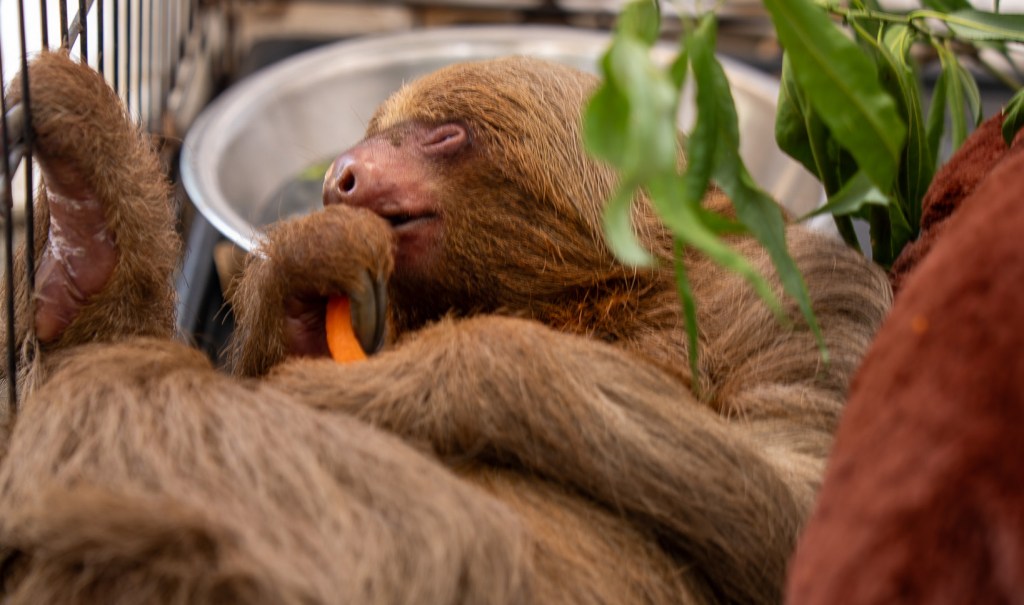
A sloth named Bandit, one of the animals imported for a planned International Drive attraction, died Wednesday at Central Florida Zoo.
The animal, the first to die of the 13 sloths that were moved to the Sanford facility Friday, had been in critical condition since his arrival, showing signs of severe lethargy, dehydration, nutritional imbalances and gastrointestinal complications, the zoo said in a news release Wednesday afternoon.
“Despite the tireless efforts of our veterinary team, including Dr. Haley Straub, Bandit’s condition was too severe to overcome,” CEO Richard E. Glover Jr. said in the release.
“We are heartbroken by this loss,” he said. “Our team did everything possible to give him the best chance at survival and ensure he was comfortable in his final days.”
Bandit had been monitored in a specialized, padded holding area in the zoo’s medical facility to ensure his safety and comfort. Its veterinary and animal-care teams provided assisted feedings, fluid therapy, blood monitoring and vitamin supplementation, but his condition remained fragile, the zoo said.
The remaining dozen sloths are still being closely watched.
Sloth World will not open following dozens of animal deaths: report
The sloths were placed in a 30-day quarantine to deal with their conditions and to protect other animals within the facility. The animals were imported with the intention of being showcased at an I-Drive attraction called Sloth World. But that business drew scrutiny after state reports of 31 sloth deaths in its warehouse facility came to light.
Owner Ben Agresta then donated the sloths to Central Florida Zoo, which is working with the Association of Zoos and Aquariums regarding future placement. of the animals. Agresta has also said that Sloth World, announced in December, will not open.
In an interview with the Orlando Sentinel on Tuesday, Straub said it was likely that the quarantine will last longer than the standard 30 days.
“The situation is a little bit unique, and they’ll most likely stay with us in this specialty quarantine space, probably a little bit longer than that 30 days,” she said. “Of course, we’re playing things day by day, hour by hour, with this group. After that 30 days, we’ll see how they’re all doing to make the best animal care and clinical decision at that point.”
Big alligator rescued from I-Drive is moved to Gatorland, named Mr. Worldwide