
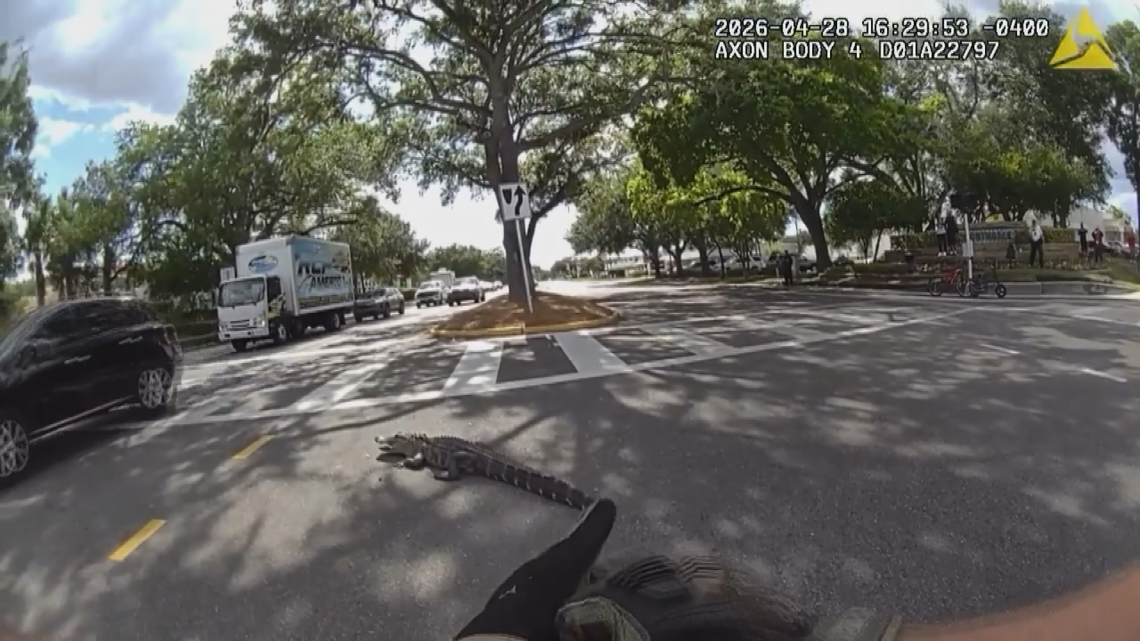
A Hillsborough County deputy, aided by a licensed trapper, safely removed a 7-foot alligator from North Dale Mabry Highway.
TAMPA, Fla. — A deputy with the Hillsborough County Sheriff’s Office was able to direct traffic, pedestrians and a 7-foot-long alligator.
On Wednesday, HCSO released a video on social media that shows the moment a deputy was successful in removing the reptile from a busy North Dale Mabry Highway.
“When your ‘suspect’ is 7 feet long and comes with 80 very sharp teeth… You call in backup,” the post on social media states about the gator crossing attempt, which took place Tuesday.

This story continues below.
The deputy, along with the help of a licensed trapper, shut down the gator’s attempt to cross the highway.
“Right now we have a gator that’s sitting in the middle of the roadway, who looks a little unhappy with us and probably everyone around here,” the deputy said in the video. “And I gotta figure out what we’re gonna do to get him away from all these people and all these cars.”
In the video, the alligator goes to a corner of the street, where it is able to stay away from everyone. Moments later, between the trapper and the deputy, they tape its snout and safely remove the reptile.
April marks the beginning of Alligator mating season, which means Florida’s famous reptile is more active and visible for you to come across. Gators spend the month of April finding partners to mate with before mating begins throughout May and June.
What to do if you see an alligator
Wildlife officials say serious injuries caused by alligators are rare in Florida, but it’s still important to be vigilant.
With gators more likely to be seen by anyone out in public, here are tips FWC recommends to follow to protect yourself.
Keep a safe distance if you see an alligator.Swim only in designated swimming areas during daylight hours and without your pet. Alligators are most active between dusk and dawn.Never feed an alligator. Not only is it dangerous, but it’s also illegal.Keep pets on a leash and away from the water’s edge. Pets often resemble alligators’ natural prey.Anyone with concerns about nuisance wildlife is encouraged to call the FWC’s toll-free Nuisance Alligator Hotline at 866-FWC-GATOR (866-392-4286) or submit a tip online at MyFWC.com/WildlifeAlert.
Previous 10 Tampa Bay News coverage contributed to this report.