
Florida faced unusually dry conditions from January to April, which worsened symptoms for UCF students with seasonal allergies. This package aired on the May 1 newscast. The anchor is Claire Macchiarola.
Emilie Gilbert
Florida faced unusually dry conditions from January to April, which worsened symptoms for UCF students with seasonal allergies.
“This year’s allergy season has been much worse than what we’ve seen in several years,” Dr. David Braun, interim medical director of Student Health Services and assistant professor at UCF, said. “One of the main reasons is there’s been a drought in Central Florida.”

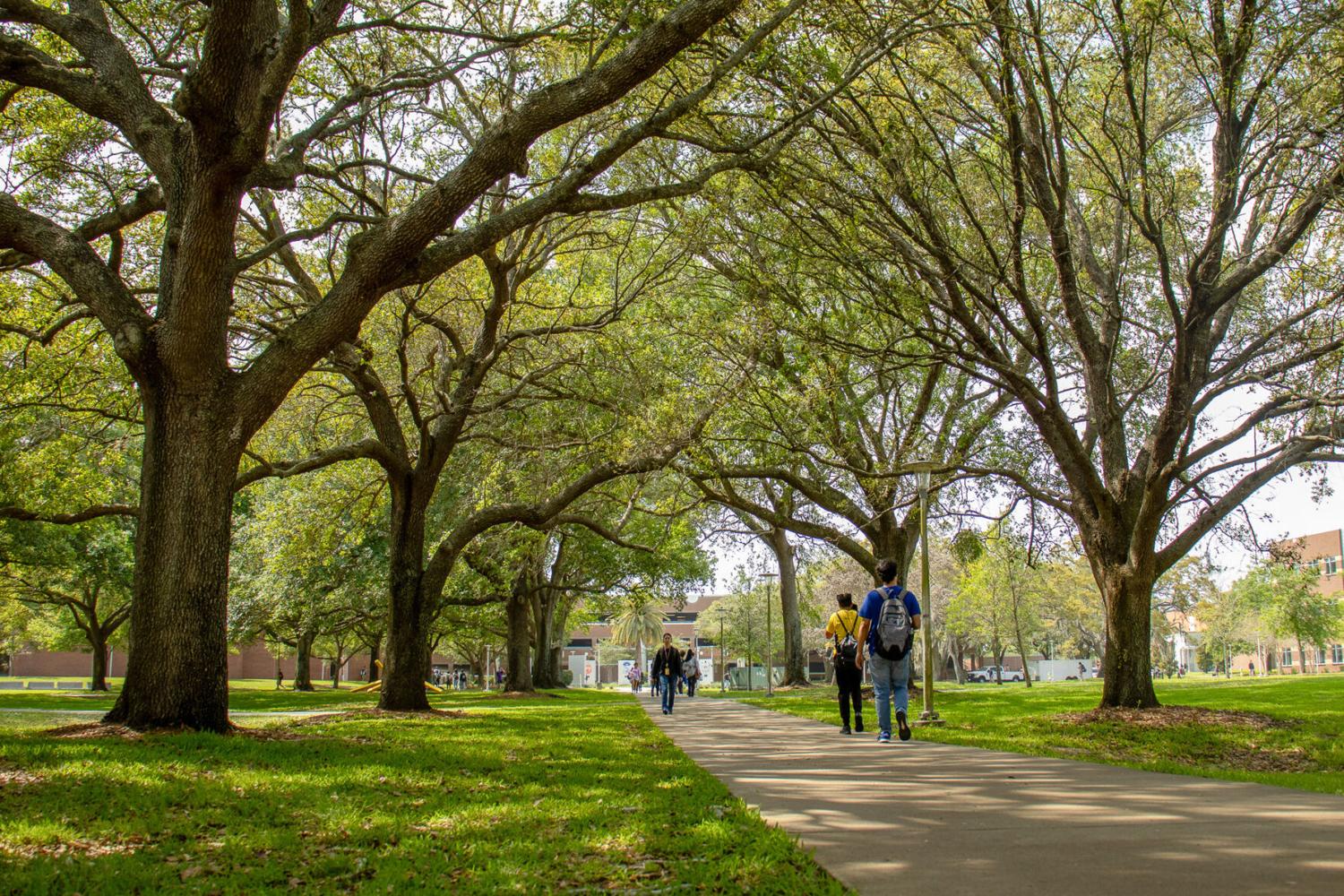
Students walk past oak trees at UCF’s main campus during spring. Oak pollen is a prevalent seasonal allergen in Florida, according to the Asthma and Allergy Foundation of America.
Emilie Gilbert
The state of Florida faced the most widespread and severe drought since 2012, according to U.S. Drought Monitor data.
Braun said allergy season typically peaks in Central Florida between January and April, but the drought triggered plant pollen releases earlier. A lack of rainfall also means more allergens like pollen remain in the air longer.
Sabel Muro, sophomore environmental science major, is allergic to oak and ragweed pollen. She said her allergy symptoms were so bad in March that she thought she was sick.
“My head was congested,” Muro said. “I was sneezing the entire day.”
Orlando ranks No. 33 on the Asthma and Allergy Foundation of America’s Allergy Capitals 2026 list, where pollen levels were rated worse than average.
“Allergic symptoms are in our top 10 diagnoses for the year,” Braun said. “In the springtime, we’re probably seeing 30% to 40% of our visits are somehow allergy related.”
In 2026, the state of Florida faced the most widespread and severe drought since 2012, according to U.S. Drought Monitor data.
Courtesy of U.S. Drought Monitor
Pollen is a seasonal allergen with common sources including trees, grasses and weeds. A 2010 study conducted by OceanSide Publications in the Allergy and Asthma Proceedings identified oak, Bahia grass and short ragweed pollen as prevalent allergens in Florida.
Braun said students should be concerned when symptoms become disruptive to daily routines and see a professional.
“It has affected my classes in the past where I felt so unwell that I feel like I either can’t come to class or like I can’t put all my effort into my assignments,” Muro said.
When there are dry conditions, nasal passages lack the moisture needed to clear allergens, Braun said.
“One of the strategies to then treat allergies is to create some moisture, and one of the ways to do that is a saline nasal spray, for example,” Braun said.
Braun said those suffering from seasonal allergy symptoms can expect to find relief once there is more consistent rainfall.