
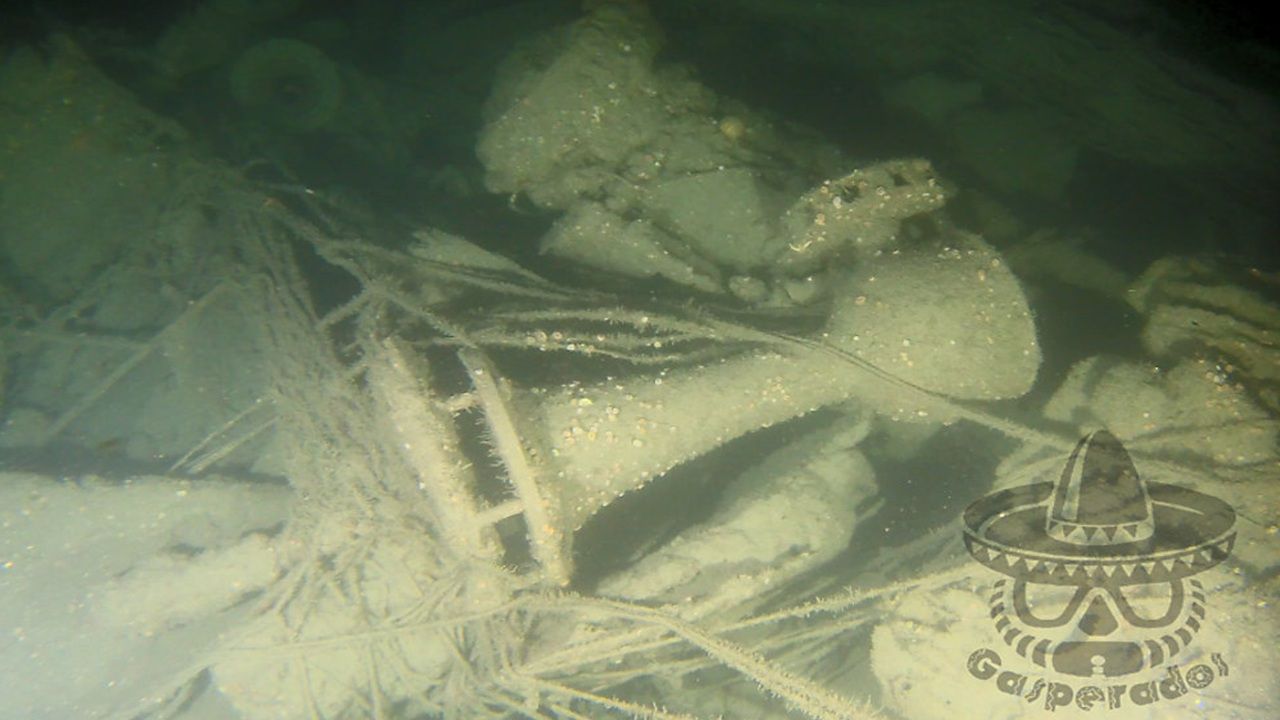
TAMPA, Fla. — A British dive team has discovered the wreckage of a sunken U.S. Coast Guard ship that was stationed in Tampa in the early 1900s.
The U.S. Coast Guard cutter Tampa was torpedoed near the end of World War I. All 131 people on board died. When the cutter Tampa sank, it was the largest single loss of life for any naval unit during World War I.
This month, the volunteer technical-divers called the Gasperados, located the wreckage in the Atlantic Ocean, about 50 miles off the Cornwall coast in the United Kingdom.
Tampa History Center historian Rodney Kite-Powell said locating the cutter Tampa had to be challenging.
“It’s in 300 feet of water and there are a number of shipwrecks around the coast of England and so identifying the right one is part of the process,” said Kite-Powell. “Just finding it, the waters pretty big, so finding a relatively small vessel on a massive sea floor is hard to do.”
Outside the Tampa History Center, there is a mural that highlights the cutter’s special ties to Tampa. Nancy Turner, a Tampa native, helped get the artwork on the wall. She’s been fascinated by the history of the cutter Tampa and its connections to the city.
“I think it’s wonderful that they found her,” said Turner.
The cutter, originally named Miami, was renamed Tampa because of the special bond with the city of Tampa. In the early 1900s, the ship was stationed in the Garrison Channel for part of the year to watch for hurricanes. Some of the soldiers were from the area. And during the early years of the Gasparilla festival, the ship and soldiers livened up the party, Turner said. They were part of the boat parade.
“And people looked forward to them coming,” Turner said. “They wined and dined them. It was wonderful.”
It’s why the community was heartbroken when the ship sank.
Now, there’s finally closure.
“Now there’s that resting place that we know exactly where the Tampa sits and again all those young men who perished on board, we know where they are,” Kite-Powell said.
A century-old mystery answered 300 feet deep in the Atlantic Ocean.