
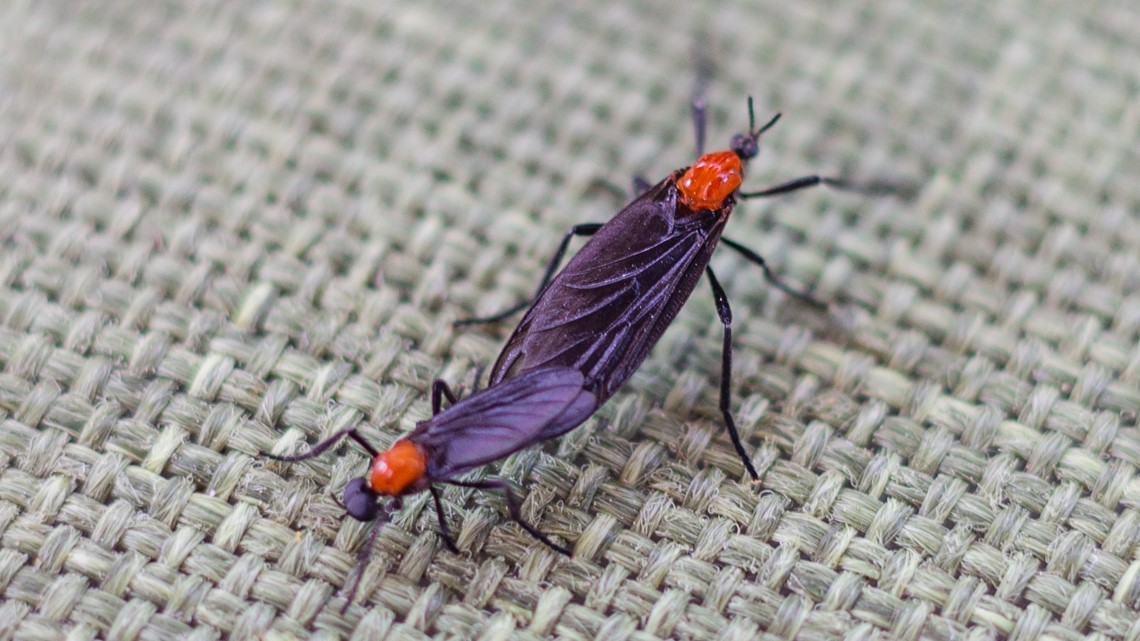
The insects — known scientifically as “Plecia nearctica” — are making a noticeable comeback, with drivers reporting heavy swarms along roadways and parking lots.
TAMPA, Fla. — If it feels like lovebugs are everywhere throughout the Tampa Bay area this spring, you’re not imagining it.
After a few quieter years, the insects — known scientifically as “Plecia nearctica” — are making a noticeable comeback, with drivers reporting heavy swarms along roadways and parking lots.
“Tons of love bugs,” commuter Scott Wendt said.
Lovebugs typically appear twice a year in Florida — in the spring and again in the fall.
Experts say this season’s surge is being driven by a combination of warm temperatures, rising humidity and enough moisture in the soil to support their development even amid ongoing drought conditions.
“I think for people who are not expecting it, it’s a surprise,” commuter Rick Henderson said. “But if you’ve lived in Florida for a while, it is lovebug season.”
Adult lovebugs only live a few days — just long enough to mate, lay eggs and die — but during that brief window, they can become a widespread nuisance.
“It goes in patches, but for a little while, it feels like it’s raining love bug bugs,” said commuter Drew Holweger, who added he’s been “pretty much getting a car wash every day.”
Despite their numbers, lovebugs are not dangerous to humans. They don’t bite or sting. But they can create hazards for drivers and cause costly damage to vehicles.
“Oh, I hate them. Absolutely. They destroy the paint on your car,” Henderson said. “I find no use for love bugs.”
Part of the problem is that lovebugs are naturally drawn to cars.
“They are attracted to the exhaust from automobiles that is hit by ultraviolet light,” said University of Florida entomologist Dr. Norman Leppla. “And it changes into an attractant.”
In addition to exhaust, the insects are drawn to heat, vibrations and the height of moving vehicles, putting them directly in the path of windshields and grilles.
“They’ll ruin your paint,” said Jason DeJesus of Woodie’s Car Wash. “Nine times out of 10 you want to get them off, especially on the windshield.”
That’s because once lovebugs hit a vehicle, the damage can begin quickly.
“Love bugs damage paint after 24 hours, especially if it’s baking in the sun,” DeJesus said.
Their remains contain acidic compounds that can etch into a car’s clear coat and paint if not removed promptly.
“If you leave them on the paint, they will begin to penetrate and ruin the paint,” Leppla added.
To prevent damage, experts recommend washing lovebugs off as soon as possible — ideally within a day — and using gentle cleaning methods to avoid scratching the surface.
“The second you get them on, take the time to get them off,” DeJesus said. “Whether it’s in your driveway or coming to a wash.”
Some drivers say quick action has become routine.
“As soon as I finish a trip, that’s what I do,” Henderson said. “I take it to the wash and I get them off.”
Others are just hoping for relief.
“I don’t know if there’s any natural predators to them, but I hope there is,” Holweger said.
There is some good news: lovebug swarms typically last only a couple of weeks in any one area before fading.
The bad news — they’re expected to return again later this year during the fall season.