
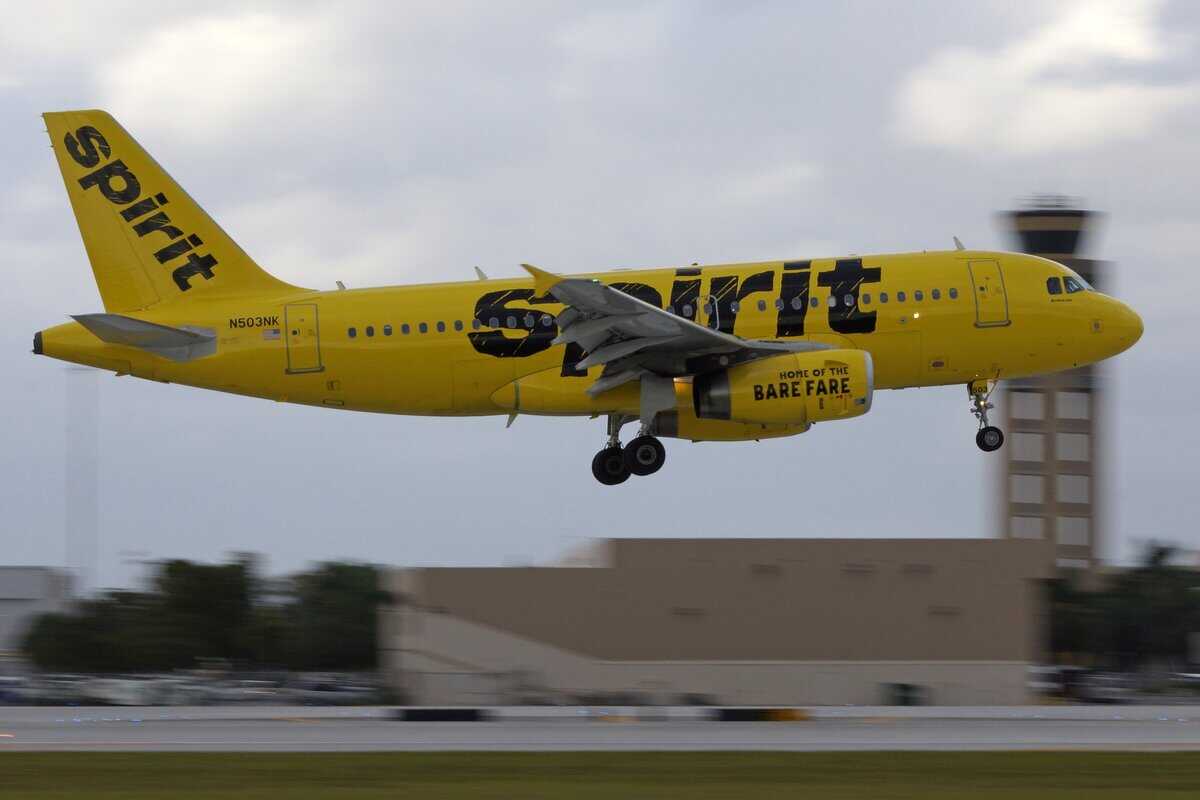
 Spirit A 319 at Fort Lauderdale By JTOcchialini – N503NK Yellow Bird FLL JTPI 4×6 3790 @ 1/60th, CC BY-SA 2.0, https://commons.wikimedia.org/w/index.php?curid=41398278
The potential collapse of Spirit Airlines—long the cornerstone of South Florida’s budget travel market—represents a tectonic shift for both travelers and the regional workforce. With a hub at Fort Lauderdale-Hollywood International (FLL) and a growing presence at Miami International (MIA), the airline’s absence would leave a void that few other carriers are positioned to fill immediately.
As reports suggest a shutdown could be imminent, and our sources back this up here is an analysis of the fallout for South Florida’s aviation landscape.
The Impact on Fort Lauderdale-Hollywood (FLL)
For decades, Spirit has been synonymous with FLL. They moved their headquarters to our region from Detroit in 1999 and have long been a behemoth in Fort Lauderdale While the airline had already begun scaling back during its 2025-2026 bankruptcy proceedings, it still accounts for nearly 29% of the airport’s total passenger capacity. Second-placed JetBlue is down near 21%
The “Fare Gap”: FLL’s reputation as the “low-cost alternative” to Miami was built on Spirit’s back. Without Spirit, travelers can expect an immediate spike in fares on domestic and Caribbean routes. Historical data shows that when ultra-low-cost carriers (ULCCs) exit a market, fares on those specific routes can jump by over 70%!
The Capacity Vacuum: JetBlue has already moved to try and overtake Spirit as the largest carrier at FLL, but a total shutdown would leave dozens of gates and hundreds of daily slots empty. While Frontier and Allegiant may look to expand, they lack the sheer volume of aircraft to replace Spirit’s network overnight.
International Connectivity: Spirit was a primary link for South Floridians to Central and South America. A shutdown would leave many smaller markets in Colombia, Haiti, and Central America with significantly reduced options, forcing travelers to use more expensive “legacy” carriers out of Miami. This is a huge point often lost on domestic analysts. Cities like Barranquilla, Quito, Lima, San Salvador and Tegucigalpa will no longer have ANY nonstop service to Fort Lauderdale
The Impact on Miami International (MIA)
Though Spirit only moved into MIA in late 2021, it quickly carved out a niche, accounting for roughly 8% of the airport’s traffic.
American Airlines Dominance: MIA is a fortress hub for American Airlines. Spirit provided one of the few meaningful checks on American’s pricing power for leisure travelers. Its removal likely cements a “premium-only” environment at MIA, making it increasingly difficult for budget-conscious locals to fly out of their closest airport.
Congestion Relief vs. Revenue Loss: While the shutdown might briefly alleviate some gate congestion at MIA, the loss of landing fees and passenger facility charges would be a significant blow to the airport’s operating budget.
The Human Cost: Mass Job Losses
The most devastating aspect of a Spirit liquidation is the impact on the South Florida workforce. Spirit is headquartered in Dania Beach, and its operations are deeply embedded in the local economy.
17,000 Lives Impacted: System-wide, Spirit employs over 17,000 people. A significant portion of these—pilots, flight attendants, ramp agents, and corporate staff—are based in Broward and Miami-Dade counties.
Corporate Headquarters: Unlike many airlines based in Texas or Chicago, Spirit’s headquarters is a major South Florida employer. A total shutdown would not just ground planes; it would shutter a massive corporate campus, impacting thousands of administrative and executive roles that are harder to replace than frontline operational jobs.
The “Bailout” Debate: As of 9:00 pm on Friday, the federal government’s proposed$500 million rescue package is stalled. Negotiations are stuck between the administration and bondholders, workers face the reality of furloughs without the safety net of the pandemic-era CARES Act.
Related