
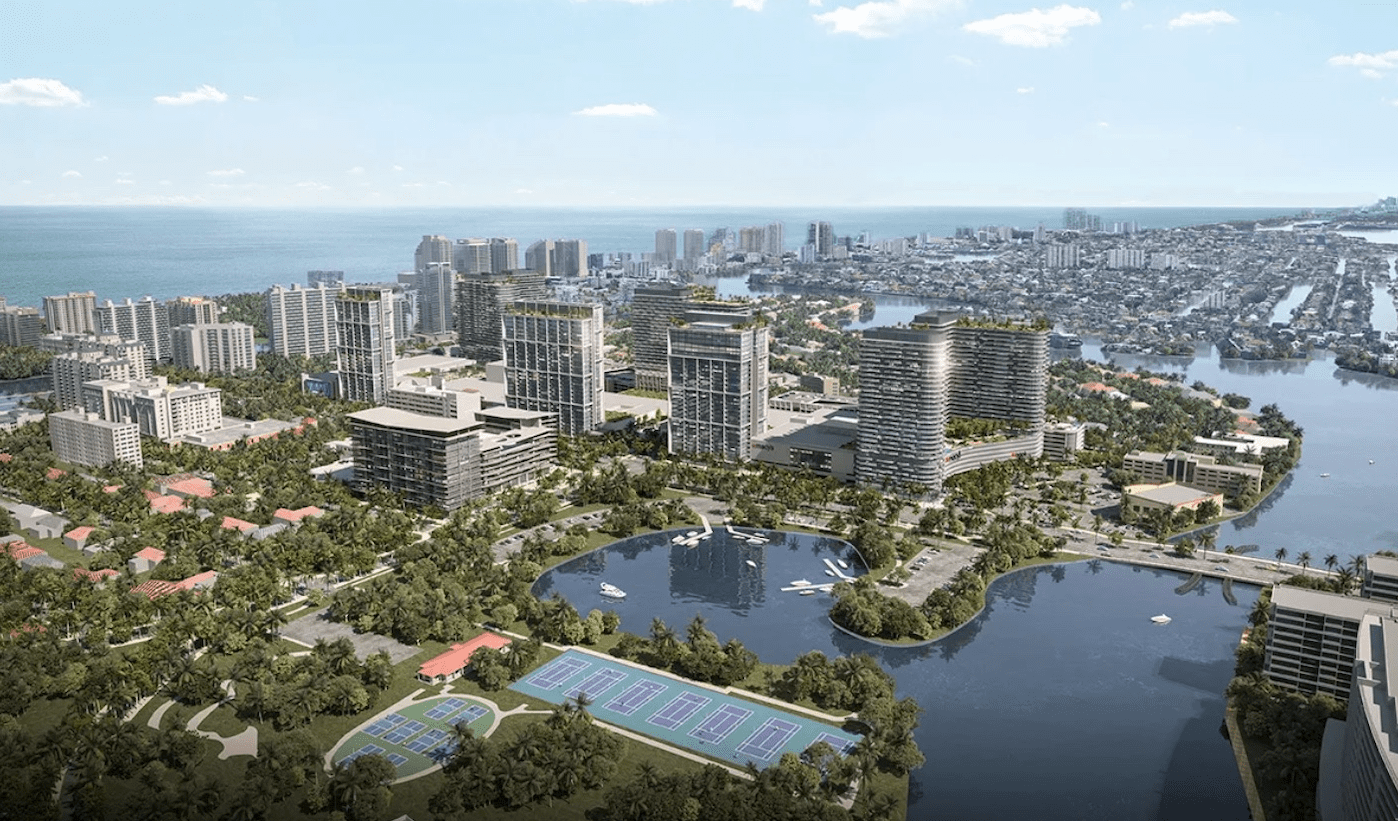
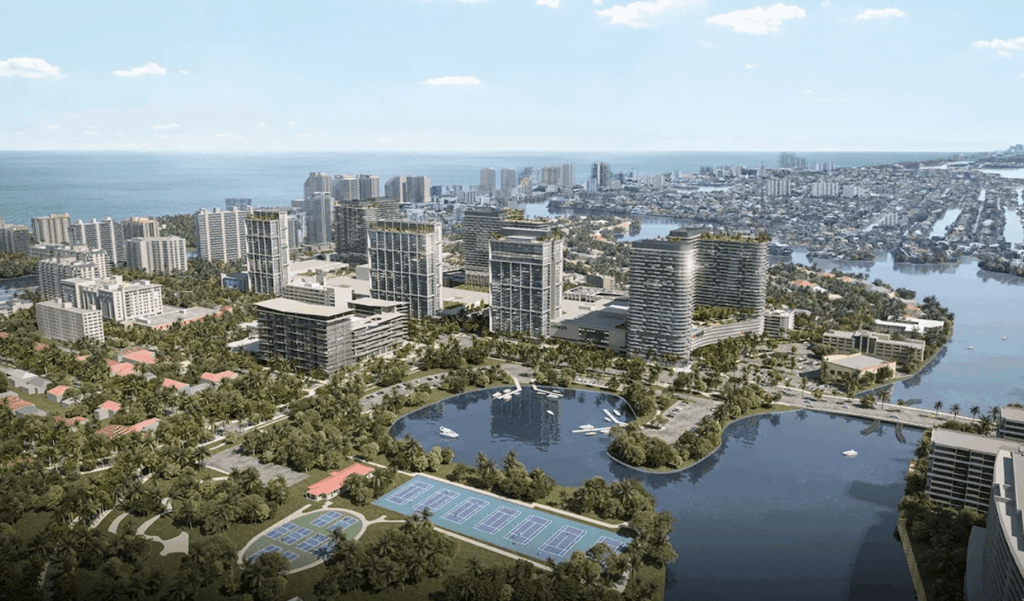
 The towers in the center of the rendering represent the proposed changes to the Galleria Mall. [Courtesy]
By John Hayden | New Pelican Writer
Eight towers stretching 300 feet into the air, 3,100 residential units, 170 hotel rooms, 4,700 new parking spaces and 143,000 square feet of new restaurant and office space.
Those are the proposed plans for the Galleria Mall in Fort Lauderdale. But a developer’s dream is one neighborhood’s nightmare. A standing room only crowd turned out for an informational town hall on the project Tuesday at the Lauderdale Yacht Club.
Mayor Dean Trantalis and Development Director Anthony Fajardo tried to explain what the city can and cannot do to modify the plans. But over the course of 75 minutes the mood went from skeptical to downright hostile.
To understand what’s happening you need to know a few key terms:
The Live Local Act: In 2023, the state legislature passed this law which allows developers to bypass many city codes, community input, and zoning boards and proceed at an administrative level. Among other things, buildings can be as tall as any existing height limits within a mile of the site. The stated goal was to incentivize affordable housing, but critics say it was a gift to big-money developers by eliminating several layers of red tape at the local level.
Affordable Housing Qualifying: Forty percent of units must be considered affordable, which is 120 percent of median family income for the area. In this case it would be about $115,000.
Affordable Housing Distribution: The 40 percent relates to units, not square footage. This is important because, theoretically, the developer could designate 400 square foot studios as the affordable units, which could mitigate the spirit of helping working families.
Developer Requirements: Among other things, they must still upgrade underground infrastructure (such as utility lines) and comply with fire safety codes. They do not need to worry about adding a projected 15,000 daily car trips through the area.
Fajardo said the application’s first draft has been rejected. The city believes developers are misinterpreting or exploiting possible loopholes to qualify for the 300 feet height limit.
But it’s important to note that something is coming to the spot no matter what neighbors say. “The (Live Local) statue kind of ties our hands,” Trantalis told the crowd.
The current renderings show new construction enveloping the existing mall and the surrounding area, creating an urban village vibe. Trantalis pointed out that, given the decline of malls and rise of online shopping, malls need a residential component to survive.
“Many of us have talked about how to improve the retail experience at the mall. We also know that a residential component is often necessary.”
The crowd listened at first before asking some nuanced questions about taking back control before openly asking Trantalis how the city or neighbors can kill the project. The short answer is: they can’t.
The mall is in Vice Mayor and District 1 Commissioner John Herbst’s area and he urges patience and perspective, calling this proposal an opening bid. Herbst believes the final number of new units will come down but will still be 2,000 or more.
This is the fourth developer in recent history to submit a plan for the mall, but the first since Live Local passed. In 2018, community pressure killed a proposal that called for 900 new units. Some at the town hall had a bit of nostalgia-tinged regret as Herbst said, “That ship has sailed.”
It will be years before anything is completed. Even a groundbreaking in 2026 is unlikely.