
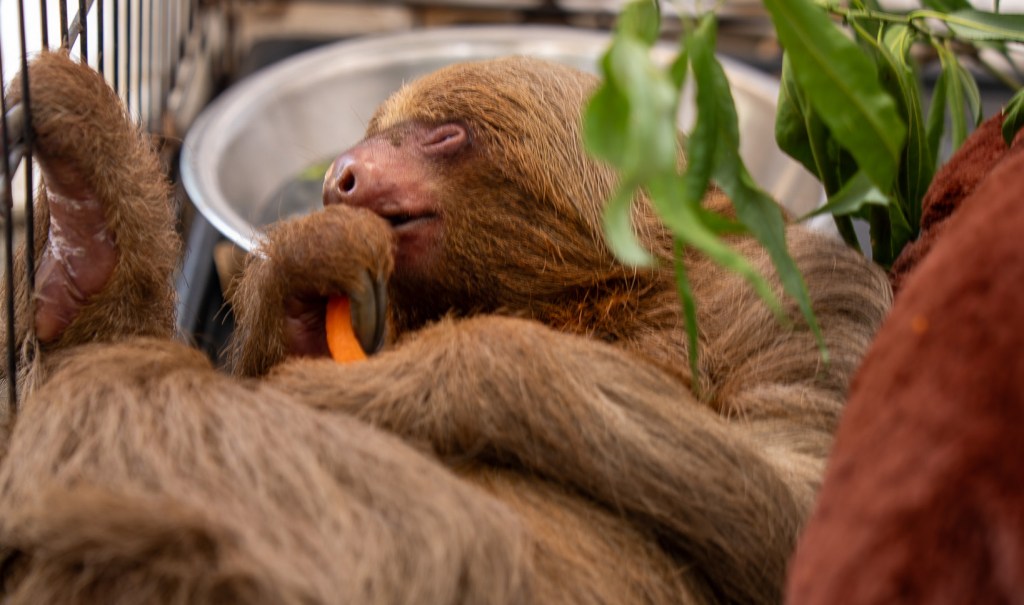
Orlando was right to be outraged.
When news broke this month that 31 sloths had died in preparation for the opening of Sloth World, an attraction shuttered by public outcry before it ever welcomed a single visitor, residents demanded accountability. Local officials responded. That is exactly how it is supposed to work. A community identified a harm, expressed its values, and its government acted.
Now Congress is moving to make sure that same process cannot happen when the animals in question are pigs, calves, or hens.
The Farm, Food, and National Security Act of 2026 is currently headed to the House floor. Buried inside it is a provision that would strip states and communities of the authority to set animal welfare standards and food safety standards for agricultural products sold within their borders. Local communities, not federal bureaucrats, deciding what enters their own marketplace is not a radical idea. This bill treats it like one.
For generations, the 10th Amendment has been the rallying point for conservatives who believe that decisions are best made closest to the people affected by them. No out-of-state farmer is compelled to change a single practice under state welfare laws. States simply retain the right to decide what gets sold within their borders. That is federalism working exactly as designed, and the Supreme Court affirmed it as recently as 2023. This bill is an attempt to override that ruling through a farm bill.
A 2022 poll found that more than three-quarters of Republicans support giving states this authority. The base is not asking for this. The industrial agriculture lobby is. At their best, Republican voters are guided by consistency and principle, and the principle here is plain: Washington should not override the states to protect an industry’s cost-cutting, harm-inducing practices.
 This is also a question of what we feed our families. The CDC has identified antimicrobial resistance as one of the most urgent public health threats facing the country, and the scientific community broadly agrees that antibiotic use in industrial livestock operations contributes to it. States have every reason to want authority over what safety standards apply in their own grocery stores. This bill sets the national floor at whatever the least regulated state happens to allow.
Most people consider themselves animal lovers. Most people would also like to believe that the open pastures and contented animals in food marketing reflect some version of reality. You do not have to be an activist to think that zero protections for farm animals is the wrong policy. Gestation crates confine breeding sows, animals that can weigh over 500 pounds, to a space roughly the size of a refrigerator box for most of their lives. Veal calves are raised in conditions specifically designed to limit movement. The conditions that killed those sloths in Orlando were not different in kind.
Conservatives who care about limited government should be troubled by a federal law whose primary purpose is to prevent states from governing themselves. Conservatives who care about their communities should be troubled that the Orlando residents who demanded justice for 31 sloths would be told by Washington that they have no equivalent say over the treatment of animals raised for their dinner tables.
The vote is imminent. Whatever your politics, if you believe that communities should have a say in the safety and standards of the food sold in their markets, your representative needs to hear from you before this comes to a vote.
Jesse Plunkett lives in Sanford with his wife and two daughters. They own two medical spas and a financial practice.