
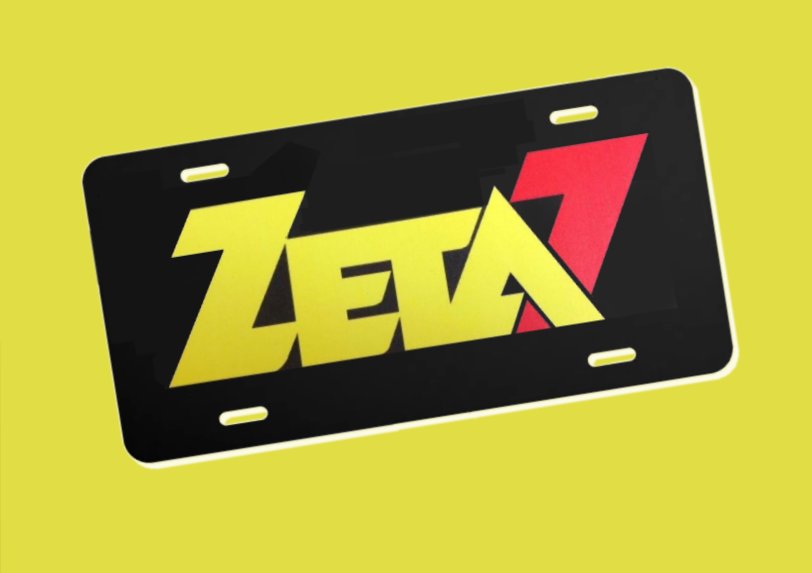
For Orlando radio listeners in 1970s and early ’80s, the name “Zeta 7” likely conjures up a mix of fond memories and profound anger.
WORJ-FM, “Zeta 7,” as it was known back then, was the station that pioneered progressive, album-oriented rock music in Central Florida. It’s now called WMGF-FM, Magic 107.7.
In early February 1981, station owner Sudbrink Broadcasting announced WORJ and Zeta 7 would end its album rock format and become WJYO-FM, “The Joy of Orlando,” featuring an “easy listening” library of music including Frank Sinatra and Tony Bennett.
“We go into this new easy listening programming with mixed feelings,” said General Manager Harvey Tate told the Sentinel-Star then. “Zeta 7 is and was one of the finest album-oriented rock stations in the county. I am sure that most Zeta 7 listeners and fans will be disappointed at having to give up this format – which was more than a radio format, it was a lifestyle.”
Tate was spot on. Many fans pleaded with the station to stop the format change. When it came anyway, they protested by displaying upside-down “Zeta 7” license plates on the front of their cars. Years after Zeta 7 left the air, you could still spot those upside-down license plates across Central Florida.
On Friday, Feb. 20, 1981, Zeta 7’s final day, Sentinel-Star reporter Jeffrey Zaslow went to the station to chronicle its finals hours. Here is part of his story:
12:01 a.m. – Disc Jockey Paul Gerardi leads into the new day, the last day, with a solemn station identification. “This is WORJ Mount Dora/ Orlando,” he says, then pauses to take a breath and catch his emotions. “To our friends, I hope, we will always be Zeta 7.” Gerardi cues a song to set the mood: “Black Friday” by Steely Dan.
7 a.m. – Rock ‘n’ rollers in Central Florida are waking up to Thom Robinson, who sits in the DJ booth (by his own acknowledgement) in a state of stunned despair. He wears a button which reads, “I Can’t Stand It No More.” His words are melodramatic but there is sincerity in what he is saying. “I’m Thom Robinson on Zeta 7,” he says, “and this is the last day of my life. I go into the bread line at 10 o’clock this morning. Soon I’ll be heading to West Virginia to stay with my sister and sort out my life. There’s a lot to be said, but music can say it much better than I can.”
7:40 a.m. – The phones have been ringing all morning and Robinson decides to allow some of the callers on the air to offer their tributes to Zeta 7. Many of the callers thank him for the Zeta license plates (70,000 were distributed in the past two years). Robinson, 29, responds by telling his listeners to open their windows, even if they’re in their cars, and shout, “We’re mad as hell and we’re not going to take it anymore.”
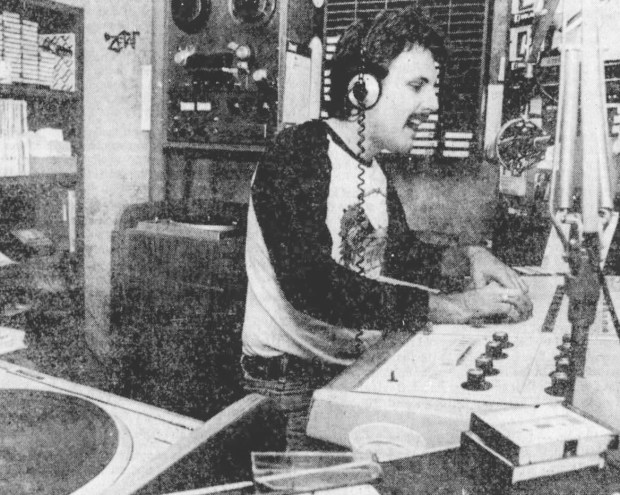 DJ Andy Preston plays music on the final day of WORJ-FM, then known as Orlando’s “Zeta 7,” on Feb. 20, 1981. (Orlando Sentinel File)
1:25 p.m. – General Manager Harvey Tate, a big, friendly, 48-year-old man whom the DJs regard as an uncle, sits in his own office smiling and speaking of his excitement. “This is probably the first time in broadcast history where a successful station has made a format change,” he says. “Yes, it’s the end of an era and it’s sad. But we’ve made intensive studies of the market, and we think the new format will attract an even larger audience.”
3:05 p.m. – A crowd gathers in Tate’s office to look through a stack of several dozen letters Tate has received from listeners. There are a few sympathy cards, and several letter-writers accuse Tate of “selling out Zeta 7 – rock ‘n’ roll just to make more money.” A few are in favor of the changed format. But most are just expressions of thanks for all the good music. As people page through the letters, Lise Ruby, one of the station’s advertising saleswomen, comes into Tate’s office and says simply, “Zeta was trying to hold onto that spirit from the ’60s and early ’70s. But now times are different. Today, everybody’s off doing their own thing.”
9:22 p.m. – Six long-faced DJs gather in the announcer’s booth along with David Sousa, 33, founder and VP of Zeta 7. “I kind of hope,” Sousa says over the air, “that in the next 38 minutes, the governor’s going to call with a reprieve – a stay of execution. He’ll say they should unstrap us from the electric chair.”
9:33 p.m. – A number of Zeta fans have gathered at the station. “I came to be here with other Zeta people,” says Mike Decker. “It’s the demise of a legend.”
9:45 p.m. – Don McLean’s “American Pie” begins.
9:59 p.m. – Sousa announces “Zeta 7 now leaves the air.” He then plays a short refrain from “Goodnight” by the Beatles.
10:01 p.m. – Dead air. Static. Outside the studio, about 20 die-hard fans, most in their teens and 20s, light candles and stand quietly paying their last respects. One fan, Lee Toy says, “It’s like losing a good friend.”
Want more Orlando history? Buy a copy of the Orlando Sentinel’s 150th anniversary book with 150 front pages from our 150 years. Get it OrlandoSentinel.com/150book.