
A voting rights group and several Florida voters filed a lawsuit Monday challenging the state’s newly approved congressional map, alleging it was intentionally drawn to favor Republicans in violation of the state constitution.The complaint, filed in Leon County Circuit Court, argues the 2026 redistricting plan is an “extreme partisan gerrymander” that could allow Republicans to win a disproportionate share of seats in Florida’s congressional delegation. Plaintiffs, including the Equal Ground Education Fund and individual voters, are asking the court to block the map’s use in upcoming elections and either reinstate the previous map or require a new one that complies with Florida law.At issue is Florida’s Fair Districts Amendment, approved by voters in 2010, which prohibits lawmakers from drawing political boundaries to favor a political party or incumbent.The lawsuit alleges state officials ignored those requirements when crafting the new map, which was approved during a special legislative session in late April.“The 2026 plan can only be explained by a desire to maximize Republican congressional representation,” the complaint states. According to the filing, the map could result in Republicans winning 24 of Florida’s 28 congressional seats — about 86% — even if they receive closer to 55% of the statewide vote.The plaintiffs argue the map achieves that outcome by “packing and cracking” Democratic voters — concentrating them into a small number of districts while spreading others across multiple Republican-leaning districts to dilute their influence.The complaint highlights changes in several key regions:In the Tampa Bay area, the map allegedly splits Democratic-leaning cities like Tampa and St. Petersburg across multiple districts, eliminating a previously competitive seat.In Central Florida, it allegedly concentrates Democratic voters into one Orlando-area district while weakening another.In South Florida, it allegedly reduces the number of reliably Democratic seats from five to three. The lawsuit also alleges the plan violates constitutional requirements for compact districts and for using existing city and county boundaries where possible. It points to irregularly shaped districts and increased splitting of municipalities as evidence of improper intent.In addition, plaintiffs claim the map was developed through a secretive process with little public input and was passed quickly after being introduced.The complaint also cites testimony from the map’s creator acknowledging the use of partisan data in drawing district lines, which plaintiffs argue is direct evidence of unconstitutional intent.According to the complaint, state officials have defended the redistricting effort by saying it reflects population changes and aims to create a race-neutral map, arguments the plaintiffs dispute.The case is expected to draw significant attention as it could affect the balance of power in Florida’s congressional delegation and potentially in the U.S. House of Representatives.A court hearing date has not yet been announced.
FLORIDA —
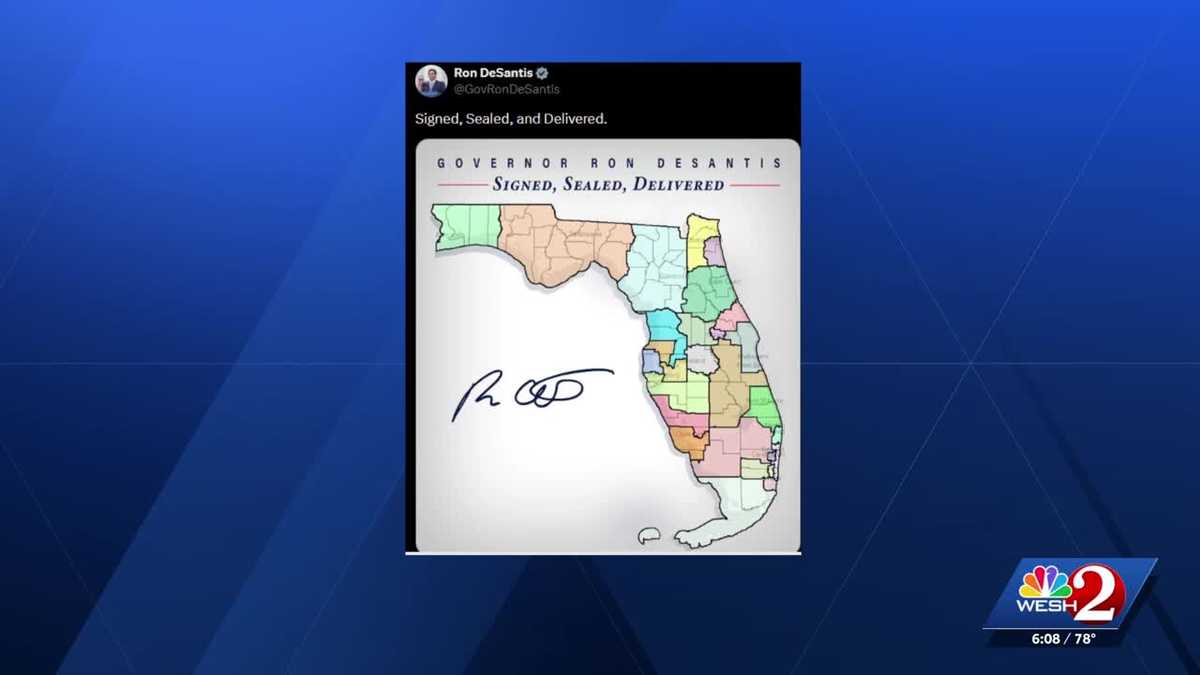
A voting rights group and several Florida voters filed a lawsuit Monday challenging the state’s newly approved congressional map, alleging it was intentionally drawn to favor Republicans in violation of the state constitution.
The complaint, filed in Leon County Circuit Court, argues the 2026 redistricting plan is an “extreme partisan gerrymander” that could allow Republicans to win a disproportionate share of seats in Florida’s congressional delegation.
Plaintiffs, including the Equal Ground Education Fund and individual voters, are asking the court to block the map’s use in upcoming elections and either reinstate the previous map or require a new one that complies with Florida law.
At issue is Florida’s Fair Districts Amendment, approved by voters in 2010, which prohibits lawmakers from drawing political boundaries to favor a political party or incumbent.
The lawsuit alleges state officials ignored those requirements when crafting the new map, which was approved during a special legislative session in late April.
“The 2026 plan can only be explained by a desire to maximize Republican congressional representation,” the complaint states.
According to the filing, the map could result in Republicans winning 24 of Florida’s 28 congressional seats — about 86% — even if they receive closer to 55% of the statewide vote.
The plaintiffs argue the map achieves that outcome by “packing and cracking” Democratic voters — concentrating them into a small number of districts while spreading others across multiple Republican-leaning districts to dilute their influence.
The complaint highlights changes in several key regions:
In the Tampa Bay area, the map allegedly splits Democratic-leaning cities like Tampa and St. Petersburg across multiple districts, eliminating a previously competitive seat.In Central Florida, it allegedly concentrates Democratic voters into one Orlando-area district while weakening another.In South Florida, it allegedly reduces the number of reliably Democratic seats from five to three.
The lawsuit also alleges the plan violates constitutional requirements for compact districts and for using existing city and county boundaries where possible. It points to irregularly shaped districts and increased splitting of municipalities as evidence of improper intent.
In addition, plaintiffs claim the map was developed through a secretive process with little public input and was passed quickly after being introduced.
The complaint also cites testimony from the map’s creator acknowledging the use of partisan data in drawing district lines, which plaintiffs argue is direct evidence of unconstitutional intent.
According to the complaint, state officials have defended the redistricting effort by saying it reflects population changes and aims to create a race-neutral map, arguments the plaintiffs dispute.
The case is expected to draw significant attention as it could affect the balance of power in Florida’s congressional delegation and potentially in the U.S. House of Representatives.
A court hearing date has not yet been announced.