
On the campus of Viva Church Assembly of God in Orlando, you see political campaign signs. One of the preferred candidates is Ilia Adorno, a teacher at the church’s school, Living Word Academy, and the sister-in-law of the pastor. WESH 2 News learned that petitions had been provided to parents to try and help Adorno, a school Board candidate in District 3, get on the ballot, without paying the qualifying fee, even guiding them on how to “complete the enclosed petition.” The office of Orange County Supervisor of Elections, Karen Castor Dentel, confirmed to WESH 2 News on Monday that roughly 100 petitions were turned in by Adorno. And one of Adorno’s opponents doesn’t like the fact that Adorno is running for a seat on the school board that runs Orange County Public Schools, and doing so with help from a private school that is helping her campaign.Candidate Susanne Pena told WESH 2 News, “I am very disappointed to see someone who wants to serve on the school board using their position at a private school to campaign and having parents sign a petition in support of her candidacy.” But the federal government won’t take any action to prevent this tax-exempt, religious organization — or any church or private school — from endorsing or opposing candidates this election year. That’s because the so-called “Johnson Rule” has been in place since 1954 and is aimed at keeping tax-exempt entities from campaigning. It’s on shaky ground. Last July, the National Religious Broadcasters reached an agreement with the Internal Revenue Service (IRS) to allow non-profit groups to campaign. But a Federal Judge in Texas in March rejected the pact, saying “Congress is the appropriate body to weigh the relevant, policy-laden considerations, such as the harshness of the present law.” “You don’t want taxpayer subsidies going to underwrite political speech,” said University of Central Florida political expert Dr. Aubrey Jewett.He said that’s exactly why the ban on churches endorsing candidates has been in place for 72 years. But Jewett said, with very little enforcement of the rule under President Donald Trump, and a growing conservative climate in the nation’s courts, changes are almost guaranteed before voters begin to cast ballots this year. “At the very minimum, there’s going to be a new set of rules coming out from Treasury and the IRS to water this rule down, and allow churches a lot more flexibility in what they say,” Jewett said. Recognizing that elections are just months away, the IRS decision is expected soon. The National Religious Broadcasters say they plan to appeal.Messages to Ilia Adorno were not returned.
ORLANDO, Fla. —
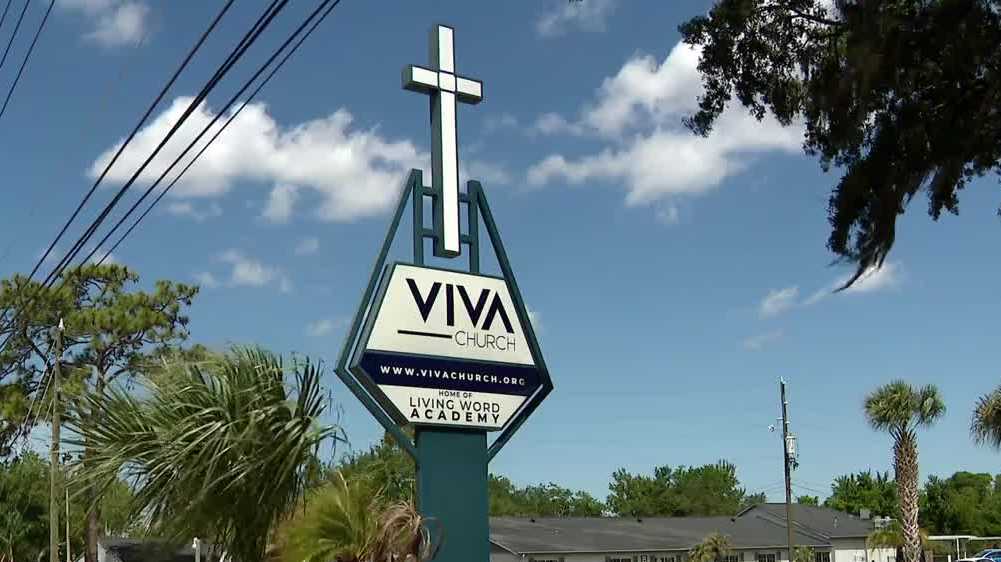
On the campus of Viva Church Assembly of God in Orlando, you see political campaign signs. One of the preferred candidates is Ilia Adorno, a teacher at the church’s school, Living Word Academy, and the sister-in-law of the pastor.
WESH 2 News learned that petitions had been provided to parents to try and help Adorno, a school Board candidate in District 3, get on the ballot, without paying the qualifying fee, even guiding them on how to “complete the enclosed petition.”
The office of Orange County Supervisor of Elections, Karen Castor Dentel, confirmed to WESH 2 News on Monday that roughly 100 petitions were turned in by Adorno. And one of Adorno’s opponents doesn’t like the fact that Adorno is running for a seat on the school board that runs Orange County Public Schools, and doing so with help from a private school that is helping her campaign.
Candidate Susanne Pena told WESH 2 News, “I am very disappointed to see someone who wants to serve on the school board using their position at a private school to campaign and having parents sign a petition in support of her candidacy.”
But the federal government won’t take any action to prevent this tax-exempt, religious organization — or any church or private school — from endorsing or opposing candidates this election year.
That’s because the so-called “Johnson Rule” has been in place since 1954 and is aimed at keeping tax-exempt entities from campaigning. It’s on shaky ground.
Last July, the National Religious Broadcasters reached an agreement with the Internal Revenue Service (IRS) to allow non-profit groups to campaign. But a Federal Judge in Texas in March rejected the pact, saying “Congress is the appropriate body to weigh the relevant, policy-laden considerations, such as the harshness of the present law.”
“You don’t want taxpayer subsidies going to underwrite political speech,” said University of Central Florida political expert Dr. Aubrey Jewett.
He said that’s exactly why the ban on churches endorsing candidates has been in place for 72 years.
But Jewett said, with very little enforcement of the rule under President Donald Trump, and a growing conservative climate in the nation’s courts, changes are almost guaranteed before voters begin to cast ballots this year.
“At the very minimum, there’s going to be a new set of rules coming out from Treasury and the IRS to water this rule down, and allow churches a lot more flexibility in what they say,” Jewett said.
Recognizing that elections are just months away, the IRS decision is expected soon. The National Religious Broadcasters say they plan to appeal.
Messages to Ilia Adorno were not returned.