
There are plenty of ways to experience Formula 1 in Miami: grandstands, paddock passes, rooftop parties, beach clubs, luxury hotel takeovers, and the kind of VIP lounges that can start to blur together after a few hours in the heat.
But after attending the 2026 FORMULA 1® CRYPTO.COM MIAMI GRAND PRIX, one space stood out because it did not feel like a traditional sponsor activation. It felt like a destination within the destination.
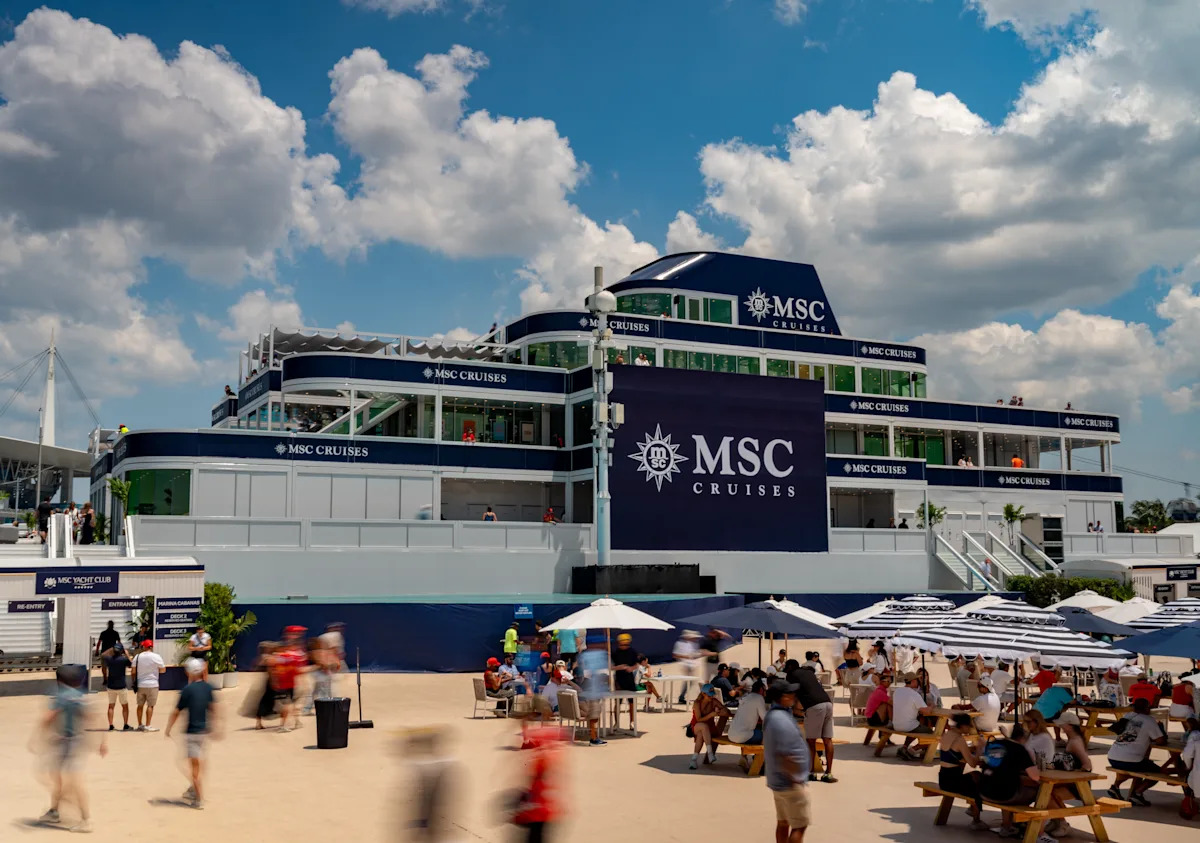
MSC Cruises brought its MSC Yacht Club concept trackside at the Miami International Autodrome, creating a multi-level, superyacht-inspired hospitality experience in the reimagined Marina. Positioned along Turns 5 through 9, the structure gave guests views of up to five turns and became one of the most visually talked-about builds of the weekend.
From the outside, it was impossible to miss. I watched fans slow down, point, and take photos before they even knew what was inside. It looked less like a temporary event build and more like a superyacht had somehow been parked in the middle of Hard Rock Stadium’s race campus.
That was the genius of it.
MSC did not just put its name on a hospitality suite. It took one of its most premium cruise products — MSC Yacht Club — and turned it into something fans could walk through, photograph, taste, smell, and remember.
Why MSC Yacht Club at F1 Miami felt different from every other VIP lounge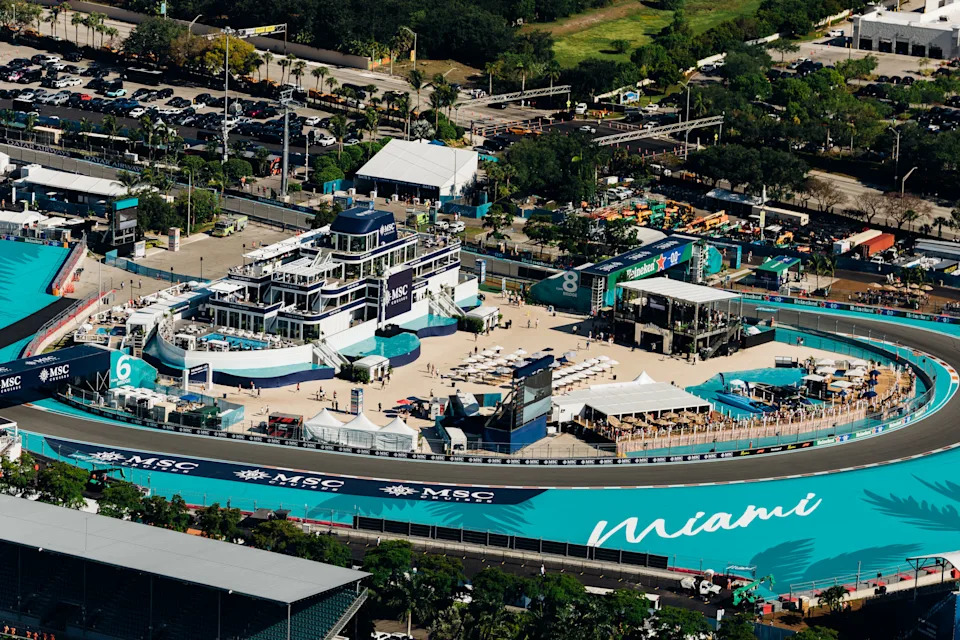
During the 2026 F1 Miami Grand Prix on Saturday, May 2, 2026 in Miami Gardens, Fla. (Photo by AJ Shorter/F1 Miami GP)
(AJ Shorter/F1 Miami GP)
The best brand activations do not interrupt the event. They become part of the reason people talk about it. MSC’s Yacht Club did that because it was built around a simple idea: bring the cruise line’s “ship-within-a-ship” experience to land for one of the most glamorous race weekends in the United States. Onboard MSC Cruises’ fleet, MSC Yacht Club is the brand’s exclusive-access product, with private facilities, 24-hour butler and concierge services, spacious suites, a dedicated restaurant, lounge, private sundeck, hot tubs, grill restaurant, and bar.
At F1 Miami, that same concept became a 50-foot-tall, 264-foot-long, 96-foot-wide hospitality structure with multiple viewing decks, open-air terraces, refined lounges, shaded seating areas, and pools.
Suzanne Salas, EVP, Marketing, eCommerce & Sales for MSC Cruises USA, put the strategy plainly: “Bringing the MSC Yacht Club concept from our ships to the track was an unrivaled opportunity to transform one of our most exclusive and celebrated onboard experiences into a bold, first-of-its-kind destination. From the striking super yacht design to the elevated hospitality and unmatched views of the action, this experience captured the innovation and premium service that define MSC Cruises and gave Formula 1® fans a taste of our signature mix of European style and American comfort.”
MSC translated a cruise experience into a race-weekend experience.
The five-level layout made the whole thing feel like a luxury itinerary
What surprised me most was that MSC Yacht Club did not feel like one big hospitality box. It had rhythm. It had progression. It had a beginning, middle, and payoff.
I moved through it almost like an itinerary. The lower levels introduced privacy and resort-style relaxation. The middle levels brought in dining, lounge energy, and social atmosphere. The top deck delivered the big “look where I am” view.
That layout mattered because each level communicated a different part of MSC Yacht Club’s brand promise.
The Marina Deck felt like the private escape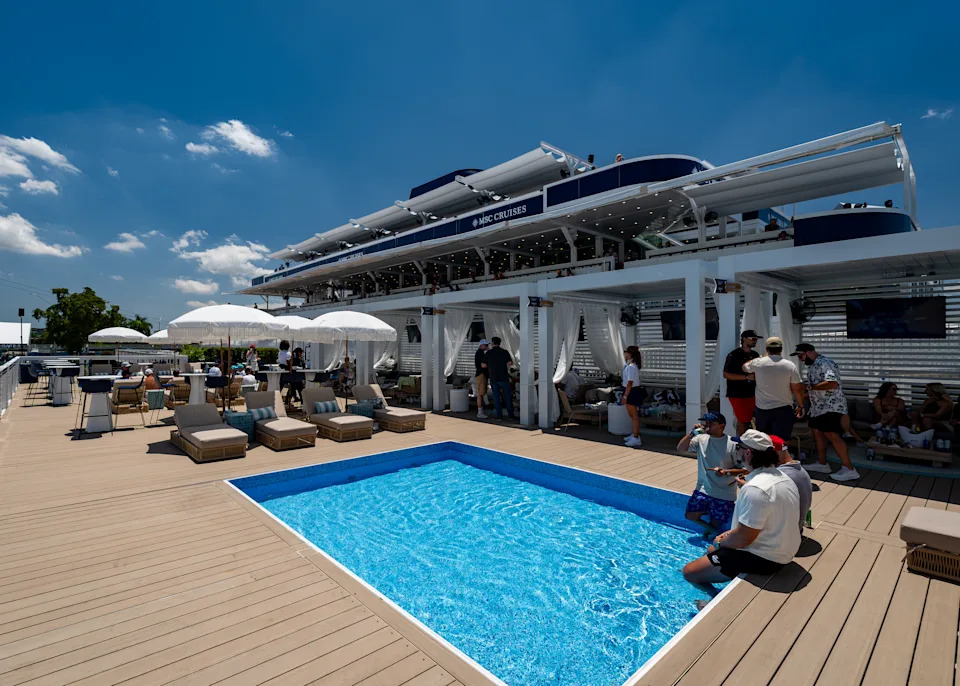
The cabanas were a more way to experience the action at F1 Miami Grand Prix
(MSC Cruises)
The Marina Deck was the most secluded-feeling part of the experience. Instead of pushing everyone into one crowded lounge, this level offered nine private cabanas designed for groups seeking space, comfort, and a more intimate race-weekend environment.
This is where the Yacht Club comparison started to click for me. The race was still right there. The cars were still screaming past. The heat, the crowds, and the sensory overload of F1 Miami were still part of the day. But the cabanas created a buffer — not distance from the action, but a more comfortable way to experience it.
That is what luxury hospitality is supposed to do. It does not remove you from the moment. It improves your relationship to it.
Deck 1 brought the open-air cruise deck feeling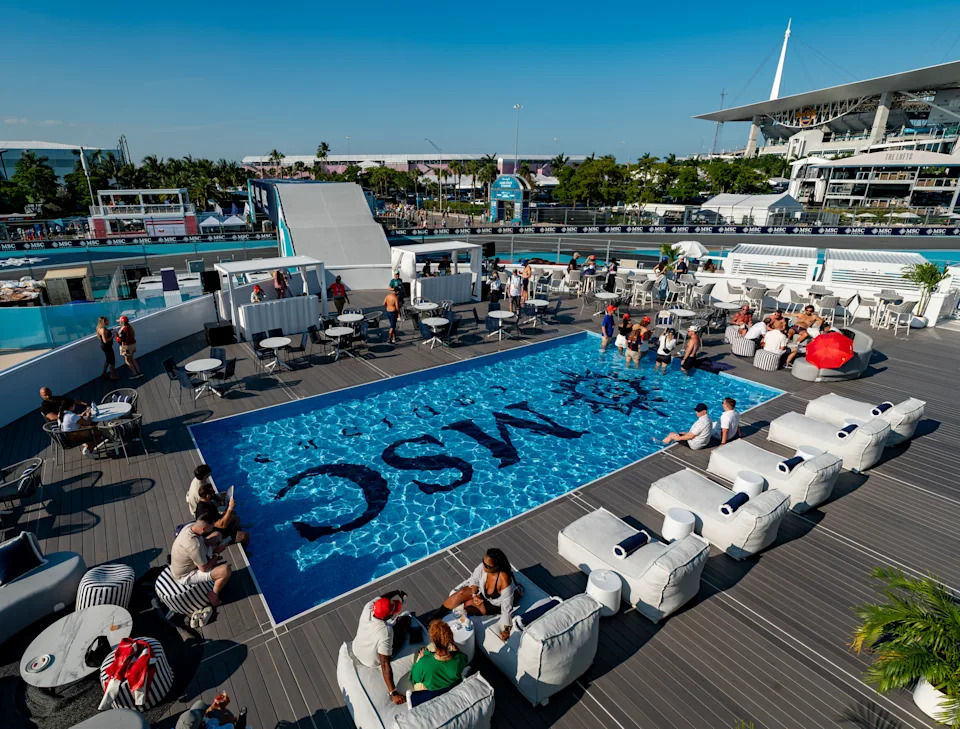
In person, the water feature changed the entire tone. At most race venues, you are thinking about heat, lines, crowds, and where you can get a better view. Here, the visual language felt closer to a luxury cruise deck: open air, water, seating, conversation, and track views in the background.
(MSC Cruises)
Deck 1 had a completely different mood. It felt more social, open, and resort-like — the kind of space where people were not just passing through but actually settling in.
MSC described Deck 1 as a vibrant open-air space with a water feature, comfortable lounge seating, and sweeping views of the action.
In person, the water feature changed the entire tone. At most race venues, you are thinking about heat, lines, crowds, and where you can get a better view. Here, the visual language felt closer to a luxury cruise deck: open air, water, seating, conversation, and track views in the background.
It was one of the clearest examples of MSC letting the product speak without over-explaining it.
Deck 2 was where the hospitality story got serious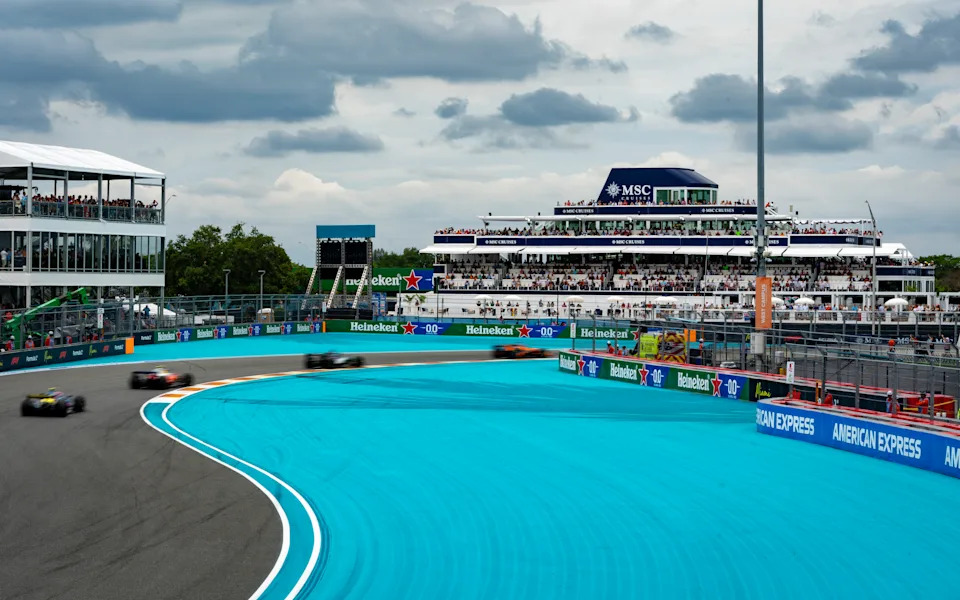
MSC Yacht Club Activation activation at the 2026 Formula 1 Miami Grand Prix
(MSC Cruises)
Deck 2 felt like the heart of the Yacht Club experience.
This was where the activation shifted from impressive structure to premium service environment. The level offered reserved covered seating, access to onboard-style dining throughout the weekend, all-day hospitality service, and a reservation-only Chef’s Table experience curated by Bagatelle.
That culinary piece mattered. At F1 Miami, nearly every brand wants to appear premium. But premium is not just a logo, a wristband, or a nice view. It is how long guests want to stay. It is whether they feel hosted. It is whether the food, service, and setting make the experience feel intentionally designed.
Deck 2 helped MSC make that case. It gave the activation a hospitality center, not just a viewing platform.
Deck 3 brought the Miami social energy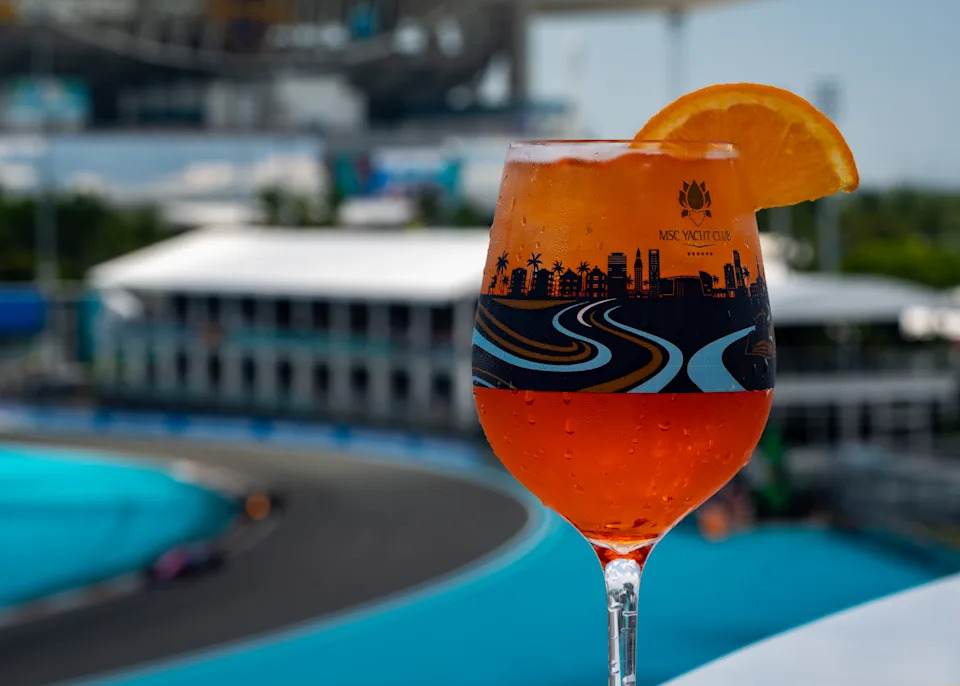
Deck 3 offered a full-service bar, custom-crafted cocktails for purchase, reserved covered seating, and elevated views of the track
(MSC Cruises)
Deck 3 was where the Yacht Club leaned fully into the lifestyle side of F1 Miami.
Home to the Jack Daniel’s Lounge, the deck offered a full-service bar, custom-crafted cocktails for purchase, reserved covered seating, and elevated views of the track. This level felt more animated and more social. It was the kind of place where people gathered between race moments, ordered drinks, took photos, checked the view, and treated the space as part of the weekend’s social circuit.
That is important because F1 Miami is not only about the race. It is about where people go, what they wear, who they see, what they post, and how the weekend feels in memory.
The Captain’s Deck was the payoff
The Captain’s Deck was the moment the whole activation came together. MSC described it as the ultimate vantage point, with 360-degree panoramic views across the track and surrounding campus.
After moving through cabanas, lounge areas, dining, and bars, the top deck delivered the emotional payoff: access.
From up there, F1 Miami felt bigger. You could see the track, the campus, the Marina, the crowds, and the scale of the weekend all at once. It was the kind of view that makes people pull out their phones before they even realize they are doing it. That is what made the layout so effective. The five levels were not just amenities stacked on top of one another. They were a physical version of the MSC Yacht Club promise: privacy, leisure, service, social energy, and access.
Why F1 Miami was the perfect place for MSC to make this move
Miami and MSC make sense together.
Miami is one of the world’s most important cruise hubs, and the Miami Grand Prix already has a strong visual connection to yachts, marina culture, luxury hospitality, and destination travel. MSC’s structure did not feel randomly placed into the event. It felt like it belonged there.
That local fit matters, but the global F1 platform matters even more.
Miami remains one of Formula 1’s most powerful U.S. stages. The 2025 Miami Grand Prix averaged 2.17 million viewers on ABC, making it the third-largest live F1 audience on U.S. television. That context matters for MSC, as it was one of the biggest American F1 audiences ever — exactly the kind of high-visibility lifestyle platform a travel brand wants to own.
For a cruise line trying to grow brand awareness in the U.S. while speaking to a global luxury audience, that kind of visibility is hard to replicate.
Formula 1 is no longer just a motorsport series. It is a travel platform, a fashion platform, a hospitality platform, and a content machine. In Miami especially, race weekend spills far beyond the circuit into hotels, restaurants, nightlife, wellness, celebrity events, and luxury brand activations. That is why MSC’s build worked so well. It did not feel like a brand trying to force itself into F1 culture. It felt like a travel brand understanding what F1 culture has become.
MSC’s Formula 1 strategy is bigger than one weekend
The Yacht Club activation was not a one-off stunt. It is part of MSC’s broader Formula 1 and sports sponsorship strategy. Formula 1 and MSC Group’s Cruise Division — including MSC Cruises and Explora Journeys — extended their Global Partnership through 2030. The renewed agreement continues rights including title races, trackside branding, and hospitality activations, with Explora Journeys also appearing across signage at select Grands Prix.
MSC confirms the brand’s growing role across the F1 calendar, including title sponsorship of the Formula 1 Grand Prix in Austin in 2025 and 2026, along with 2026 title sponsorships in Barcelona, Spain, and São Paulo, Brazil. That long-term commitment is important because sponsorship works best when it compounds. One splashy activation can generate buzz. A multi-year partnership can create association. MSC is clearly aiming for the second outcome: not just to appear at F1 events, but to become part of how fans think about premium race-weekend travel.
The travel trend behind the activation: people want experiences they can feel and share
MSC Yacht Club at F1 Miami also tapped into a larger luxury travel shift. Today’s high-end travelers are not only buying rooms, suites, cabins, or access. They are buying stories. They want experiences that feel personal, visual, exclusive, and worth sharing.
Virtuoso’s 2025 Luxe Report, built from insight across its global luxury travel advisor network, highlights continued demand for luxury and experiential travel, including active adventures, personalized journeys, and high-value experiences that feel distinctive. That trend showed up clearly at MSC Yacht Club.
Guests were not just looking for a seat. They were looking for a feeling: a private cabana, a shaded lounge, a poolside moment, a Chef’s Table, a cocktail deck, a panoramic view. Each of those details gave people something to remember and something to post.
That is the future of luxury hospitality partnerships. The activation has to work in person, on camera, in a headline, and in memory.
What hospitality brands can learn from MSC at F1 Miami
The first lesson is to translate the product, not just advertise it. MSC did not simply tell people Yacht Club is premium. It created a trackside environment where privacy, service, comfort, dining, and access were all tangible.
The second lesson is to design for movement. The five-level layout gave guests a reason to explore, which made the activation feel more memorable than a static lounge.
The third lesson is to make the local connection obvious. Miami’s cruise culture and F1’s marina aesthetic made MSC’s superyacht concept feel native to the event.
The fourth lesson is to build for both attendees and everyone watching online. I saw people taking photos of the structure from the outside before ever entering. That means the activation was already working as a brand asset before the hospitality experience even began.
Lastly, the fifth lesson is to think long term. MSC’s Formula 1 partnership through 2030 gives the brand time to turn one memorable weekend into a durable association with global motorsport, premium hospitality, and destination travel.
Final take: MSC made F1 Miami feel like a destination within the destination
After attending F1 Miami, I kept thinking about how rare it is for a brand activation to explain a product better than a brochure could. MSC Yacht Club did that for me. By the end, I did not feel like I had visited an MSC-branded structure at a race. I felt like I had briefly stepped into MSC’s version of luxury travel — only with Formula 1 engines replacing the sound of waves.
It was not just a hospitality space. It was a product preview, a travel experience, a content machine, and a lifestyle statement all at once.
For Formula 1, MSC added another layer of Miami glamour. For MSC Cruises, it turned Yacht Club into something fans could see, touch, taste, smell, photograph, and remember.
And for everyone watching the future of sports partnerships, it offered a clear reminder: the best brand activations do not just show up at major events.
They become one of the reasons people talk about them.