
Before you ever talk about maps, you have to talk about people.
What Tallahassee has done to Congressional District 20 is a conscious decision about whose voices matter — and whose can be safely ignored.
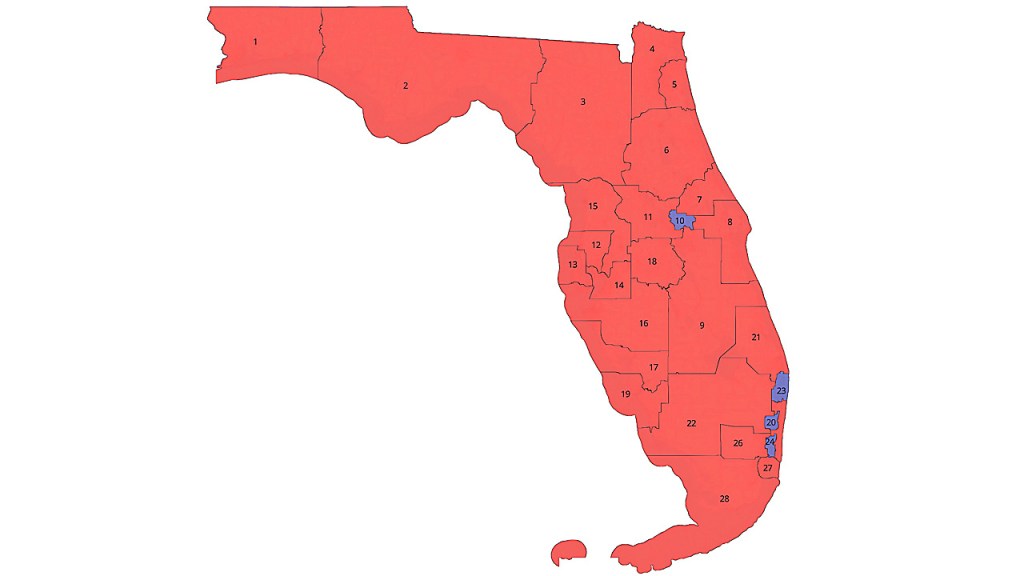
During this illegal round of redistricting, CD-20 was treated less like a community and more like a container. A place to pack as many Democratic voters as possible so that two surrounding districts can be made red.
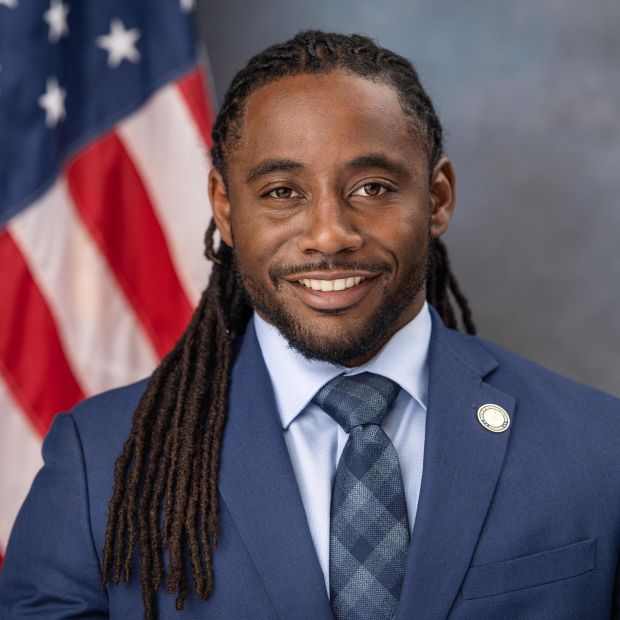 State Rep. Daryl Campbell represents House District 99. (courtesy, Daryl Campbell)
And the people who live here — my neighbors — feel it, whether they follow redistricting or not. They feel it when outcomes are predetermined. When elections don’t feel like choices. When their communities are carved apart to serve political convenience somewhere else.
This isn’t the first time CD-20 has been on the receiving end of this kind of thinking.
We see it right now. The seat is open, but no election has been called, not because the people didn’t care, but because the governor refuses to act. Candidates have stepped forward. The Broward Supervisor of Elections stands ready. And still — silence. No special election. No urgency. Just a district told, once again, to wait.
We saw this movie before, in 2021, after the death of Congressman Alcee Hastings. It took a lawsuit to force a special election — nine months of delay for a community that deserved representation from day one. Nine months where the people of CD-20 were left without a voice in Washington.
And the consequences didn’t stop there. That delay rippled downward. State legislative seats whose incumbents resigned to run for that seat also sat unfilled. My own election was pushed back. And after I won, Tallahassee Republicans tried to delay my seating even further — leaving people in this district without full representation at two levels of government.
So when we talk about these new maps, understand this: They are not happening in isolation. They are part of a pattern. A willingness to treat the people of CD-20 as expendable so long as it serves a broader political goal.
Now we’re told this is all justified.
But the same voices making those arguments are also claiming that the Fair Districts amendments — the very protections voters overwhelmingly approved — are themselves unconstitutional. That the rules don’t apply. Jason Poreda, who drew the congressional map for the governor, admitted to using partisan data while drawing districts, including CD-20, which is illegal! Ron DeSantis’ general counsel claimed that race can be ignored, even though using this data is a constitutional requirement.
At some point, you have to ask a simpler question: What should be done?
CD-20 is not just any district. It is, and remains, a minority access district — one of the few left. In its new congressional map, Tallahassee dismantled a Hispanic-majority district. The threat we face is existential. Will communities that have historically fought to be heard still have a meaningful voice?
District maps are not just lines. They are moral decisions. They tell people whether they count.
Right now, the message being sent to CD-20 voters is unmistakable: Your role is to be counted, but not to count.
That cannot stand.
This regular session, I proposed a different path. An independent redistricting commission — transparent, balanced and insulated from the very political pressures that have corrupted this process. A system where Floridians could submit maps, where hearings would be held in the open, where the power to shape representation would no longer sit exclusively with those who benefit from manipulating it.
Because if the Legislature has shown anything, it’s that it cannot be trusted to police itself.
And that’s the heart of this issue.
You don’t restore trust by asking people to accept outcomes they had no role in shaping. You restore it by giving them ownership of the process.
The people of CD-20 have been patient. They have endured delay after delay, decision after decision made without them in mind. But patience should not be mistaken for consent.
The time for these games is over.
At the end of the day, this is not about one district. It’s about whether we still recognize the basic promise that makes a democracy worth having at all.
State Rep. Daryl Campbell represents House District 99, which includes parts of Fort Lauderdale, Lauderdale Lakes, Lauderhill, Plantation and Wilton Manors.