
Fifty-five sloths died in unsuitable conditions at the failed and never-opened Sloth World attraction in Orlando.The loss and what appears to be neglect of the exotic animals pulled from jungles has sparked outrage in the community. But loopholes and somewhat lax exotic animal laws in Florida make it possible for something similar to happen again. How did this happen?Dr. Rebecca Cliffe, founder of the Sloth Conservation Foundation, said the animals were kept in conditions they could not survive.She explained that sloths are biologically adapted to warm environments and diets consisting of greens, but the conditions they faced were far from suitable.Cliffe said that in 2024, 21 sloths were placed in what she called an unpermitted warehouse with no electricity. Another 10 sloths were brought in and died as well.Cliffe said the Florida Fish and Wildlife Conservation Commission became aware of the sloth deaths in August 2025 but allowed the facility to continue importing sloths until March 2026.During that time, another 21 sloths died, bringing the total to 55. How are the surviving sloths doing?Thirteen sloths were surrendered to the Central Florida Zoo & Botanical Gardens, where veterinarians said the animals were showing signs of improvement.Since then, three of those sloths have died.Zoo officials said they are continuing to closely monitor the animals through bloodwork and supportive care.Necropsy report findingsWESH 2 previously reported the deaths of 31 sloths between December 2024 and February 2025.However, a newly released necropsy report revealed 21 additional sloth deaths:Rowan – August 2025Leif – August 2025Poncho – September 2025Side – September 2025Belt – September 2025Slackoth – September 2025Kiwi – September 2025Pumpkin – October 2025Gator – December 2025Siesta – December 2025Picasso – December 2025Banksy – December 2025Tugbaot – January 2026Fin- January 2026Nell – February 2026Chili – March 2026Sonic – March 2026Snuggles – March 2026Jazz – April 2026Diablo – timing of death unclearUnnamed Sloth – timing of death unclearThe Central Florida Zoo & Botanical Gardens announced the death of three more sloths in recent days. Bandit – April 29Habanero – May 2Dumpling – May 5What now?Experts and officials are now demanding accountability and changes. Cliffe questioned why FWC claimed there was no evidence of violations.”Under Florida law, it is a criminal offense to subject animals to unnecessary suffering. Placing highly sensitive animals into a warehouse with no electricity, no heat, and no running water resulted in predictable, visible, and highly preventable . I have a hard time understanding how that does constitute a violation,” Cliffe said.State Attorney Monique Worrell issued a statement, saying:”The loss of these vulnerable animals is deeply troubling, and our office mourns alongside the community. We take seriously our responsibility to pursue justice on behalf of those who cannot speak for themselves, and we will do everything within our power to ensure accountability in this matter.The Assistant State Attorney assigned to this matter immediately began seeking answers as soon as the reporting regarding the death of the sloths began. He reached out to Senior Statewide Prosecutor Lauryn Day based on their prior working relationship in animal cruelty cases during her time with this office to seek her perspective on the matter. This type of inter-agency collaboration is not uncommon, particularly in matters requiring specialized knowledge.To be clear, neither the assigned ASA nor Ms. Day is investigating this matter. At this stage, they are in preliminary discussions about which law enforcement agency would be best suited to conduct an investigation, should one move forward. We do not have any information regarding an investigation that is currently underway.The State Attorney’s Office serves a distinct and deliberate role in the criminal legal process: we do not investigate cases — we receive investigations from law enforcement, evaluate the evidence, and make prosecutorial decisions grounded in law and fact. That distinction matters, and it guides everything we do.When we have more information to share, we will do so through the appropriate channels.”Cliffe said her organization is calling for a ban on the importation of wild sloths into the United States for commercial purposes and private ownership. They are also advocating for a review of how sloths are classified and full transparency when animals die in such facilities.During a news conference, Rep. Anna Eskamani criticized the people behind the attraction, calling them unqualified.“These sloths did not grow up in captivity. They were stolen from the wild and brought for human entertainment to Florida. That alone should be prohibited,” Eskamani said.Necropsy reports obtained by WESH 2 show the sloths suffered from a long list of serious health issues.The reports also reveal that the animals were fed the wrong kind of food, including brown rice instead of fresh greens.The CEO of the Central Florida Zoo said, “That kind of diet is not good for sloths.”The Sloth Conservation Foundation, in a second news conference on Wednesday, called for a ban on importing sloths into the U.S. for personal or commercial use.
ORLANDO, Fla. —
Fifty-five sloths died in unsuitable conditions at the failed and never-opened Sloth World attraction in Orlando.
The loss and what appears to be neglect of the exotic animals pulled from jungles has sparked outrage in the community. But loopholes and somewhat lax exotic animal laws in Florida make it possible for something similar to happen again.
How did this happen?
Dr. Rebecca Cliffe, founder of the Sloth Conservation Foundation, said the animals were kept in conditions they could not survive.
She explained that sloths are biologically adapted to warm environments and diets consisting of greens, but the conditions they faced were far from suitable.
Cliffe said that in 2024, 21 sloths were placed in what she called an unpermitted warehouse with no electricity. Another 10 sloths were brought in and died as well.
Cliffe said the Florida Fish and Wildlife Conservation Commission became aware of the sloth deaths in August 2025 but allowed the facility to continue importing sloths until March 2026.
During that time, another 21 sloths died, bringing the total to 55.
How are the surviving sloths doing?
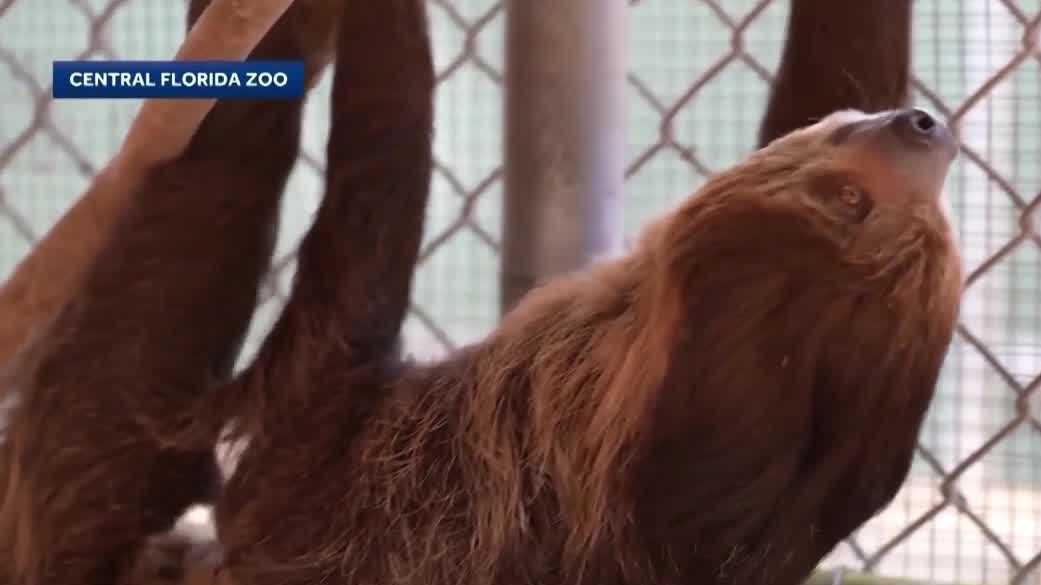
Thirteen sloths were surrendered to the Central Florida Zoo & Botanical Gardens, where veterinarians said the animals were showing signs of improvement.
Since then, three of those sloths have died.
Zoo officials said they are continuing to closely monitor the animals through bloodwork and supportive care.
Necropsy report findings
WESH 2 previously reported the deaths of 31 sloths between December 2024 and February 2025.
However, a newly released necropsy report revealed 21 additional sloth deaths:
Rowan – August 2025Leif – August 2025Poncho – September 2025Side – September 2025Belt – September 2025Slackoth – September 2025Kiwi – September 2025Pumpkin – October 2025Gator – December 2025Siesta – December 2025Picasso – December 2025Banksy – December 2025Tugbaot – January 2026Fin- January 2026Nell – February 2026Chili – March 2026Sonic – March 2026Snuggles – March 2026Jazz – April 2026Diablo – timing of death unclearUnnamed Sloth – timing of death unclear
The Central Florida Zoo & Botanical Gardens announced the death of three more sloths in recent days.
Bandit – April 29Habanero – May 2Dumpling – May 5
What now?
Experts and officials are now demanding accountability and changes.
Cliffe questioned why FWC claimed there was no evidence of violations.
“Under Florida law, it is a criminal offense to subject animals to unnecessary suffering. Placing highly sensitive animals into a warehouse with no electricity, no heat, and no running water resulted in predictable, visible, and highly preventable [deaths]. I have a hard time understanding how that does constitute a violation,” Cliffe said.
State Attorney Monique Worrell issued a statement, saying:
“The loss of these vulnerable animals is deeply troubling, and our office mourns alongside the community. We take seriously our responsibility to pursue justice on behalf of those who cannot speak for themselves, and we will do everything within our power to ensure accountability in this matter.
The Assistant State Attorney assigned to this matter immediately began seeking answers as soon as the reporting regarding the death of the sloths began. He reached out to Senior Statewide Prosecutor Lauryn Day based on their prior working relationship in animal cruelty cases during her time with this office to seek her perspective on the matter. This type of inter-agency collaboration is not uncommon, particularly in matters requiring specialized knowledge.
To be clear, neither the assigned ASA nor Ms. Day is investigating this matter. At this stage, they are in preliminary discussions about which law enforcement agency would be best suited to conduct an investigation, should one move forward. We do not have any information regarding an investigation that is currently underway.
The State Attorney’s Office serves a distinct and deliberate role in the criminal legal process: we do not investigate cases — we receive investigations from law enforcement, evaluate the evidence, and make prosecutorial decisions grounded in law and fact. That distinction matters, and it guides everything we do.
When we have more information to share, we will do so through the appropriate channels.”
Cliffe said her organization is calling for a ban on the importation of wild sloths into the United States for commercial purposes and private ownership. They are also advocating for a review of how sloths are classified and full transparency when animals die in such facilities.
During a news conference, Rep. Anna Eskamani criticized the people behind the attraction, calling them unqualified.
“These sloths did not grow up in captivity. They were stolen from the wild and brought for human entertainment to Florida. That alone should be prohibited,” Eskamani said.
Necropsy reports obtained by WESH 2 show the sloths suffered from a long list of serious health issues.
The reports also reveal that the animals were fed the wrong kind of food, including brown rice instead of fresh greens.
The CEO of the Central Florida Zoo said, “That kind of diet is not good for sloths.”
The Sloth Conservation Foundation, in a second news conference on Wednesday, called for a ban on importing sloths into the U.S. for personal or commercial use.