
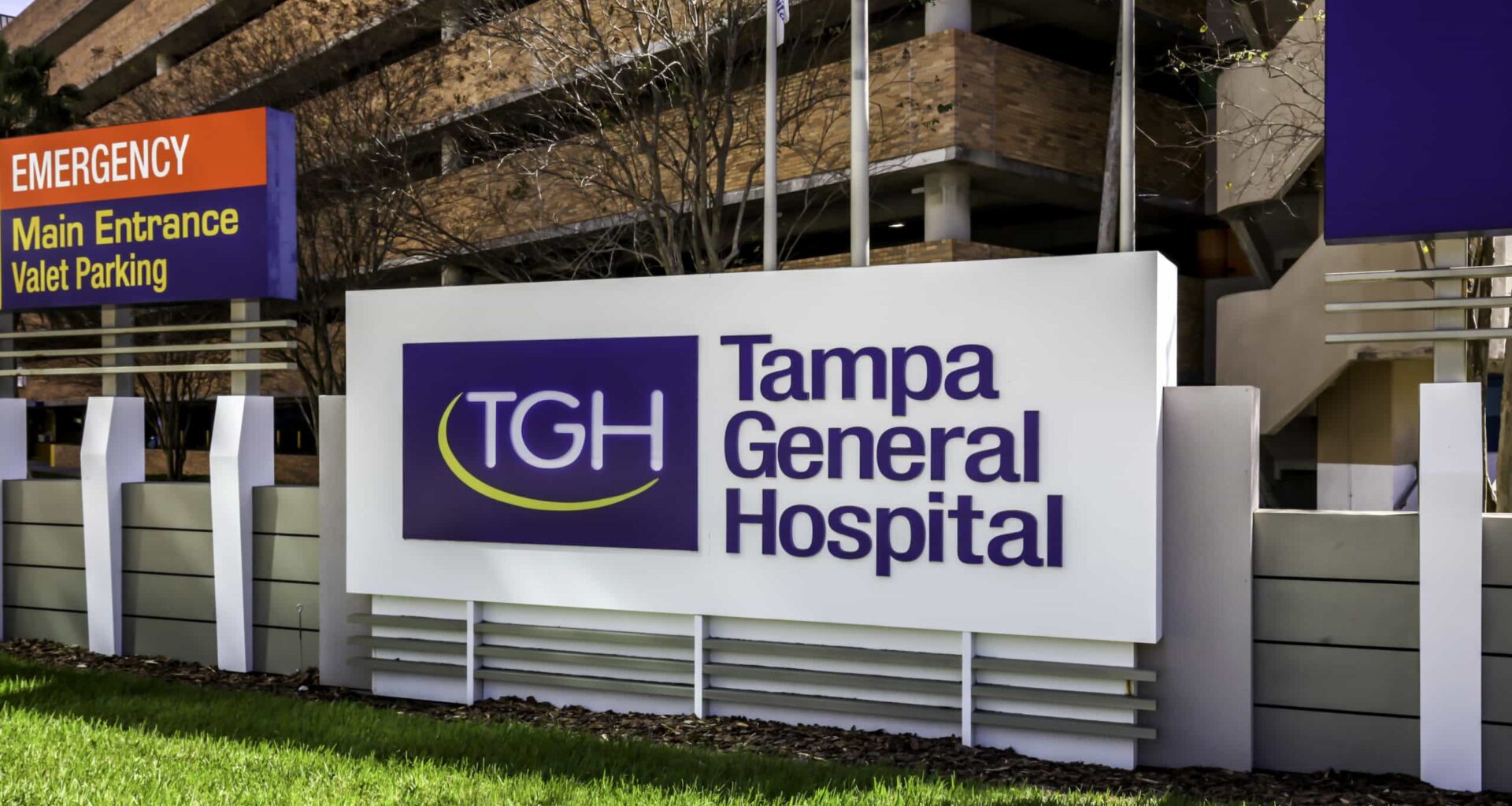
Tampa General Hospital (TGH) has performed more than 15,000 organ transplants since its program launched in 1974 — a milestone reached by only a handful of medical centers worldwide.
The TGH Transplant Institute closed 2025 with 895 transplants, narrowly besting its own 2024 record of 889. That 2024 number was the highest of any hospital in the country by volume. The 2025 total earned a top five national finish — TGH’s third consecutive year in that bracket.
“Tampa General is not just a premier destination for patients seeking life-saving transplants, but an academic-based, research-driven and nationally ranked program that has proven to deliver the best possible patient outcomes,” said John Couris, President and CEO of Florida Health Sciences Center at TGH.
“Reaching 15,000 transplants is an achievement shared by only a small number of institutions in the world, and it’s a testament to our team’s commitment to exceptionalism.”
Volume matters in this field. Surgeons who perform more transplants tend to be better at performing transplants, and the data on that relationship is consistent. TGH outperforms national averages on one-year survival rates for lung, heart, liver and kidney transplants, according to the Scientific Registry of Transplant Recipients.

Last year’s 895 procedures broke down as 519 kidney transplants, 284 liver, 42 heart, 42 lung, and eight kidney-pancreas. The program also completed 23 dual-organ transplants and 135 living-donor procedures, including 123 living-donor kidneys and 12 living-donor livers.
A growing share of those procedures rely on perfusion and advanced preservation technology, which keeps organs functioning outside the body during transport and lets surgeons accept organs from farther away or in higher-risk condition. TGH used the technology on 72% of transplanted organs in 2025 and was the first hospital in Florida to deploy the Organ Care System for hearts, lungs and livers. The geographic reach matters: TGH procurement teams logged 101,609 miles last year tracking organs from coast to coast.
“This milestone is ultimately about patients,” said Kiran Dhanireddy, vice president and chief of the TGH Transplant Institute. “Each transplant represents a life extended, a family given more time and a team working with extraordinary purpose.”
Dhanireddy credited the result to surgeons, physicians, nurses, coordinators, advanced practice providers and support teams across the institute.
The 15,000-transplant mark places TGH among an exclusive set of programs — domestically and globally — to clear that threshold. The program has expanded steadily since 1974 and now ranks consistently among the highest-volume centers in the country.
