
Health clubs are places where people go to get healthy. But some popular features can do just the opposite, if they’re not maintained under state standards set by the Florida Department of Health (FDOH). For your safety, state regulations require pools and spas to be safe, and the water quality sanitary. Some fitness center members WESH 2 talked with say their club’s pools and spas are great. One woman we talked with who swims at a Seminole County fitness club told us, “The quality is perfect.” Another who swims daily at her club in Orange County said, “And they always keep it clean.” Others we talked with say they stay out of the water.One man who is a member of a health center told us, “As many people that get in this pool, you don’t know if it’s clean.” Still another man at a different club said, “A lot of places don’t keep Jacuzzis as clean.” Breeding germs WESH 2 Investigates put the quality of water at some central Florida pools and spas at fitness centers to the test. The Centers for Disease Control (CDC) and local medical experts warn that these public pools and spas can breed germs that can make you extremely ill. “Public pools can have a lot of germs, absolutely. And here’s the hard part, is that you can’t tell,” said WESH 2 medical expert Dr. Todd Husty, who also serves as medical director for Seminole County Fire and Emergency Services. He said unsanitary pools, with low or no disinfectants, can make you sick from parasites like Cryptosporidium and Giardia, and bacteria like E. coli and Shigella, when chemicals are not strong enough to guard against fecal incidents or fecal matter washing off the body. Husty added, “These get into your gut and sort of develop and grow and multiply. It might be the next day. It might be two days. It might be three days. Nausea, vomiting and diarrhea.”Chlorine levels Florida requires, under Administrative Code 64E-9, public pool chlorine levels to be between one and 10 parts per million (ppm). Chlorine in the spa should be between two and five ppm. If using Bromine as a sanitizer, the pool level should be between one and a half and six ppm. For spas, it should be between three and six ppm.Putting water to the test WESH 2 Investigates put the water to the test. Several local pool stores tested samples from a randomly-selected fitness club, collected on four different days over the span of a month. On March 2, the spa was fine. But the pool failed, having no chlorine at all. On March 19 and 26, the chlorine levels in the pool and spa were low, but acceptable, under state standards. Jason Lloyd of Pinch A Penny, who conducted the test, told us, “Swim-ability wise, the pool is fine.” On March 30, the spa was low, but, again, the pool was at zero chlorine. We asked Lloyd if he would swim in that pool in those conditions. He replied, “No. No. You wouldn’t want to swim in a pool with zero sanitation especially a pool that’s a public pool.” We asked if Lloyd would close that pool temporarily until the chemicals were brought to standard. He replied, “If it’s a commercial pool, yeah.” The Florida Department of Health inspects public pools and spas twice a year, and immediately if someone complains. Detailed reports are public record from the Florida Department of Health in each county and available upon request. The department also posts abbreviated results of public swimming pool inspections online at Most fitness club members we talked with said they did not know they could easily check online. One woman told us, “No, I didn’t know.” We asked one man who said he sometimes uses the pool at his fitness center, “Are you going to look up your club?” He replied, “Yes. Now I will.”Online inspection results WESH 2 Investigates reviewed online inspection results for every fitness center in eight Central Florida counties. That included 82 pools and spas. During the past year, from May 2025 to April 2026, there were 43 temporary closures. FDOH also requires twice-daily water testing to determine disinfectant and pH levels, and the keeping of logs. Jasen Kunz, a waterborne disease expert with the CDC, said you should ask fitness club management to see the test results if the water doesn’t look or feel right, adding, “I may have a concern about that, so yes, I think you could ask that front desk staff or the operator to show you those logs.” If you have a concern about the water quality that you believe isn’t being addressed by the club, experts recommend that you contact your local health department to request an inspection.WESH 2 Investigates The WESH 2 Investigates team is comprised of Greg Fox and Justin Schecker. Greg Fox has worked in broadcast journalism for nearly 44 years, 39 of which have been at WESH 2 News in Orlando. He has covered politics the entire time and investigative news for 25 of those years. Contact him at gfox@wesh.comJustin Schecker joined the WESH 2 Investigates team in September 2024. He’s spent the past six years of his broadcast journalism career reporting in Florida, with a focus on politics, criminal justice and education. Contact him at justin.schecker@hearst.com
ORLANDO, Fla. —
Health clubs are places where people go to get healthy. But some popular features can do just the opposite, if they’re not maintained under state standards set by the Florida Department of Health (FDOH).
For your safety, state regulations require pools and spas to be safe, and the water quality sanitary.
Some fitness center members WESH 2 talked with say their club’s pools and spas are great.
One woman we talked with who swims at a Seminole County fitness club told us, “The quality is perfect.”
Another who swims daily at her club in Orange County said, “And they always keep it clean.”
Others we talked with say they stay out of the water.
One man who is a member of a health center told us, “As many people that get in this pool, you don’t know if it’s clean.”
Still another man at a different club said, “A lot of places don’t keep Jacuzzis as clean.”
Breeding germs
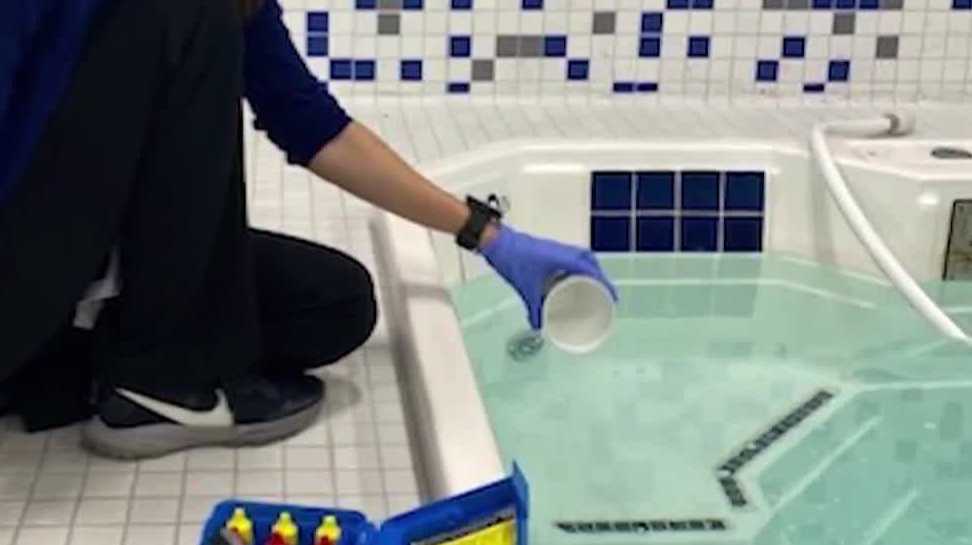
WESH 2 Investigates put the quality of water at some central Florida pools and spas at fitness centers to the test.
The Centers for Disease Control (CDC) and local medical experts warn that these public pools and spas can breed germs that can make you extremely ill.
“Public pools can have a lot of germs, absolutely. And here’s the hard part, is that you can’t tell,” said WESH 2 medical expert Dr. Todd Husty, who also serves as medical director for Seminole County Fire and Emergency Services.
He said unsanitary pools, with low or no disinfectants, can make you sick from parasites like Cryptosporidium and Giardia, and bacteria like E. coli and Shigella, when chemicals are not strong enough to guard against fecal incidents or fecal matter washing off the body.
Husty added, “These get into your gut and sort of develop and grow and multiply. It might be the next day. It might be two days. It might be three days. Nausea, vomiting and diarrhea.”
Chlorine levels
Florida requires, under Administrative Code 64E-9, public pool chlorine levels to be between one and 10 parts per million (ppm).
Chlorine in the spa should be between two and five ppm. If using Bromine as a sanitizer, the pool level should be between one and a half and six ppm. For spas, it should be between three and six ppm.
Putting water to the test
WESH 2 Investigates put the water to the test. Several local pool stores tested samples from a randomly-selected fitness club, collected on four different days over the span of a month.
On March 2, the spa was fine. But the pool failed, having no chlorine at all.
On March 19 and 26, the chlorine levels in the pool and spa were low, but acceptable, under state standards.
Jason Lloyd of Pinch A Penny, who conducted the test, told us, “Swim-ability wise, the pool is fine.”
On March 30, the spa was low, but, again, the pool was at zero chlorine.
We asked Lloyd if he would swim in that pool in those conditions.
He replied, “No. No. You wouldn’t want to swim in a pool with zero sanitation especially a pool that’s a public pool.”
We asked if Lloyd would close that pool temporarily until the chemicals were brought to standard.
He replied, “If it’s a commercial pool, yeah.”
The Florida Department of Health inspects public pools and spas twice a year, and immediately if someone complains. Detailed reports are public record from the Florida Department of Health in each county and available upon request. The department also posts abbreviated results of public swimming pool inspections online at
Most fitness club members we talked with said they did not know they could easily check online.
One woman told us, “No, I didn’t know.”
We asked one man who said he sometimes uses the pool at his fitness center, “Are you going to look up your club?”
He replied, “Yes. Now I will.”
Online inspection results
WESH 2 Investigates reviewed online inspection results for every fitness center in eight Central Florida counties. That included 82 pools and spas. During the past year, from May 2025 to April 2026, there were 43 temporary closures.
FDOH also requires twice-daily water testing to determine disinfectant and pH levels, and the keeping of logs.
Jasen Kunz, a waterborne disease expert with the CDC, said you should ask fitness club management to see the test results if the water doesn’t look or feel right, adding, “I may have a concern about that, so yes, I think you could ask that front desk staff or the operator to show you those logs.”
If you have a concern about the water quality that you believe isn’t being addressed by the club, experts recommend that you contact your local health department to request an inspection.
WESH 2 Investigates
The WESH 2 Investigates team is comprised of Greg Fox and Justin Schecker.
Greg Fox has worked in broadcast journalism for nearly 44 years, 39 of which have been at WESH 2 News in Orlando. He has covered politics the entire time and investigative news for 25 of those years. Contact him at gfox@wesh.com
Justin Schecker joined the WESH 2 Investigates team in September 2024. He’s spent the past six years of his broadcast journalism career reporting in Florida, with a focus on politics, criminal justice and education. Contact him at justin.schecker@hearst.com