
Work is now underway to rebuild the Naples Pier more than three years after Hurricane Ian turned the old one into twisted lumber. Before the old pier was torn down, a team with Sea & Shoreline Aquatic Restoration managed to rescue some of the coral that was on the pilings. It has now found a new home at Mote Marine’s Internal Coral Gene Bank in Sarasota County. “This one’s the Hidden Cup Coral, the Phyllangia americana,” Nick McMahon said, describing the coral collected from the old pier. McMahon is the operations manager at the gene bank. He said the coral from Naples is among 30 different species and 10,000 unique genotypes housed at their site. “Up to 60 species of stony corals live in Florida,” he said. “We want to have all of them.” Corals are critical to ocean life. Their reefs support 25% of all marine species despite taking up only 1% of the ocean floor. “These are super small in the big picture, but what they account for and what they provide is worth so much more than that little bit of space,” McMahon said. That is why what is happening to coral is such a concern. Florida’s coral reef, which stretches from the Dry Tortugas through the Keys and north to Martin County, is in dire shape. Pollution, rising water temperatures and disease have all decimated the reef’s coral cover. “At this point in history, we’re at about 2% or less on all of those reef sites,” McMahon said. The gene bank in Sarasota County is known as the “Noah’s Ark” for corals. It has some that do not exist in the wild anymore. And not just that — it has spawning systems and has reproduced three different coral species. Some go to Mote Marine’s restoration team to eventually get put back on the reef. “The endgame is to get the reef back on its feet so that we don’t have to have our hands in its business anymore,” McMahon said. “I think it’s going to take a long time and a lot of effort, but I do think it’s possible.” It’s not just coral from the old pier that has found new life. A spokesperson for the city of Naples said 59 pilings were recently deployed at a reef site 10 miles offshore in the Gulf. They will help form a new underwater ecosystem. To follow the progress on the Naples Pier rebuild project, click here. DOWNLOAD the free Gulf Coast News app for your latest news and alerts on breaking news, weather, sports, entertainment, and more on your phone or tablet. And check out the Very Local Gulf Coast app to stream news, entertainment and original programming on your TV.
SARASOTA, Fla. —
Work is now underway to rebuild the Naples Pier more than three years after Hurricane Ian turned the old one into twisted lumber.
Before the old pier was torn down, a team with Sea & Shoreline Aquatic Restoration managed to rescue some of the coral that was on the pilings.
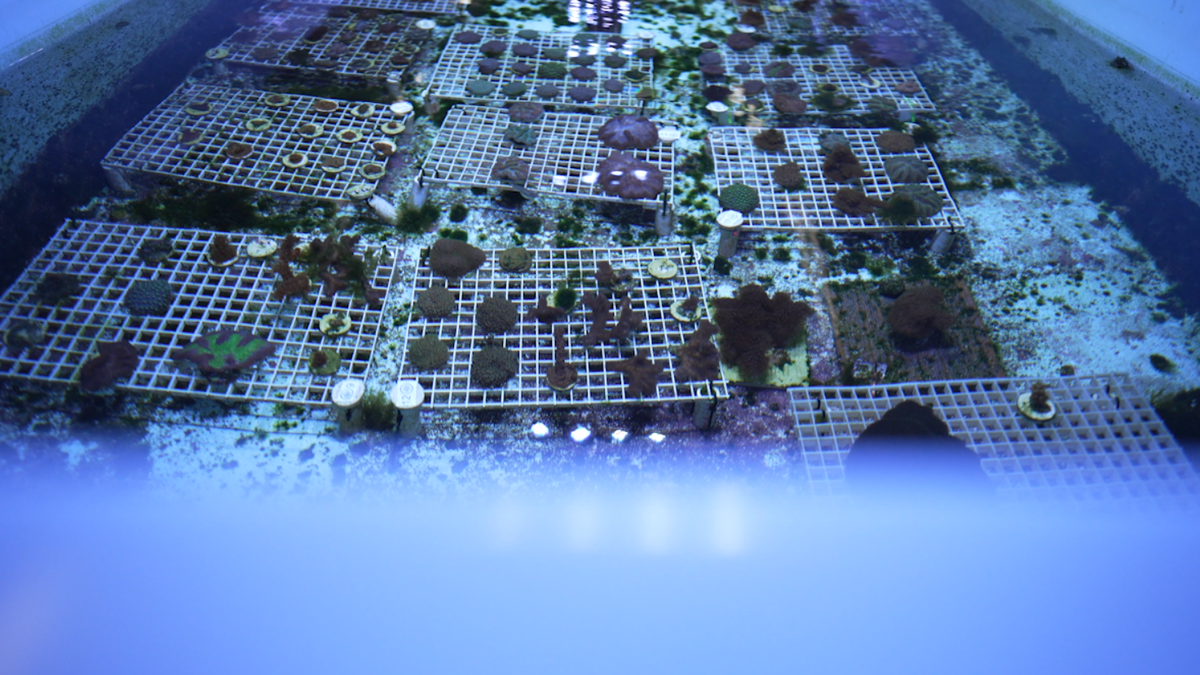
It has now found a new home at Mote Marine’s Internal Coral Gene Bank in Sarasota County.
“This one’s the Hidden Cup Coral, the Phyllangia americana,” Nick McMahon said, describing the coral collected from the old pier.
McMahon is the operations manager at the gene bank.
He said the coral from Naples is among 30 different species and 10,000 unique genotypes housed at their site.
“Up to 60 species of stony corals live in Florida,” he said. “We want to have all of them.”
Corals are critical to ocean life. Their reefs support 25% of all marine species despite taking up only 1% of the ocean floor.
“These are super small in the big picture, but what they account for and what they provide is worth so much more than that little bit of space,” McMahon said.
That is why what is happening to coral is such a concern.
Florida’s coral reef, which stretches from the Dry Tortugas through the Keys and north to Martin County, is in dire shape.
Pollution, rising water temperatures and disease have all decimated the reef’s coral cover.
“At this point in history, we’re at about 2% or less on all of those reef sites,” McMahon said.
The gene bank in Sarasota County is known as the “Noah’s Ark” for corals. It has some that do not exist in the wild anymore.
And not just that — it has spawning systems and has reproduced three different coral species. Some go to Mote Marine’s restoration team to eventually get put back on the reef.
“The endgame is to get the reef back on its feet so that we don’t have to have our hands in its business anymore,” McMahon said. “I think it’s going to take a long time and a lot of effort, but I do think it’s possible.”
It’s not just coral from the old pier that has found new life. A spokesperson for the city of Naples said 59 pilings were recently deployed at a reef site 10 miles offshore in the Gulf. They will help form a new underwater ecosystem.
To follow the progress on the Naples Pier rebuild project, click here.
DOWNLOAD the free Gulf Coast News app for your latest news and alerts on breaking news, weather, sports, entertainment, and more on your phone or tablet. And check out the Very Local Gulf Coast app to stream news, entertainment and original programming on your TV.