
A group of local college students recently did something no other tech company in South Florida could figure out.
The students helped bring two broken robots back to life. And they used new technology to find a solution.
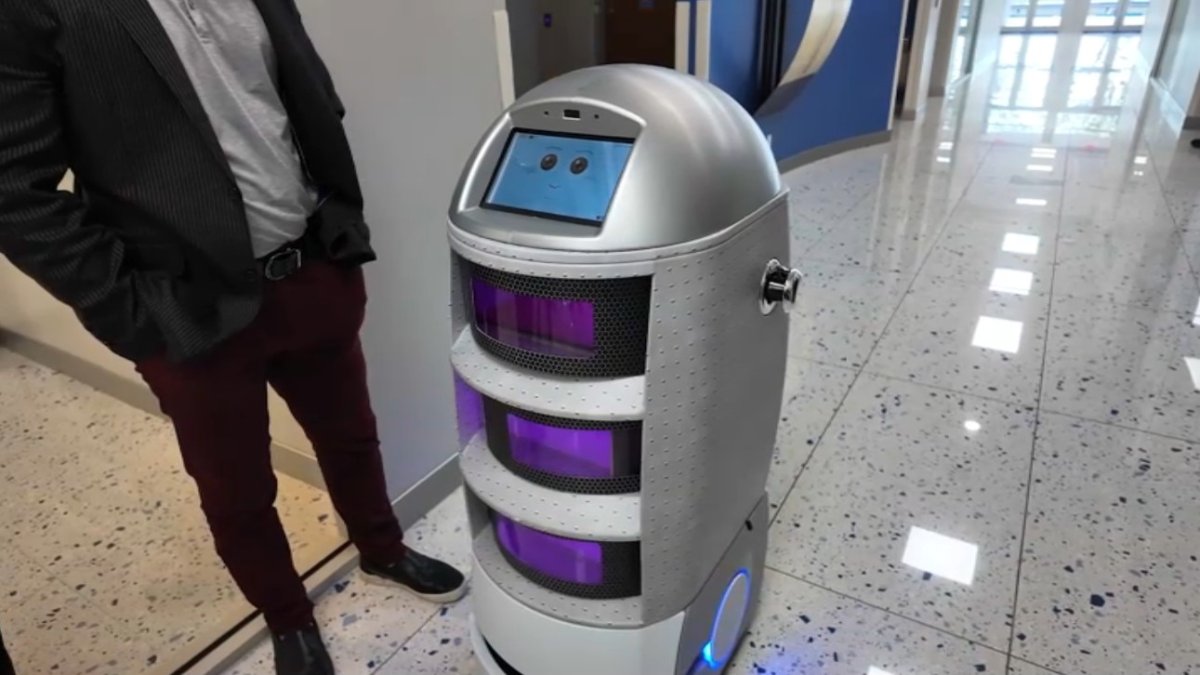
At Yotel in downtown Miami, there were two robots, Luna and Pepper. Their job, according to the General Manager of Yotel, Joseph LaFleur, was to help customers.
“Things like toiletries, bath and dairy products, up to a guest room, for example,” he said. “They can act as a concierge, so they can offer tips as to where to go locally.”
But after a year of operation, the very niche technology stopped working.
“We started searching for assistance, couldn’t find anything. We hit roadblocks,” LaFleur said.
No company in Miami could find a solution to bringing this emerging technology of robots back to life, but inside a classroom at Miami Dade College’s West Campus is where Yotel found help.
A band of five Miami Dade College students was put to the task.
“We were all taken aback because none of us had worked on a robot before,” Patricia Hurtado said.
And yet, the instructor, Philip Colodetti, knew that by using each student’s strength, they could maybe find a solution.
Hurtado had a background in hospitality. Noel Rodriguez and Samuel Suarez had a hardware and software background. Daniel Pena Calleja worked on language. And Liennis Montiel worked on mapping.
The first step for these students was to figure out how to turn it on. After lots of trial and error manually, Rodriguez said he turned to AI.
“I personally had no idea why it wouldn’t turn on,” he said. “I found out that it was a laser problem, but I would have no way to figure out how to solve it if it wasn’t for AI helping me.”
The next step was mapping the robot.
“It was a struggle because it was a specific system that the robot itself has,” said the group’s tutor, Nickolas Garcia. “And, well, none of us really had any idea on how to manage it, but trial and error. And we were able to map the entire campus.”
And after that, the students created an AI language model that would allow Luna to speak in Spanish and English.
“At the same time, she speaks like a real human, and we put this Miami vibe into her accent.”
In just under two months, the students found a way to bring a very new technology back to life and better than before. And while you might be thinking you will never be faced with having to fix a problem like this, Colodetti said it may happen in the future.
“These robots use a platform that’s used in logistics. And also at the Amazon warehouses. And so, learning about that, you can actually translate the same skills to multiple industries,” Colodetti said. “So, the robots can deliver products at a hospital and can deliver automate warehouses. So, this is actually very important for our local industry.”
And as for the students, they say they are forever learning and changing at the speed of AI to be able to tackle whatever robot or technology comes next.