
ORLANDO, Fla. — Currently, hundreds of thousands of Florida homeowners rely on Citizens Property Insurance Corporation as an insurer of last resort, but the company says it has been working to reduce the number of policies it insures in an effort to lessen the potential burden to taxpayers.
However, Citizens is the only homeowners insurance company in the state that can assess taxpayers if a catastrophic event took place and they ran out of funds to pay claims.
Over the past couple of years, Citizens has worked to move more policies to private insurers, and the way they are doing that may be surprising to some. Information from the state shows that Citizens is providing documents and data exclusively to private insurance companies every month, which allows them to select which Citizens policies to take over.
While Citizens is depopulating, some people who dropped from private insurance companies are now ending up with Citizens. It’s something that happened to Satellite Beach homeowner Glenn Rector.
For nearly 20 years, Rector’s home has withstood all Florida could throw its way. A reason for that is he constantly chose to spend money out of pocket to strengthen his home. Some of the improvements include: a metal roof, a reinforced garage door and heavier impact windows.
Rector lived in his home during hurricanes Charley in 2004, Irma in 2017, then both Ian and Nicole in 2022. Not once has he had to file a claim for storm coverage.
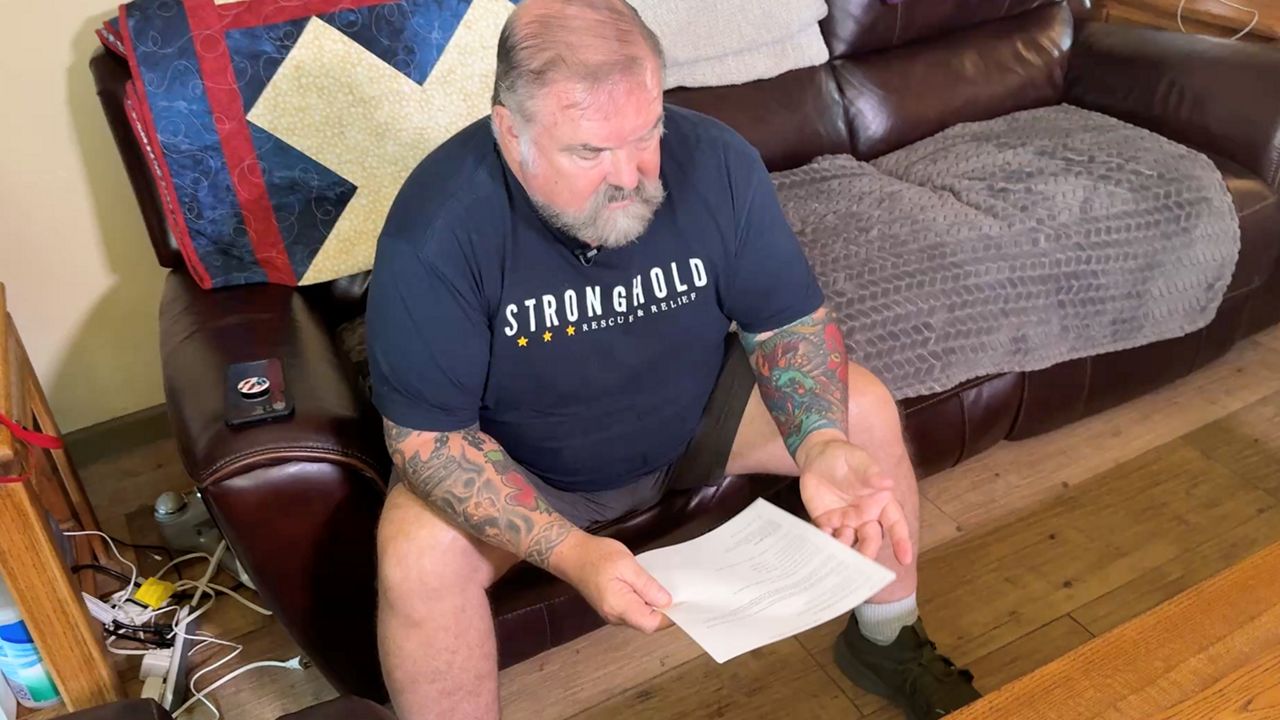
In 2023, Rector received a letter that many across the state can relate to: “Your policy will be non-renewed due to exposure management,” Rector said out loud, reading a printed letter as he sat on his couch. “I don’t know what the hell that is.”
Rector and his wife shopped around for insurance after being dropped, and the best rate they could find was $12,000. Not wanting to pay such a large amount, they eventually found Citizens for about $3,600.
“It didn’t make any sense,” Rector said. “Did this insurance company have to pay out more, or why were they jacking the rates up?”
Data provided by Citizens Insurance shows that when Rector was dropped by Florida Peninsula, that same company added more than 37,000 policies from Citizens. In 2024, Florida Peninsula added another 58,000 and then in 2025, more than 24,000.
Over the past two years, they ranked fourth in the state in dropping the most policies that ended up at Citizens. Slide Insurance is No. 1 in both categories. Slide has taken 326,000 policies over the past two years while dropping more than 12,000, based on data provided by Citizens.
Attempts to speak to Florida Peninsula leadership were made, but they declined. Slide Insurance declined an interview as well, but did invite Spectrum News to Slide Insurance Chief Executive Officer Bruce Lucas’ February earning calls with investors and stakeholders in February.
On that call, Lucas reported, “We expect to continue to be opportunistic with respect to Citizens depopulation efforts in 2026, albeit at a lesser level as we believe there will be fewer policies to meet our criteria to assume.”
But how are they choosing policies to meet their criteria?
Citizens shared an Excel spreadsheet with Spectrum News that includes more than 300 points of information about homes of Citizens policyholders. It’s a full blueprint to assess just how much of a risk a policy may be. This information is sent to private companies every month: the full bios of every single one of their current policies.
Citizens acknowledged to Spectrum News, “The legislature created the depopulation program, a state initiative to allow qualified private companies the opportunity to provide coverage to Citizens policyholders.”
Rollins College business professor Dr. Richard Lewin said when it comes to insurance, the more information the better to help cover any risks or potential risks.
“In some respects, we have met the enemy, and it’s ourself when we look in the mirror,” Lewin said. “The number of claims has caused policyholders to revise them. That’s caused an amazing appetite for data information, and that has spawned this unyielding document which you have pointed out.”
Since October 2023, Citizens has been able to depopulate from 1.42 million to currently having just under 392,000 at the end of January 2026.
“They’ve made it as easy as possible,” Lewin said. “Citizens has compiled the most comprehensive data set imaginable because they are trying to reduce the overall aggregate number, and it has been quite quick and successful.”
Deandre Wakefield, the owner of Alpha Advantage Insurance, has been in insurance for 26 years. He said that with private companies taking the best or safest policies from Citizens, but then dropping their highest risk ones that ultimately end up at Citizens, Citizens is potentially holding a ticking time bomb financially if a major storm hits the state.
Spectrum News asked Citizens about the practice of taking on high-risk policies and offloading lower-risk polices, and Citizens spokesperson Michael Peltier responded via e-mail: “Citizens was created to provide coverage to policyholders with the riskiest policies, those that private market carriers would not cover. That’s Citizens’ mission.”
“Eventually (Citizens) is going to run out of money,” Wakefield suggested. “They are going to have a situation where they are having to pay claims that ultimately should not be on their backs.”
When the list of information Citizens provides to private companies was shown to Wakefield, he was in shock. He said he had never seen that list before, likely because Citizens said it only supplies the list to private insurers.
When Wakefield speaks to potential customers, he only asks a few questions: age of roof, age of pipes, location and if there’s a way to heat and cool the home — nothing nearly as detailed at Citizens’ info sheet.
“It impacts us because I don’t have access to the same information,” Wakefield said. “I have to insure individuals based on those four points of information.”
Even armed with this new information, for Wakefield and Rector, there’s not much they can do about it.
According to Rector, he has about 4-1/2 more years on a mortgage, which requires homeowners insurance, but when that is paid off, he plans to not have homeowners insurance. Instead, he’ll just pay for what he needs when he needs it.
State Rep. Doug Bankson, R-Apopka, when asked about the process that Citizens is doing with private companies, said: “When Charlie Crist was governor, an artificial cap on premium increases was placed for Citizens. And yes, Citizens is intended as an insurance of last resort, but it also came in to competition with the insurance industry, adding to the cost inversion.”
“Due to the artificial price fix, Citizens gradually undercut the industry and hurt the economic optics regarding insurance,” Bankson added. “Once overpopulated, it became at high risk for insolvency, which would literally fall upon all the citizens of the state to bail out. Depopulation of Citizens became necessary to avoid insolvency and right the ship of the faltering insurance industry in the state.”