
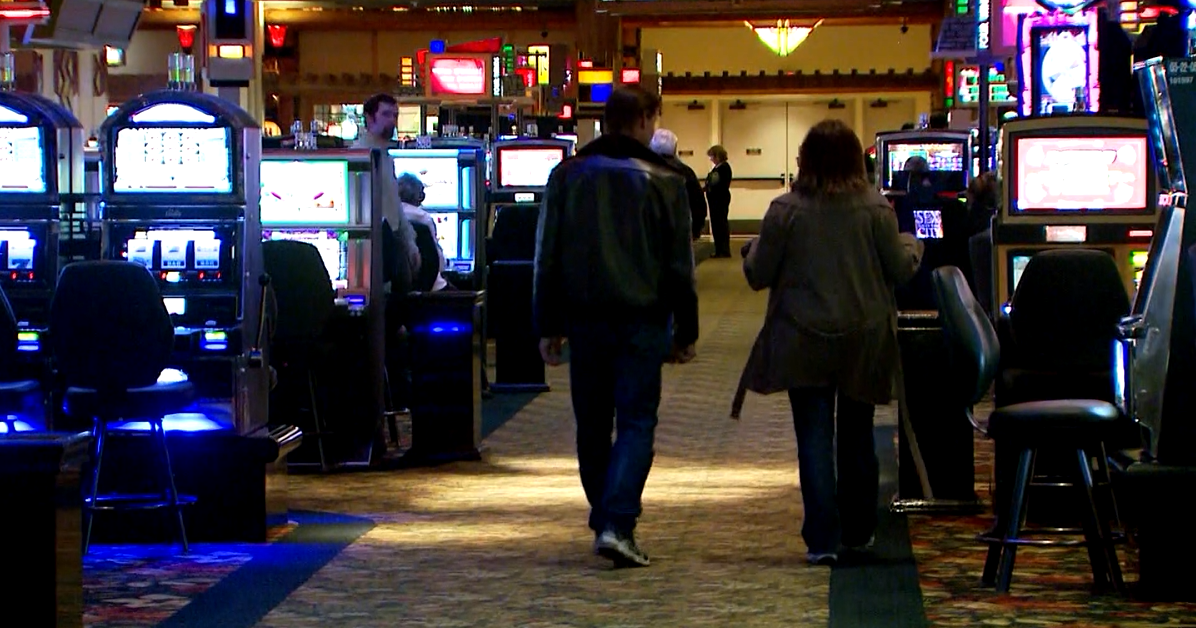
WINK Investigates has spent months tracking illegal gaming arcades across Southwest Florida — from high-profile raids to the millions of dollars seized.
New data — and a rare inside perspective — raise a deeper question: Is this crackdown actually stopping illegal gambling — or just disrupting it?
Records obtained by WINK Investigates from local law enforcement agencies show that while raids are happening, arrests are not.
Across Southwest Florida — including Lee County, Collier County, Charlotte County, and Cape Coral — the number of people charged in connection with illegal arcades in 2024, 2025, and the beginning of 2026 remains low.
Records obtained by WINK Investigates show arrests tied to illegal arcades remain limited across Southwest Florida:
Lee County2 arrests3 notices to appearNo patrons arrestedCollier CountyCharlotte County5 arrests in 20240 arrests in 2025Cape Coral
The data suggests that while businesses may be targeted and shut down, few individuals are ultimately held criminally accountable.
Inside an illegal arcade
To better understand how these businesses operate, WINK Investigates spoke with a former employee who claims she worked inside illegal arcades in Southwest Florida for about two years.
She asked to remain anonymous, fearing the interview could impact her current job.
She described a workplace that, while technically illegal, often felt ordinary.
“We are just people that want a job… we just needed income.”
She said many employees were not involved in the business side — and were simply trying to make a living.
“The owners may not be on the up and up, but the employees are… for the most part.”
A place for connection — not just gambling
The former employee says for many customers, the arcades served a social purpose.
“I had people that would come in… just to decompress… we were their only outlet.”
She described regulars who stopped in after work, or people dealing with difficult situations at home — including one woman caring for a dying spouse.
“They just wanted to stop in for a couple minutes… to relax.”
That environment, she said, is part of why these businesses continue to exist — even as enforcement increases.
Concerns about fairness and payouts
The former employee also raised concerns about how the machines operate.
“They can program it to win less… the house is actually winning all the money.”
According to her, machines can be adjusted to change payout ratios — something regulators warn is a key issue with illegal gambling.
“It’ll keep them playing, but they’re not actually winning.”
A cycle of raids — and reopening
Despite repeated enforcement actions, she says many arcades don’t stay closed for long.
“I’ve watched these places shut down and… two weeks later open back up. How?”
That pattern has been observed across Southwest Florida.
“You either care or you don’t… you’re either going to shut them down or don’t shut them down. You’re now wasting taxpayers’ money by continuously shutting them down and letting them reopen.”
State crackdown ramps up
Enforcement at the state level is intensifying.
According to data from the Florida Gaming Control Commission, investigators conducted 194 investigations between January and March 2026 alone.
During that time:
More than 2,241 machines were seizedAt least 51 arrests or notices to appear were issuedMore than $1.3 million in cash was confiscated
The numbers reflect a growing effort to crack down on illegal gaming operations statewide.
“A happy medium”
Instead of repeated shutdowns, the former employee believes there may be another solution.
“I feel like there’s got to be some kind of happy medium… where they can make these places accountable and still have them for the people that need them.”
She suggests regulation — rather than outright prohibition — could address both concerns.
“There’s got to be some way that they can make it legal… they can still have their fun… but maybe in a dumbed down way.”
That could include oversight of machines and more consistent rules for payouts.
Legislative effort falls short
Lawmakers recently attempted to take a tougher stance.
A bill that would have made operating illegal “storefront casinos” a third-degree felony — punishable by up to five years in prison — failed during the 2026 legislative session.
The proposal, , collapsed amid concerns about its potential impact on veterans’ organizations.