
Miami-Dade County ran into a wall of opposition last week on a return visit to Miami’s Planning, Zoning and Appeals Board when a small phalanx of neighbors objected to the county’s plan to rebuild the Coconut Grove Playhouse without a wall to protect them.
Board members rejected the plan after hours of public testimony by residents who oppose the county’s plan to buttress the playhouse with retail shops, a restaurant and office space that would connect to their historic West Grove neighborhood.
Preserve the West Grove, an organization that represents homeowners living within 500 feet of the playhouse on Charles, William and Thomas avenues, wants the county to erect a barrier to prevent traffic and commercial activity from spilling onto their streets.

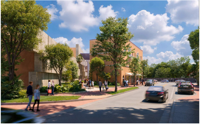
A view of the county’s proposed playhouse development from Charles Avenue, with storefront shops planned for the ground floor on the right.
(Miami-Dade County/Arquitectonica)
Together with three other West Grove organizations, they are also asking the county to develop a traffic mitigation plan, provide job opportunities and youth programming, and showcase the history of their historically Black neighborhood as part of the project.
Planning board members were sympathetic to those concerns but couldn’t agree on how to address them. County officials expressed a willingness to rethink their approach, but residents were skeptical.
Neighbors asked for an ironclad commitment, but the board deadlocked late last Wednesday night after two failed attempts to find a way forward, effectively denying the county the approval it needed to move forward with its playhouse plan.
The decision represents a major setback for the county and leaves the fate of the historic playhouse in limbo yet again. In addition to the neighborhood concerns, several board members expressed discomfort over the size and scope of the project.
“If we have to build a wall, clearly this is not the right use for the property,” said board member Maria Paula De Carolis.
The county can appeal the board’s decision to the City Commission, which is what happened in 2019 when another city board – the Historic and Environmental Preservation Board – rejected the county’s plan.

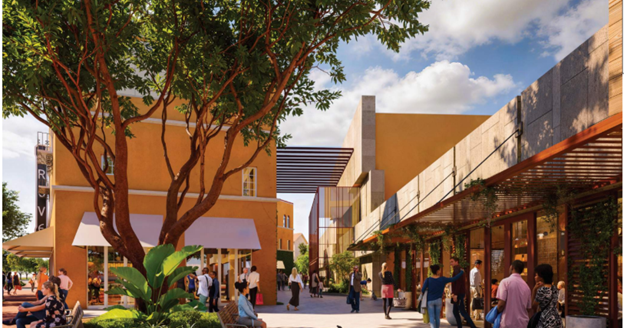
The county’s development plan includes 3,800 square feet for food-and-beverage service flanking a pedestrian promenade that connects to William Avenue and the single-family residential neighborhood behind the playhouse.
(Miami-Dade County/Arquitectonica)
The county appealed that decision and prevailed, but the project has been beset by years of litigation since. The playhouse, which is owned by the state of Florida and leased to the county, has been shuttered since 2006.
Last year, the county demolished the playhouse’s rear auditorium despite stiff resistance by local preservationists.
County officials are now seeking city approval to restore the playhouse’s historic façade at Main Highway and Charles Avenue, build a new 310-seat theater behind it and add a parking garage immediately to the north.
The campus-style design, with open-air plazas and pedestrian promenades, would include 2,600 square feet of retail space, 3,800 square feet for food and beverage service, and 30,600 square feet of office space.
The campus would be open to the formerly segregated Black neighborhood behind the playhouse — a design element that county officials say is needed to address past discrimination but that nearby residents fear will overwhelm their quiet neighborhood.
County officials have not said whether they plan to appeal last week’s decision.
This story was produced by the Coconut Grove Spotlight, a nonprofit newsroom covering Coconut Grove and Miami City Hall, as part of a content sharing partnership with The Miami Times. Read more at coconutgrovespotlight.com.