

PALM BEACH COUNTY, Fla. (CBS12) — Dramatic video released by U.S. Immigration and Customs Enforcement (ICE), showing agents surrounding a car in Greenacres and ordering a man to the ground, is now fueling broader questions about transparency and public access to information tied to immigration enforcement operations in Florida.
The video shows federal agents working alongside the Florida Highway Patrol (FHP) and the Palm Beach County Sheriff’s Office (PBSO) during an April 14 operation targeting 34-year-old Luis Merary Peralta-Sevilla, an alleged gang member.
“What happened today is just another perfect display of our partnership with our local law enforcement,” an unidentified ICE agent says in the footage released by the agency.

The video, released by ICE, shows federal agents working alongside the Florida Highway Patrol and the Palm Beach County Sheriff’s Office during an April 14 operation targeting 34-year-old Luis Merary Peralta-Sevilla. (x/ICEGOV)
But while ICE publicly promoted the arrest, questions are now emerging about whether local agencies participating in federal immigration partnerships may face new restrictions on what they can publicly disclose about those operations.
A recent report by The Florida Trib and the “Two Can Be True” newsletter claimed ICE issued guidance to agencies participating in the federal 287(g) program regarding media inquiries, public communications and records requests tied to immigration enforcement operations. According to the report, agencies were instructed to coordinate with ICE before publicly releasing certain immigration-enforcement information, including some media inquiries, press releases, social media posts and public records requests.
CBS12 News has not independently obtained the reported directive.
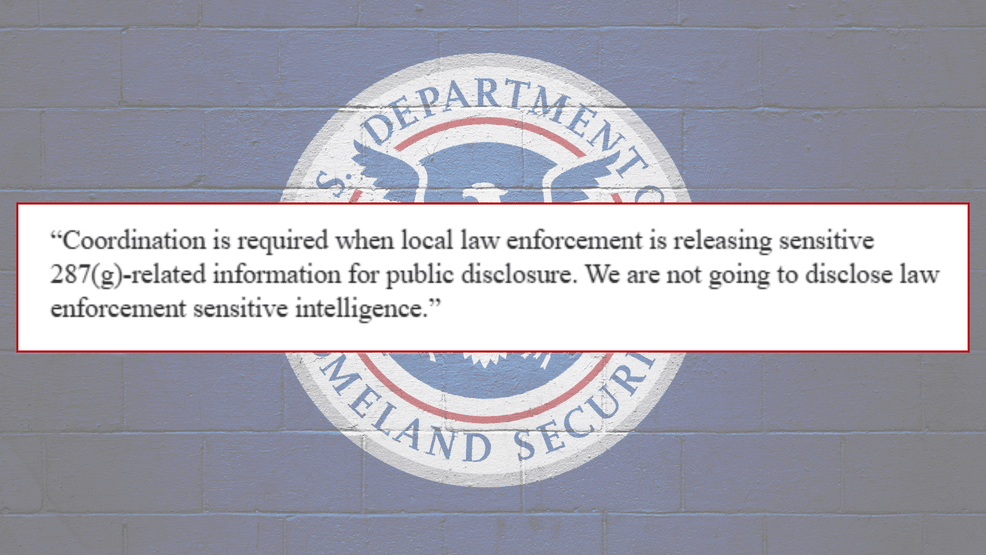
When CBS12 News asked the Department of Homeland Security about the reported guidance, a spokesperson responded in part: “Coordination is required when local law enforcement is releasing sensitive 287(g)-related information for public disclosure. We are not going to disclose law enforcement sensitive intelligence.” (WPEC)
However, when CBS12 News asked the Department of Homeland Security (DHS) about the reported guidance, a spokesperson responded in part:
Coordination is required when local law enforcement is releasing sensitive 287(g)-related information for public disclosure. We are not going to disclose law enforcement sensitive intelligence.
The department did not specify what information it considers “sensitive.”
The debate comes as Florida rapidly expands local cooperation with federal immigration enforcement through the 287(g) program, which allows specially trained local officers to assist federal immigration authorities in certain enforcement functions.
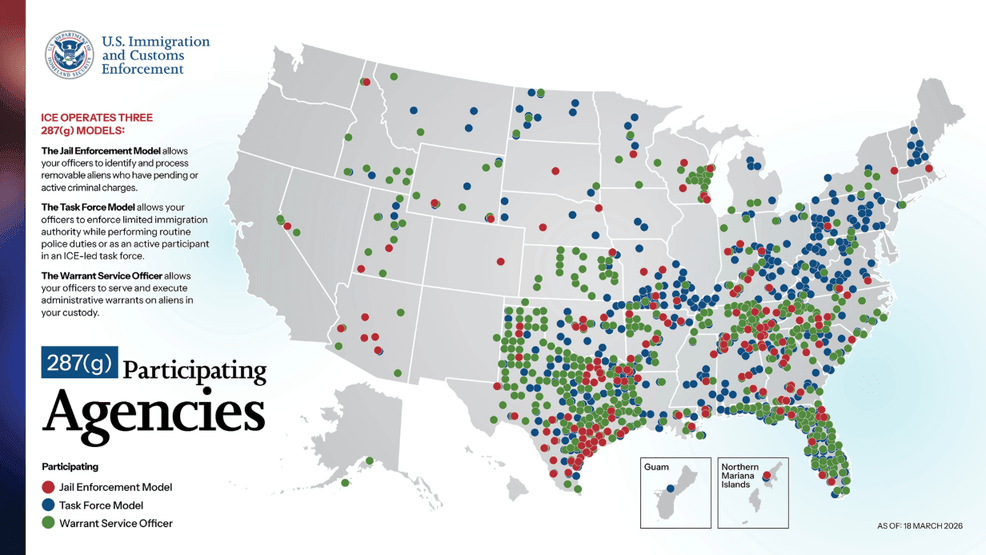
All 67 Florida sheriffs’ offices now participate in some form of ICE partnership agreement. (ICE.GOV)
All 67 Florida sheriffs’ offices now participate in some form of ICE partnership agreement.
State and federal officials have increasingly promoted Florida as a national model for local-federal immigration enforcement cooperation. Earlier this year, ICE and Florida leaders announced “Operation Tidal Wave,” which officials described as the largest immigration enforcement operation in Florida history after more than 1,100 arrests were made during a weeklong statewide operation involving federal, state and local agencies.
ICE identified Peralta-Sevilla as a Honduran national and alleged MS-13 associate. According to ICE, Peralta-Sevilla was first encountered by U.S. Border Patrol agents in Texas in July 2013 after entering the country through the Rio Grande Valley. ICE said an immigration judge later granted him bond while removal proceedings remained pending. His next immigration court hearing was scheduled for April 2027.
ICE said Peralta-Sevilla is currently being held in the Palm Beach County Jail pending transfer to ICE custody.
See also: Wrong-way driver identified in deadly Florida Turnpike crash in Indian River County
The reported guidance is now raising concerns among legal advocates and transparency groups about how the policy could interact with Florida’s broad public records laws, often referred to as Sunshine laws.
William J. Sanchez, P.A. and the CONLAMIC Legal Defense Fund told CBS12 News in a statement they are concerned the reported policy could weaken long-standing transparency protections.
“Policies affecting local residents and taxpayers should not be shielded from public scrutiny through informal administrative directives,” the organizations said in part.
The groups also argued the reported policy raises broader legal and constitutional concerns involving “government accountability, public transparency, and the ability of local communities to obtain information regarding immigration enforcement activities taking place in their own jurisdictions.”
CBS12 News reached out to several local law enforcement agencies, including PBSO, asking whether they had received any such guidance from ICE and whether they had changed how they handle public records requests connected to immigration enforcement activities.
As of publication, most agencies had not responded.