
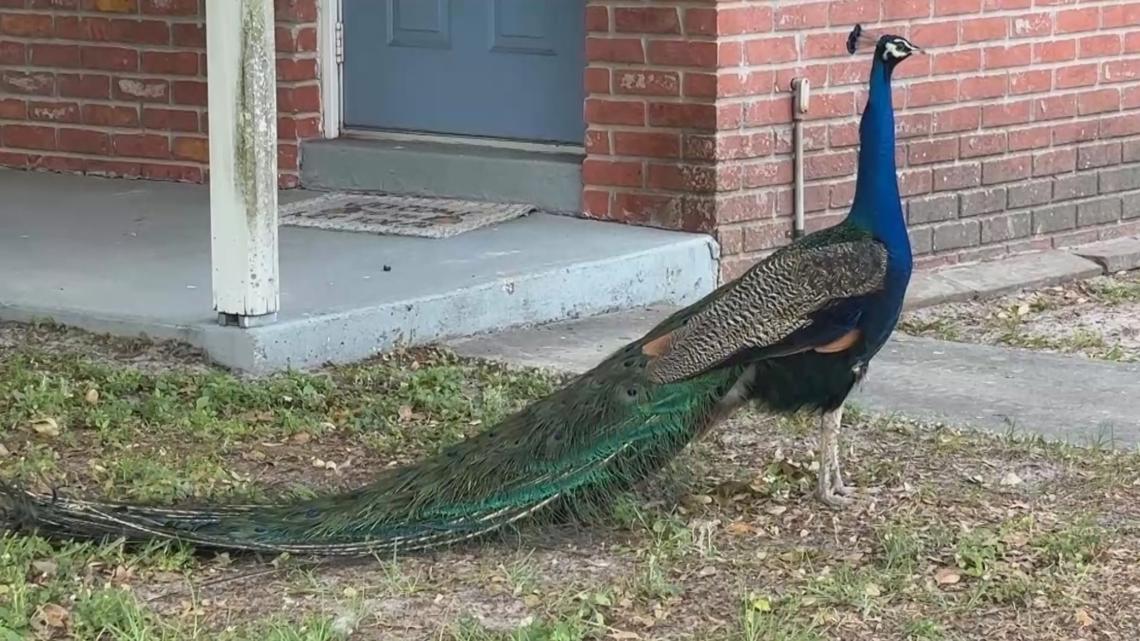
Some say they add beauty to the neighborhood, while others are tired of the colorful birds destroying cars, gardens and pool screens.
GULFPORT, Fla. — What started as a pair of peacocks roaming parts of Gulfport has now grown into what some neighbors describe as a full-blown colony, sparking both admiration and concern across the quirky waterfront community.
Residents say dozens of peacocks can now regularly be seen wandering streets, perching in trees, standing on rooftops and strolling through yards in several neighborhoods.

This story continues below.
Gulfport’s growing peacock population is colorful but controversial
Country Thunder starts today at Coachman Park in Clearwater
“They’re gorgeous, and they keep to themselves for the most part,” neighbor John Nixon said.
Others say the birds have become part of Gulfport’s personality and charm.
“I see people stopping all the time to take pictures of them,” resident Marian East said. “I think they make a lot of people’s day, kind of, just fun.”
East described the colorful birds as peaceful and said they add beauty to the neighborhood.
Still, not everyone is embracing the growing flock.
Residents recently brought concerns about the birds before the Gulfport City Council, warning the population could become increasingly disruptive if left unchecked.
“They are a huge problem,” neighbor Berkeley Grimble said. “They wake us up at 5 o’clock in the morning.”
Grimble said the peacocks can damage gardens, vehicles and pool enclosures.
“They can peck your cars. They can jump on top of your cars,” he said. “If they land on your pool screen, they will completely destroy it.”
Others worry the flock could continue multiplying rapidly in the coming years if no action is taken.
Florida Fish and Wildlife Conservation Commission officials classify peafowl as nonnative, domestic-feral birds that have become established in communities across the state after escaping captivity or being released.
While the birds are not protected statewide like native wildlife, FWC says local governments may adopt ordinances regulating how they are handled.
For now, Gulfport city leaders have not taken official action regarding the birds.
FWC recommends residents first try nonlethal deterrents before considering removal. Suggested strategies include removing attractants like pet food and bird feeders, covering reflective surfaces on cars and windows and using deterrents such as hoses or motion-activated sprinklers to scare the birds away.
Wildlife officials also warn residents not to feed peacocks because it can attract larger flocks and worsen nuisance issues.
Some Gulfport residents argue the city should embrace the birds rather than push them out.
“Gulfport is an arts community — one that celebrates color, expression and the unexpected,” resident Brad Brunner said. “The presence of the peacocks feels like a reflection of who we are.”
Neighbor Rosemary Minton agreed.
“I think they’re magical,” she said. “They’re a wonderful addition to the city.”
FWC says homeowners may legally remove peafowl from private property within local laws, often through licensed nuisance wildlife trappers. Officials recommend residents check local ordinances and contact wildlife authorities for guidance before taking action.