
Should everyone get a second chance?
Kenneth Kilpatrick, the executive director of The Alternative Programs (TAP), thinks so.
TAP provides no-cash bail alternatives to incarceration for low-income, non-violent adult and juvenile offenders.


TAP Executive Director Kenneth Kilpatrick (fourth from left) honored Judges (from left) Ariel Rodriguez, Lody Jean, Orlando Prescott and Richard Hersch.
(TAP)
“This program is a diversion program wherein if you complete our program, there’s a very good chance that the judge will usurp that felony charge and you will not be a convicted felon,” Kilpatrick explained.
He sees nothing but positives.
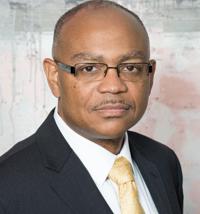
“The people who are committing these minuscule crimes, all they really need is that second chance. They come back stronger than they were when they came in.” -Executive Director Kenneth Kilpatrick
(TAP)
“For the adults, it saves tons of jobs,” Kilpatrick said. “People are able to go back to work, able to go back to their families immediately. They’re able to integrate back into the community. So that void that’s usually caused by incarceration … brings families back together. It gets people back to work.”
The Alternative Programs recently celebrated its 40th anniversary at — appropriately enough — a courtroom at the Richard E. Gerstein Justice Building. The event allowed the team to express thanks to the judges who have had the “courage,” as Kilpatrick put it, to give others a second chance.
“Judges don’t have to do that,” Kilpatrick said. “Diversion programs are not mandatory, so nobody is necessarily entitled by the system, by the rules of the system, to diversion programs. So we were elated to honor those judges and other partners in the community, in the system, like Miami-Dade Corrections Department of Juvenile Justice, just other folks who helped to make this program what it is in the success that we saw.”
Kilpatrick said the program came to being in the wake of the 1980 Arthur McDuffie riots. McDuffie was a Black man beaten to death by white police officers, whose acquittal by an all-white jury spurred public unrest.
“There was outcry in that time about economic disenfranchisement, and there was also a crime disenfranchisement in the criminal justice system,” Kilpatrick explained. “Low-income people in the working class being arrested for low-level offenses — some of it just civil infractions. So we needed something to put people back to work. We needed to have something in place that would show that there’s accountability to your responsibilities, but also with enough compassion to make sure that we’re not crippling the individual for mistakes.”
Benefits for juveniles

Improving Community Control program students pose at an outing.
(TAP)
Kilpatrick said teenagers also benefit from the Improving Community Control program.
Juveniles are referred to the program by the Florida Department of Juvenile Justice and by juvenile probation officers in the DJJ.
“On the juvenile side, this is first and foremost: We want to find out what the problem is,” Kilpatrick said.

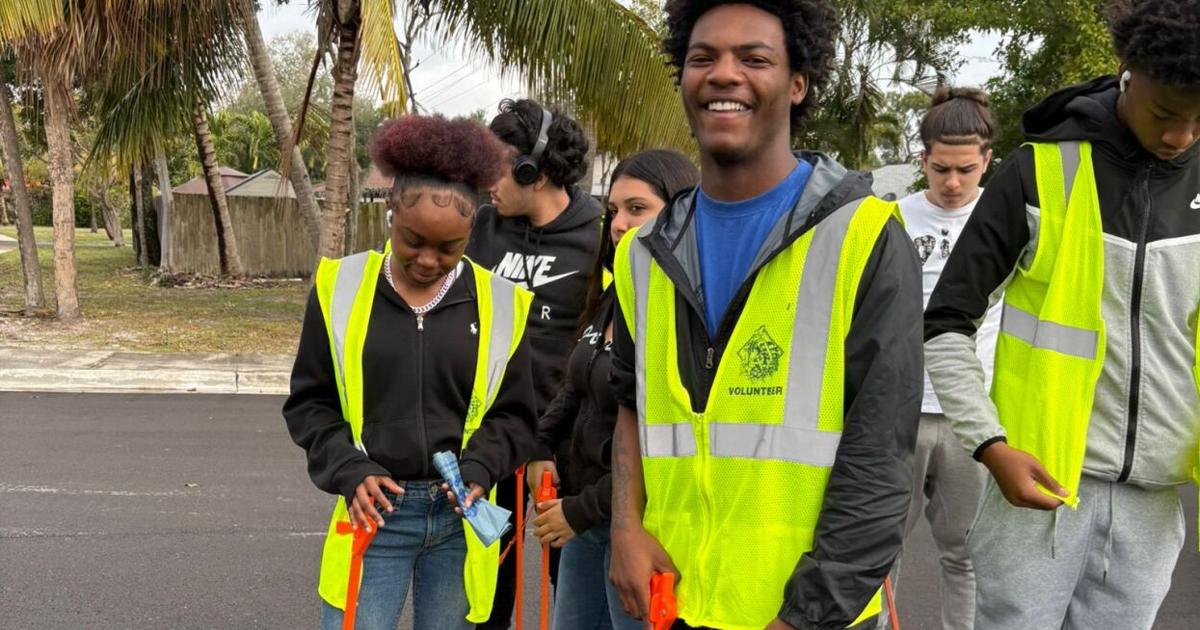
As part of their community service, Improving Community Control program students work on a park cleanup.
(TAP)
He gave an example of a juvenile with no adult supervision because his or her parent has two or three jobs.
“A part of that remedy may include seeing what we can do to get the parent a better skills training so that they can get one job that would take the place of maybe the two or three jobs that he or she has to work now,” Kilpatrick said.
He said these strategies help make sure that juveniles do not re-offend.
“If there are drug problems with the youth, we do drug tests and we make sure that before we release you, you have to be clean,” Kilpatrick said.
Participants attend skills sessions and provide community service by participating in cleanups and helping distribute food to the disadvantaged. It also includes recreation time at the Break Room or Game Room, in what Kilpatrick described as cultural exposure.

Improving Community Control program students. Juvenile Services Director Jeffrey Murray is on the left and TAP Executive Director Kenneth Kilpatrick is on the right./
(TAP)
Success stories
Kilpatrick points to Candido Orsario as one particular success story.
“Candido was in our program last year, and he was a very opinionated young man,” Kilpatrick said. “We knew that there was leadership in Candido, so we worked with him, and he really enjoyed the program, because there was an avenue for him to express himself and to work through the issues that he was having … but Candido now is working, and he is a supervisor right now.”
Osario said the program had a positive effect on him.
“They provided coping skills … so we cope with our anger issues and stuff like that,” Osario said. “They also try to help us with our communication and listening skills.”
“I used to be in the streets really heavy,” Osario said. “But now I got a job. I moved out.”
Osario is now the housekeeping supervisor at the Breakwater Hotel.
He shrugged off his reputation as a leader in the program.
“I’ve been through things that (younger participants) probably hadn’t been through or seen,” Osario said. “So, if they did something bad while (the supervisor) was trying to teach, I’d try to correct them.”
Another participant who has seen success is RaNiya Burks, who’s now working at the U.S. Postal Service.
During her time with the program, she said she provided community service and learned skills she now uses every day.
“I learned from the program how to deal with conflict resolution,” Burks said. “I learned how to deal with my anger. I learned how to walk away from certain situations.”
‘The program works’
“These are great success stories,” Kilpatrick said. “It’s the evidence. That’s the proof that the program works. The people who are committing these minuscule crimes, all they really need is that second chance. They come back stronger than they were when they came in.”
Kilpatrick is happy with the results.
“Our programs are, in my view, very, very successful,” he said. “Our recidivism rates are either at or below 5%, and so that is an excellent turnaround, and it’s an excellent investment for the system and a great return on investment for the community.”
“If they complete the program successfully, then they are not a convicted felon, and that is a very big deal.”