
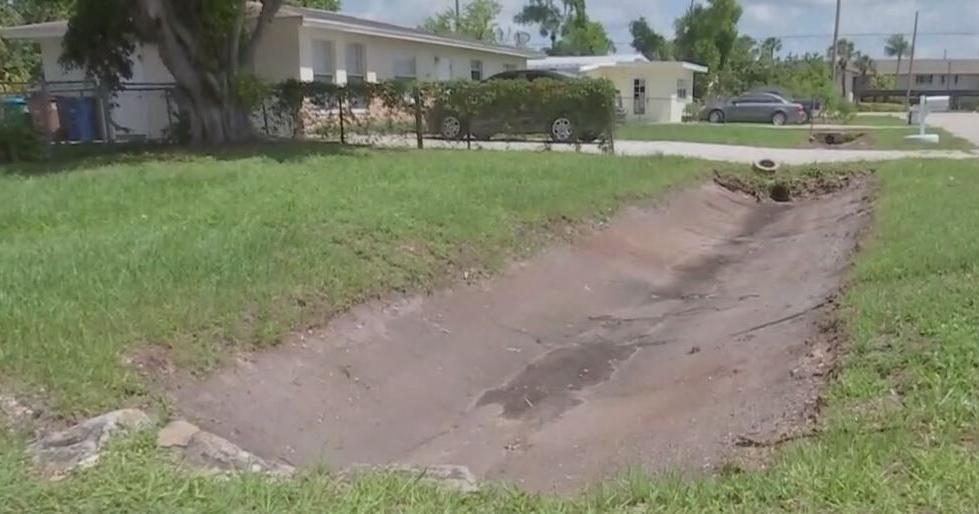
SANIBEL, Fla. (WINK)—As rainy season approaches, Sanibel is showing residents and visitors what crews have done to prepare the island’s drainage system.
For many people on Sanibel, water hits different after Hurricane Ian. The city says people often see water in swales, yards or even on roads and immediately think the worst.
But engineers say some of that water is actually part of the island’s drainage system working exactly how it’s supposed to.
“The rainy season is, it’s a blessing. I mean, it’s a wonderful thing to get some fresh water that just naturally comes down,” said Jessica Ladisky, a Sanibel resident.
For many people who live on Sanibel, like Ladisky, rainy season is part of island life. But after Hurricane Ian, even normal standing water can make people nervous.
“We are going to have water on roadways, water in your yard, that’s going to go away within maybe half a day,” Ladisky said.
To help neighbors and visitors understand how draining it all works, Sanibel City Engineer O. Dolley took Price inside some of the island’s swales. Dolley showed what the city has been doing to prepare before rainy season begins.
“Last summer we did around $2.8 million worth of work—clearing swales, clearing drains, making sure that our system is functioning as well as possible,” Dolley said.
Dolley says Sanibel’s drainage system works differently than most places. Because the island sits so low, water doesn’t quickly drain away.
Instead, it fills, holds and overflows with the tides. The city says seeing water in swales or low-lying areas is normal during rainy season.
“So generally, that’s when you start seeing water that sits on top of grates. But when the tides go down, the water generally will overflow out at that point,” Dolley said.
Dolley says some water may even sit for a few days after heavy rain.
“It can take sometimes 48 to 72 hours for that water to overflow out as the tidal cycles go through,” Dolley said.
But the city says that doesn’t always mean there’s a problem.
“We want to see water in these swales. And that’s really part of what we’re trying to educate people about, is it’s not going to drain dry after every rainfall,” Dolley said.
He even recommends every property should have at least a six-inch deep roadside swale. Ladisky says as they wait for whatever this year brings, she’s happy the city is getting ahead of it.
“I feel like there’s so much planning, thought, preparation, discussion, the communities involved,” Ladisky said.
The city’s engineer also said when getting landscaping work done, residents should remember to get proper permits and coordinate with the city when doing any work in drainage areas.