
FORT PIERCE, Fla. (CBS12) — As the nation celebrates its 250th anniversary, one small coastal city in Florida is drawing attention for its outsized role in American military history.
Fort Pierce is known for its beaches, but it is also the birthplace of the Navy SEALs — and home to the only Navy SEAL Museum in the country. Inside, history is not re-created. It is real.
Every artifact in the museum is authentic, each tied to a mission, a moment or a life. For retired Lt. Cmdr. Hector Delgado, the museum’s director of development and partnerships, preserving those stories is deeply personal.
“They could see their son’s photo here on a mission that he was on,” Delgado said. “They also can relate to the memorial wall seeing those who have given the ultimate sacrifice.”
See also: ‘Service Beyond the Badge’: St. Lucie County sergeant honors fallen officers
The origins of the Navy SEALs trace back to World War II, when U.S. troops faced a deadly obstacle during amphibious landings. Enemy forces had placed barriers in shallow waters, causing landing craft to break apart and soldiers to drown before reaching shore.
“There was a call to action,” Delgado explained. “A volunteer force to become a Navy combat demolition, underwater demolition unit to remove these obstacles and training was conducted here.”
That training, which took place in Fort Pierce, was intentionally grueling. Recruits endured extreme stress, relentless heat, swarms of mosquitoes and severe sleep deprivation — all designed to prepare them for the realities of combat.
“We needed to put them in an environment that was extremely stressful, extremely challenging,” Delgado said. “That lack of sleep was very important.”
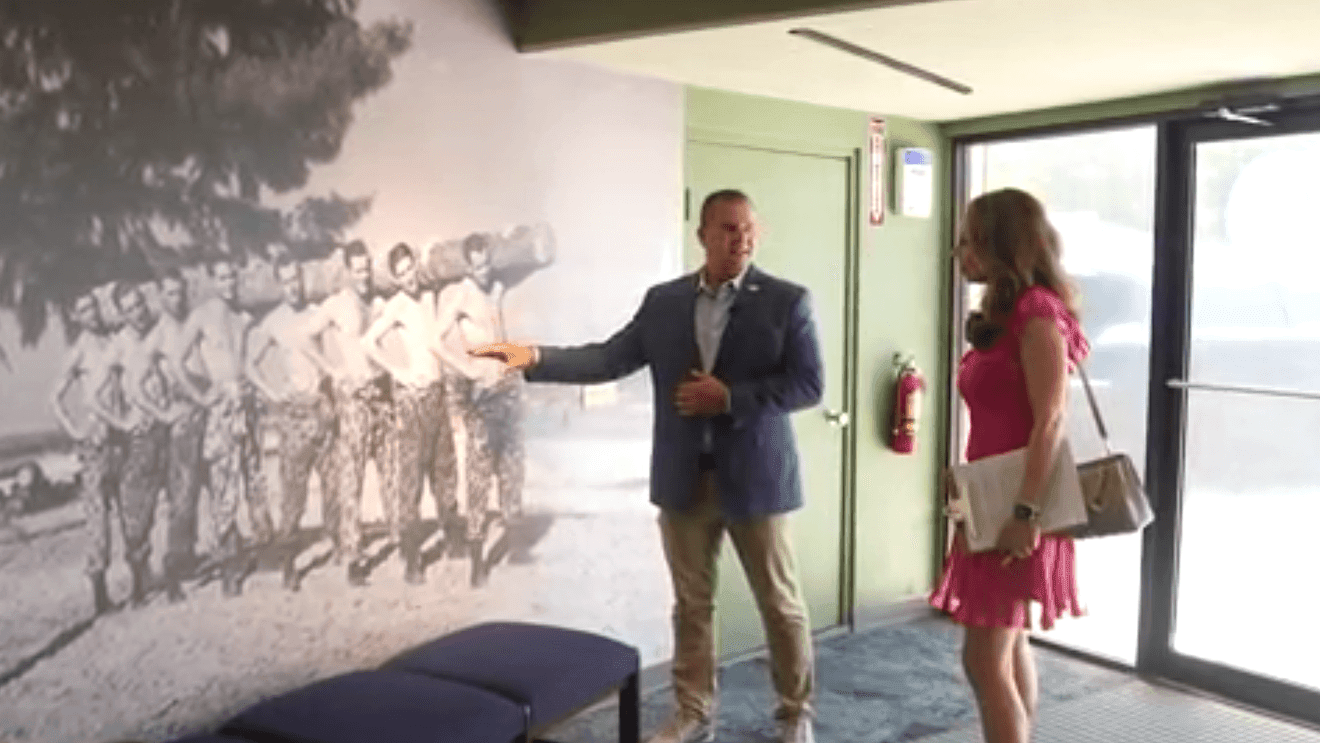
Elements of that training still exist today. Exercises like “log PT,” where teams must carry heavy logs together, emphasize teamwork and accountability.
“If everyone has to pull their weight, you’re going to quickly know if someone’s not carrying the load,” Delgado said during a tour.
Another enduring symbol is the training bell. Candidates who choose to quit must ring it three times, immediately ending their journey.
Beyond the training, the museum highlights missions that shaped modern history. Exhibits include artifacts from the raid that killed Osama bin Laden, the rescue of Captain Richard Phillips from Somali pirates, and a Black Hawk helicopter used in multiple high-risk operations.
“That helicopter was used to rescue Jessica Buchanan, and it was also used in the Battle of Mogadishu — very symbolic,” Delgado said.
Outside the museum, visitors encounter one of its most powerful tributes: the Medal of Honor monument honoring Navy SEAL Mike Thornton’s 1972 rescue of fellow SEAL Tommy Norris during the Vietnam War. The story embodies the SEALs’ unwavering commitment to one another.
“That story of how one SEAL saved his brother SEAL is so impactful,” Delgado said. “We rely on each other greatly in combat and in training.”
That sense of brotherhood extends beyond active duty. The museum’s Trident House provides a place for Gold Star families and veterans to stay while visiting, offering time and space to reflect and honor loved ones memorialized on site.
Even the smallest details carry meaning. Delgado points to the Navy SEAL Trident insignia, where the eagle’s head is bowed — a rare design choice in U.S. military symbols.
“It’s a symbol of humility,” he said.
As America reflects on 250 years of history, the Navy SEAL Museum stands as a reminder that freedom is not only won on the battlefield, but sustained through the sacrifice, service and humility of those willing to answer the call.
In Fort Pierce, that legacy lives on.