
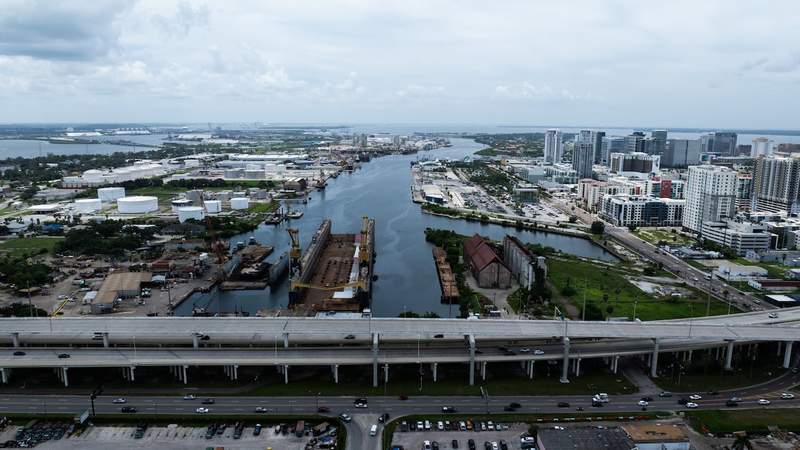
In a swift vote, the Tampa City Council on Thursday approved $35 million for Ybor Harbor, an effort by developer Darryl Shaw to redevelop the stretch between Ybor City and the Channel District.
The money will go toward infrastructure on the waterfront site, including a marine seawall and underground utilities.
“This is a transformational project,” said Tampa City Council member Alan Clendenin. “It’s one of those projects we’re going to look back on and say, ‘This was a pivotal moment in Tampa’s history, to be able to reclaim property that has been left in disrepair.’”
The more than $200 million project is part of a larger push from Shaw to reinvent Ybor City and better connect it to the surrounding neighborhoods. The council approved the public support by a unanimous vote while meeting at the Community Redevelopment Agency on Thursday.
It will add thousands of feet of public waterfront access, with boardwalks, parks and a nature trail. There will also be housing and space for retail and restaurants, according to a presentation from the developer. At least 10% of the rental residences will be rent-restricted and affordable, Shaw said.
A slice of the project falls within the Channel District Community Redevelopment Area, created to address blight. Money from the redevelopment area relies on tax increment financing, which leverages future tax value increases to pay for current projects.
The site currently generates around $400,000 a year in property tax revenue, said Avi Friedman Shaw, vice president of development at Darryl Shaw’s firm. It’s a low-lying industrial zone, marked by environmental contamination and home to a ship repair business.
“That’s not very much for 32 acres in Tampa’s urban core,” Shaw said. Once fully built, he said, the project is expected to generate more than $47 million per year in tax increment money.
“We believe this site plan will actively integrate Ybor Harbor with Ybor City and the Channel District, and bring all of those together at the waterfront,” Shaw said.
The project will unfold in three phases, with infrastructure work in the Channel District slated to begin in 2027.