
A local nonprofit has been fighting to protect Florida’s water for decades.Stay up to date: The latest headlines and weather from WPBF 25One of the big issues the Florida Oceanographic Society in Stuart is working on is protecting our coastal ecosystems.Before development in Florida, water flowed south from Lake Okeechobee through the Everglades and into the Florida Bay. As water moves through the marshes, the Everglades naturally filter out pollutants.“When it went south, it slowly flowed through the Everglades. The Everglades is a shallow river of grass, only about a foot and half deep, with all that sawgrass marshes takes up all those nutrients, the phosphorus and nitrogen,” Mark Perry, CEO of the Florida Oceanographic Society, explained.By the time the water emptied out to the Florida Bay, it was clean and helping to create a healthy estuary.“It is pristine, clean waters mixing with salt water from the ocean, forming this wonderful estuary environment. Where we have one of the largest seagrass meadows in Florida Bay, over 500,000 acres,” said Perry.A series of deadly hurricanes in the 1920s changed the landscape. The 1926 Miami hurricane and the 1928 Okeechobee hurricane caused devastating flooding around Lake Okeechobee, killing thousands.To prevent future storm surge disasters, the U.S. Army Corps of Engineers built what would become the Herbert Hoover Dike in the 1960s. While it protected communities around the lake, it also disrupted the natural flow of water south through the Everglades.“We’ve had to dike around the lake many years ago, back in the 1930s, because hurricane flooding all around the lake. So, they put a dike all around the lake, which used to flow to the south, then they channelized the water to the east in the St. Lucie River and Indian River Lagoon and then west to the Caloosahatchee near Fort Myers. They also have channels going south and east out into the Atlantic Ocean, probably at a rate of 1.7 billion gallons a day, and we only consume about 1.3 billion gallons a day in South Florida. So, we’re literally dumping more fresh water to the Atlantic and Gulf than we are consuming,” according to Perry.Perry says those discharges have damaged the St. Lucie and Caloosahatchee estuaries.“That whole Florida flow system has kind of been interrupted and channelized and changed over the years for different purposes. Whether we want different agricultural uses or different land uses of some kind, and unfortunately, that changing of all those water flows, if you will, has disrupted those ecosystems of the Everglades, the estuaries, the coastal systems along our coastline,” said Perry.The nutrient-rich waters change the salinity levels of the estuaries, killing seagrass and marine life.“Trying to control the water levels in the lake has caused so much damage in these coastal estuaries — the Caloosahatchee, the St. Lucie and Indian River — because these estuaries are a mixture of the salt water from the Gulf or the Atlantic and the fresh water from the inland portions of rivers and tributaries. That mixture of the estuaries are a really, really critical habitat for things like seagrass or oyster reefs or different kinds of fish and shellfish that depend on that salt and freshwater balance. Unfortunately, if we channelize that water and dump it and discharge this water, it causes tremendous damage for the amount of water and the duration of time it’s over these estuaries, it just kills off the oyster reefs. It kills off the seabeds,” Perry said.Perry says the discharges have also contributed to toxic blue-green algae blooms.“In recent years, we’ve had tremendous blue-green algae blooms in the Okeechobee, and as they’ve made these discharges from the Okeechobee out into these estuaries, it brought with it all of this freshwater blue-green algae,” Perry explained.A major restoration project is underway. Part of the Everglades Restoration plan includes the creation of a reservoir to store excess water and treat it through man-made marshes before sending it through the Everglades. It’s expected to be completed in 2029.“We’re in the process of trying to ameliorate these flows and clean up the pollution by these man-made marshes and then try to get back to more of a natural system,” Perry said.Get the latest weather updates with the WPBF 25 News app. You can download it here.
A local nonprofit has been fighting to protect Florida’s water for decades.
Stay up to date: The latest headlines and weather from WPBF 25
One of the big issues the Florida Oceanographic Society in Stuart is working on is protecting our coastal ecosystems.
Before development in Florida, water flowed south from Lake Okeechobee through the Everglades and into the Florida Bay. As water moves through the marshes, the Everglades naturally filter out pollutants.
“When it went south, it slowly flowed through the Everglades. The Everglades is a shallow river of grass, only about a foot and half deep, with all that sawgrass marshes takes up all those nutrients, the phosphorus and nitrogen,” Mark Perry, CEO of the Florida Oceanographic Society, explained.
By the time the water emptied out to the Florida Bay, it was clean and helping to create a healthy estuary.
“It is pristine, clean waters mixing with salt water from the ocean, forming this wonderful estuary environment. Where we have one of the largest seagrass meadows in Florida Bay, over 500,000 acres,” said Perry.
A series of deadly hurricanes in the 1920s changed the landscape. The 1926 Miami hurricane and the 1928 Okeechobee hurricane caused devastating flooding around Lake Okeechobee, killing thousands.
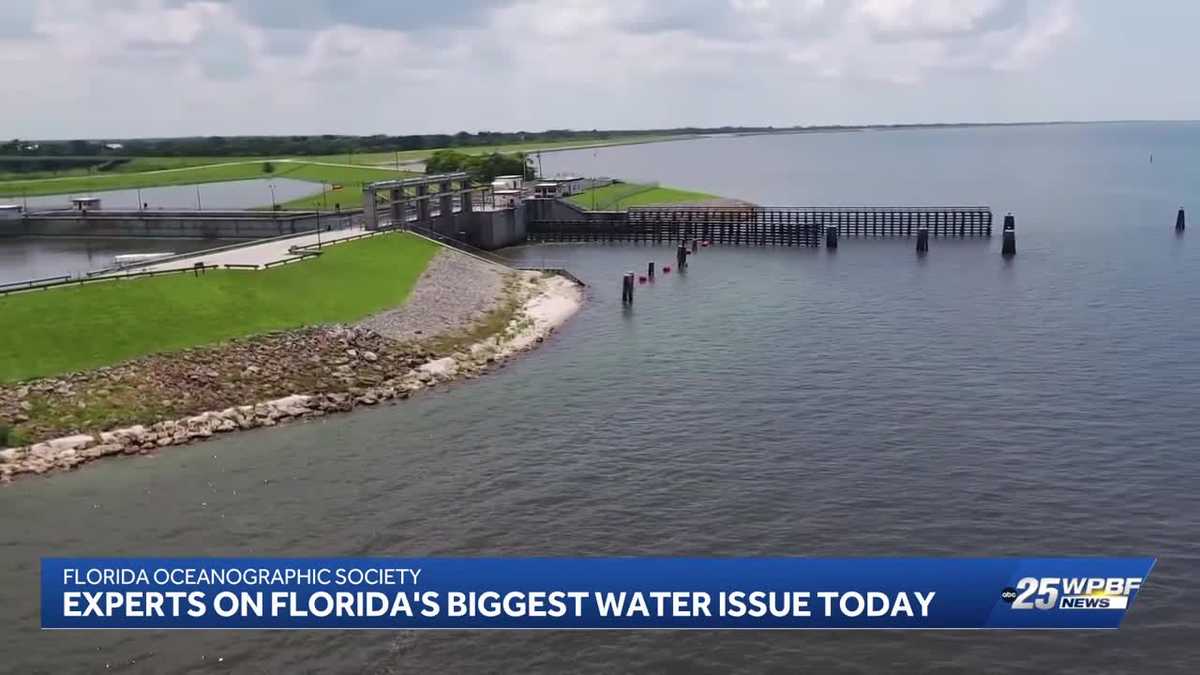
To prevent future storm surge disasters, the U.S. Army Corps of Engineers built what would become the Herbert Hoover Dike in the 1960s. While it protected communities around the lake, it also disrupted the natural flow of water south through the Everglades.
“We’ve had to dike around the lake many years ago, back in the 1930s, because hurricane flooding all around the lake. So, they put a dike all around the lake, which used to flow to the south, then they channelized the water to the east in the St. Lucie River and Indian River Lagoon and then west to the Caloosahatchee near Fort Myers. They also have channels going south and east out into the Atlantic Ocean, probably at a rate of 1.7 billion gallons a day, and we only consume about 1.3 billion gallons a day in South Florida. So, we’re literally dumping more fresh water to the Atlantic and Gulf than we are consuming,” according to Perry.
Perry says those discharges have damaged the St. Lucie and Caloosahatchee estuaries.
“That whole Florida flow system has kind of been interrupted and channelized and changed over the years for different purposes. Whether we want different agricultural uses or different land uses of some kind, and unfortunately, that changing of all those water flows, if you will, has disrupted those ecosystems of the Everglades, the estuaries, the coastal systems along our coastline,” said Perry.
The nutrient-rich waters change the salinity levels of the estuaries, killing seagrass and marine life.
“Trying to control the water levels in the lake has caused so much damage in these coastal estuaries — the Caloosahatchee, the St. Lucie and Indian River — because these estuaries are a mixture of the salt water from the Gulf or the Atlantic and the fresh water from the inland portions of rivers and tributaries. That mixture of the estuaries are a really, really critical habitat for things like seagrass or oyster reefs or different kinds of fish and shellfish that depend on that salt and freshwater balance. Unfortunately, if we channelize that water and dump it and discharge this water, it causes tremendous damage for the amount of water and the duration of time it’s over these estuaries, it just kills off the oyster reefs. It kills off the seabeds,” Perry said.
Perry says the discharges have also contributed to toxic blue-green algae blooms.
“In recent years, we’ve had tremendous blue-green algae blooms in the Okeechobee, and as they’ve made these discharges from the Okeechobee out into these estuaries, it brought with it all of this freshwater blue-green algae,” Perry explained.
A major restoration project is underway. Part of the Everglades Restoration plan includes the creation of a reservoir to store excess water and treat it through man-made marshes before sending it through the Everglades. It’s expected to be completed in 2029.
“We’re in the process of trying to ameliorate these flows and clean up the pollution by these man-made marshes and then try to get back to more of a natural system,” Perry said.
Get the latest weather updates with the WPBF 25 News app. You can download it here.