
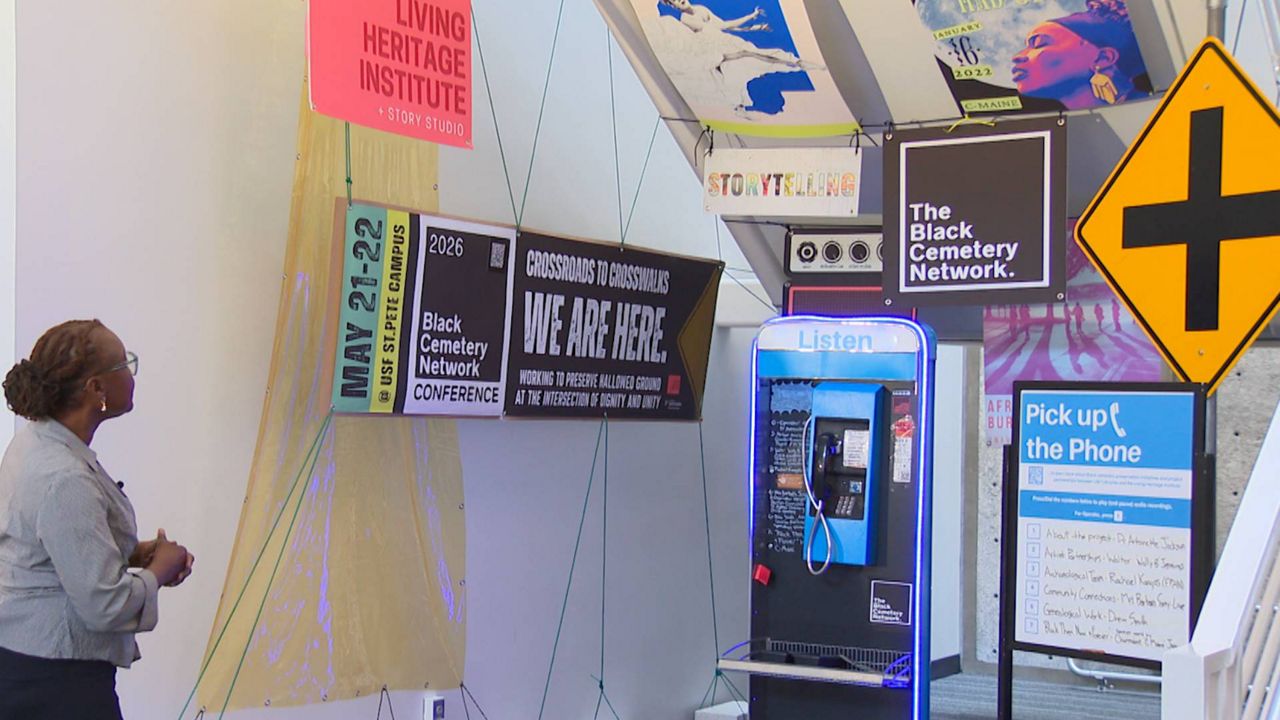
ST. PETERSBURG, Fla. — This week, the Black Cemeteries Network is kicking off its first convention in Tampa Bay.
The conversations, research, and legislation surrounding the erased African American cemeteries first gained traction in Tampa Bay. With Zion Cemetery and the cemeteries on the Tropicana Field property, leaders and educators are taking the lead by hosting their first Black Cemetery Network conference.
Patricia NiBlack Jackson is a descendant of a person buried at Evergreen Cemetery — that’s one of three cemeteries that now sits where Tropicana Field’s parking lot and the interstate are located. NiBlack Jackson said she learned early on her grandfather, William Bradley was buried at that cemetery.
“As a child, I was told my grandfather was buried in Evergreen Cemetery. So as a child, even though I was afraid to walk around in the cemeteries, I always remembered that was something that was part of my family,” she said. “William Bradley was part of our legacy. And being that he was part of our legacy, I feel like it was disrespectful for the group that decided to make the plans that they made and not respond to the family,” she said.
NiBlack Jackson wants people to remember her family’s story when discussing cemeteries like Evergreen. “There are descendants of these individuals who have shown good citizenship and service to their community,” she said. “And all that is to be lost?”
Her grandfather was one of hundreds believed to have been buried and later moved before the area was redeveloped.
Like many families, NiBlack Jackson said she still has questions.
“I don’t even remember them removing the bodies. I do remember the construction of Tropicana Field, but I don’t remember anything with regards to the fact that he was in that cemetery and supposedly moved the bodies,” she said.
Dr. Antionette Jackson is a professor and chair of anthropology at USF and director of the Living Heritage Institute. She says the research they’ve collected supports those questions people like NiBlack Jackson have.
She said what’s happening in Tampa Bay is part of a much larger national pattern.
“If you look at our map, we have over 210 sites or members, people who are doing this work actively around the country that are showing that these types of erasures of Black cemeteries are happening everywhere unfortunately,” Dr. Jackson said.
Dr. Jackson has spent years studying and visiting cemeteries connected to the Black Cemetery Network.
Now she said the focus is bringing together descendants, historians and researchers to share resources and support at the group’s first conference.
“We get a chance to really bring people together to actually network with some of the people doing the work with the resources and expertise around how they can get help, doing the things they’re doing and just fellowship, because this work is not easy,” Jackson said.
Because this is an issue happening all over the country, there are speakers and guests coming from all over to attend the conference. That conference runs two days, May 21 and 22 at the USF St. Pete Campus. It is open to the public. Register for the conference on the USF College of Arts & Sciences website.