
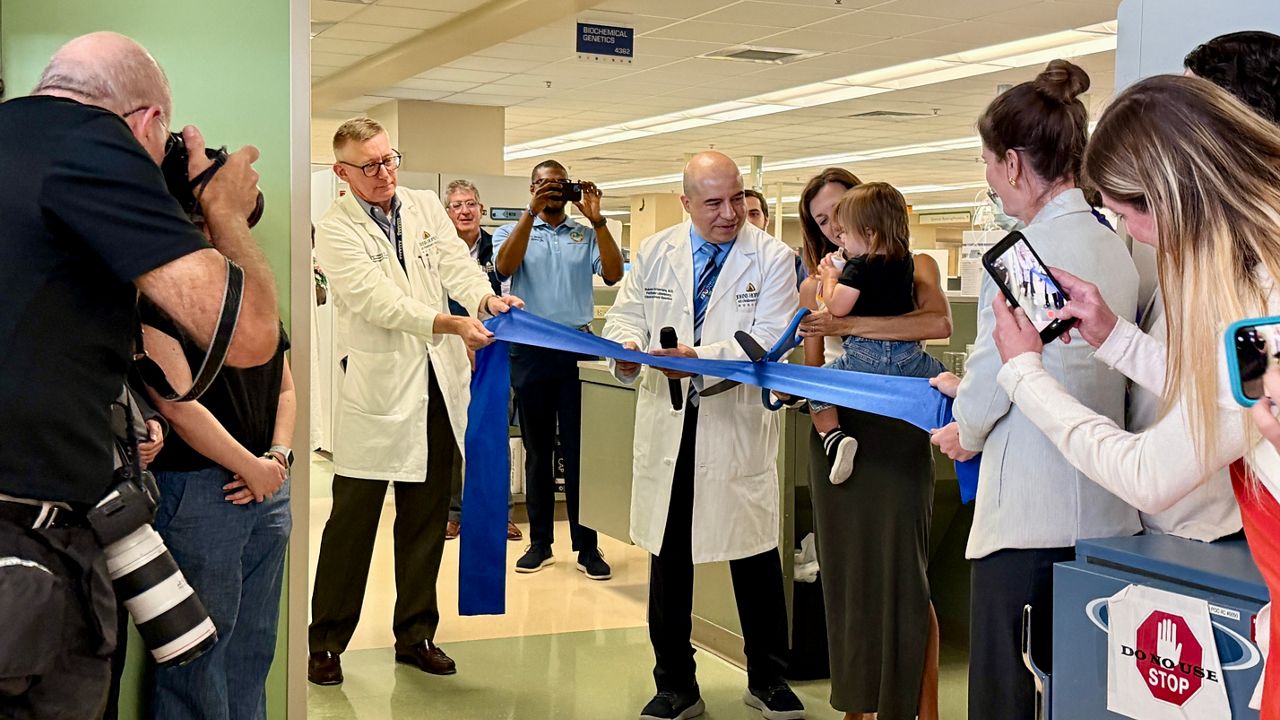
ST. PETERSBURG, Fla. — Inside Johns Hopkins All Children’s Hospital, Axl Loughran-Fox crawls across the floor waiting for an appointment to give blood.
The 16-month-old boy is happy, but staying healthy is a day-to-day battle for his parents.
“When Axl was first diagnosed, we came to Johns Hopkins twice a week,” said Bryanna Fox, his mother.
Hours after giving birth, a nurse noticed a few things that were off with little Axl and rushed him to the NICU.
“She ended up being his guardian angel. She saved his life,” said Bryanna.
Axl went into a coma because his little body was filling with ammonia — 100 times more than a normal amount.
Test after test was done, including lots of blood work that had to be shipped out of state. The results showed he had a rare genetic disorder, one that could have killed him.
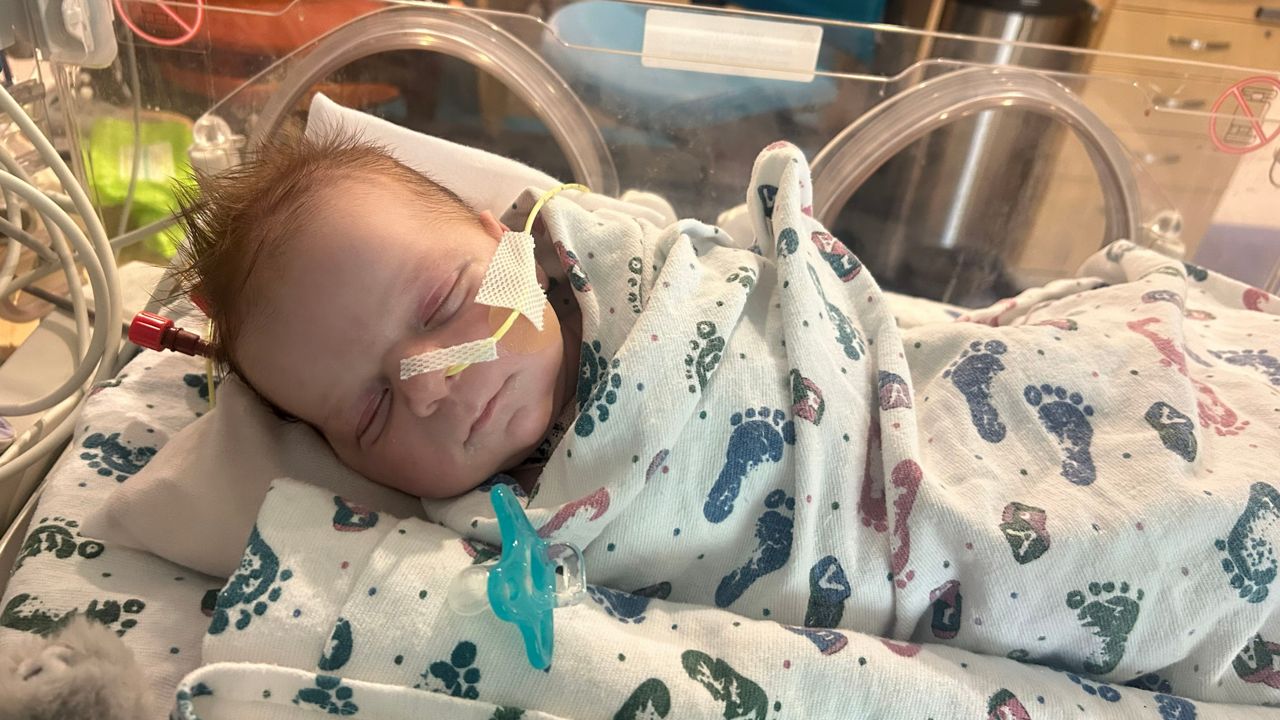
Axl went into a coma because his little body was filling with ammonia — 100 times more than a normal amount. (Family photo)
“He is alive because of the people in this room, particularly Dr. Kim. We can’t say enough. I know other families who are in desperate need, and this lab is going to help them as well. We just can’t thank you guys enough. Thank you for all you do. Thank you for saving Axl’s life,” Bryanna said to a room full of medical staff inside the John’s Hopkins All Children’s Hospital new Clinical Biochemical Genetics Lab.
“There are other biochemical genetics laboratories in the world, but not that many. Like, not that many,” said Dr. Ruben Bonilla Guerrero, the Biochemical Genetics Laboratory Director at Johns Hopkins All Children’s Hospital. “It is probably the smallest number of specialist laboratories worldwide.”
Dr. Bonilla Guerrero said that before opening the lab, the hospital would send metabolism genetic testing samples out of state. That was a problem in cases like Axl’s.
“You need to get the results faster. Once you get the results, you know what to do. First, you identify the disorder, you identify how severe it is, and it will give you the framework on how to treat the patient,” said Guerrero.
So what once took two to three weeks sometimes to get results, now takes days or even hours.
“Depending on the test, but it will be no more than five days to get the results,” said Guerrero.
For Axl’s test, they are planning for a 24-hour turnaround. That is a big deal for a boy who has faced so much already.
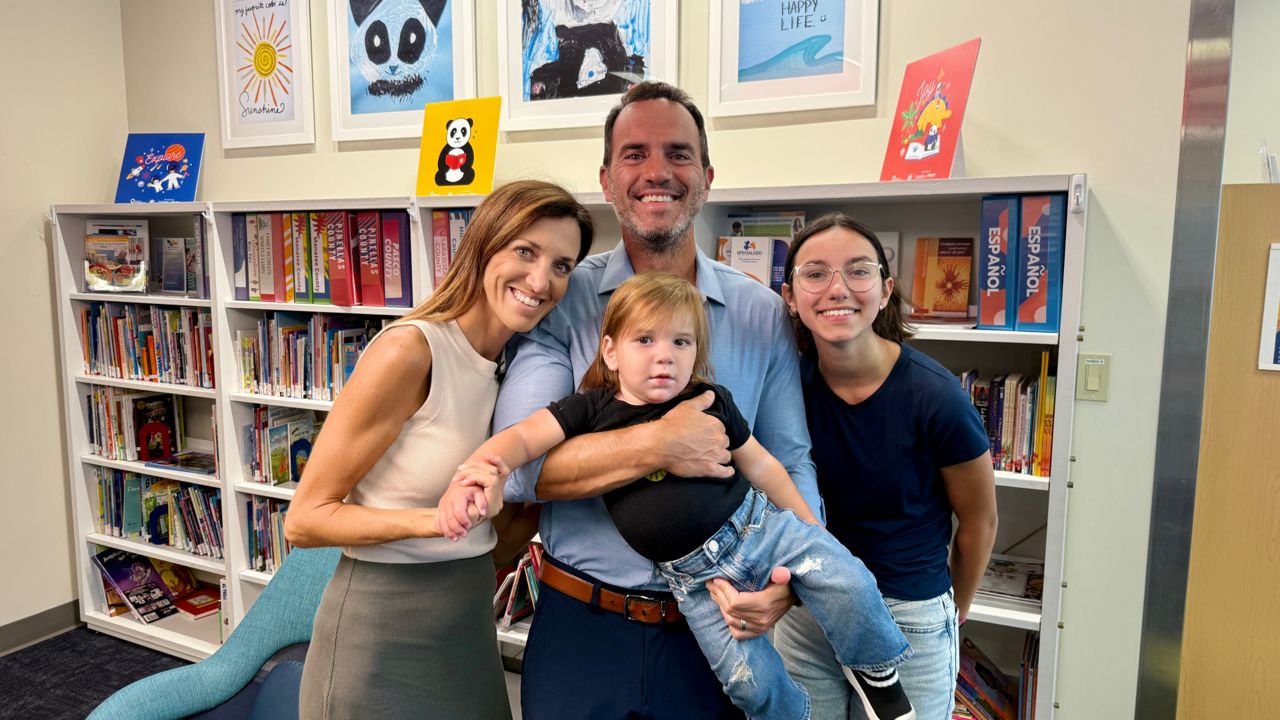
The Loughran-Fox family. (Spectrum News/Erin Murray)
“He has scars on his body from where he had surgery and needles and injections and, you know, all over it. He doesn’t know it. He is happy. He’s grateful. He is just thrilled to be alive,” said Bryanna.
Jumping at the fact that today he is happy and healthy, and in better care with a new lab, crawling distance away.
The new lab will support newborn screening efforts in areas like neurology, cardiology, gastroenterology and dermatology.
The lab will also be available to help health systems across the state and country.
If you want to support Johns Hopkins All Children’s Hospital, click here.