
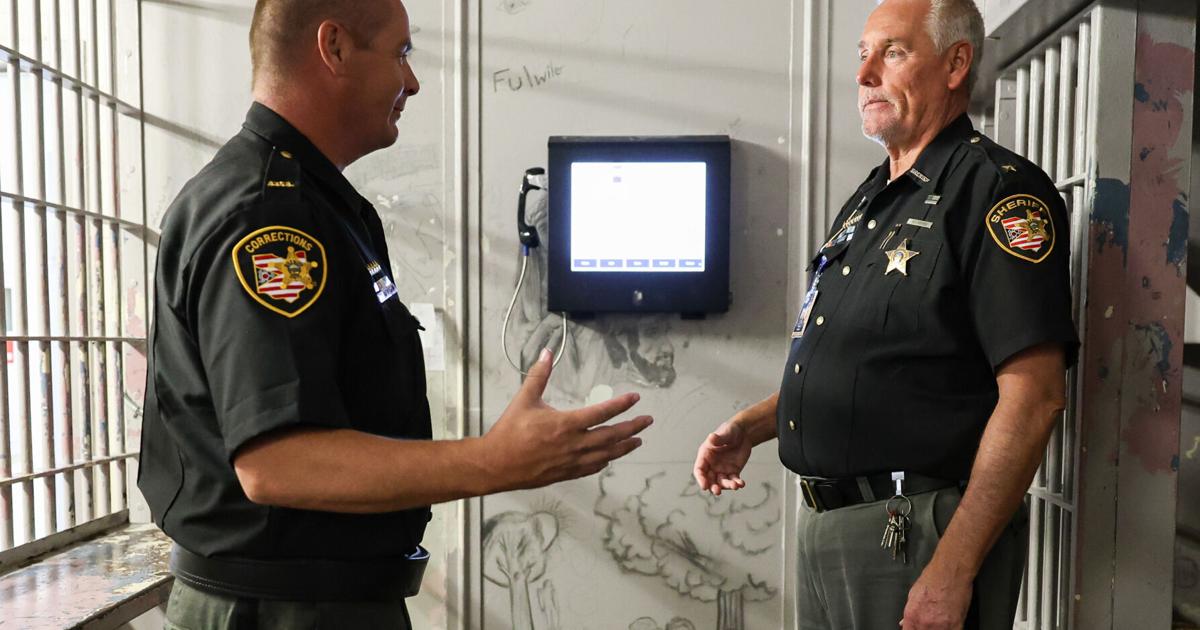


A view of cells in in the Miami County Jail, the county’s maximum security facility in the safety building in downtown Troy. Each cell can fit a maximium of four inmates. The cell pictured is used for housing female inmates. “No one has bars anymore,” assistant jail administrator Nate Collett said. BRYANT BILLING / STAFF
Voters’ rejection of a ballot request to raise the sales tax in Miami County has only delayed difficult decisions about how best to handle the county’s aging jail infrastructure, according to Sheriff Dave Duchak.
Voters were asked during the May 5 election to increase the county’s sales tax by 0.5% to fund the construction of a new jail and renovation of the jail facility on North County Road 25A.
Under the increase, for every $100 purchase, consumers in Miami County would have paid an additional 0.50 cents in sales tax.
The combined sales tax rate in Miami County is currently 7%, which includes a 5.75% Ohio state sales tax and a 1.25% county-level tax.
In an interview following the levy’s defeat, Duchak said he was disappointed but not surprised voters rejected the measure, which failed by roughly a 60-40 margin.
“I’ll be honest with you, it wasn’t a surprise,” he said. “We knew we were going into a situation where people are dealing with inflation, rising gas prices and taxes.”
The levy would have funded a plan county officials described as the most cost-effective path forward for addressing overcrowding and aging jail facilities.
Miami County Sherrif Dave Duchak (right) talks with assistant jail administrator Dave Duchak in a cell block in in the Miami County Jail, the county’s maximum security facility in the safety building in downtown Troy. The county is considering asking voters to approve a $100 million plan to build a new maximum-security facility next to its existiting minimum-security facility on County Road 25-A, just north of Troy. BRYANT BILLING / STAFF
Plans included development of a new 200-bed service jail, which would have been constructed adjacent to the current minimum-security jail on 25A.
Duchak said the issue has been studied for years and warned the county still faces a growing problem.
“The problem is not going to go away,” he said. “The problem is going to grow worse, and it’s going to grow more costly.”
According to Duchak, the jail in downtown Troy is 54 years old and has exceeded its expected 30-year lifespan. He said the jail regularly fails state inspection standards, including overcrowding requirements, and suffers from aging infrastructure problems that create safety concerns for staff.
“A lot of the (electronic) jail locking mechanisms don’t work,” Duchak said. “So, to evacuate people in the event of a fire or anything else, a lot of the cells have to manually unlocked. It’s not safe for the correction staff or inmates.”
Duchak said county leaders are now weighing whether to invest an estimated $7 million to $8 million into repairs for a facility he described as outdated and too small for the county’s current or future needs.
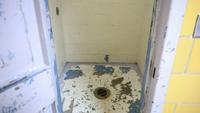
A view looking at the floor of a “suicide cell” in the Miami County Jail, the county’s maximum security facility in the safety building in downtown Troy. The drain in the floor is a bathroom for an innmate housed in the cell, though assistant jail administrator Nate Collett said they try to avoid having innmates use it. “Nobody really has these suicide cells anymore. They aren’t really a thing,” Collett said. BRYANT BILLING / STAFF
These major repairs could mean temporary closure of the downtown facility while construction is ongoing, Duchak said, which would force the county to send inmates to neighboring counties, increasing transportation and medical costs while pulling deputies and local officers away from patrol duties.
“And you’d still be dumping millions into a jail that’s too small for the county,” he added.
Duchak said the jail was originally designed for far fewer inmates than it now houses. State standards recommend a capacity of about 42 inmates, he said, while winter populations often reach the 60s and summer populations can climb into the 70s and 80s.
Complicating matters, the county’s minimum facility on 25A cannot house any inmates that require maximum security.
The sheriff also pointed to growing mental health demands inside local jails. Miami County currently has no infirmary beds in its jail system, Duchak said, even as county jails increasingly house people with serious behavioral health needs.
“Jails are slowly turning into mental hospitals,” he said.
Duchak expressed optimism about the proposed state mental health facility planned for the Trotwood area, which he said could eventually improve access to psychiatric beds for Miami County inmates. But access to that facility’s proposed 200 beds will be limited as it will serve multiple counties.
Currently, inmates needing psychiatric treatment are often transported to Northwest Ohio Behavioral Healthcare in Toledo, Duchak said.
County officials hope to pursue state jail construction funding made available under Gov. Mike DeWine and the Ohio legislature, Duchak noted.
Since 2021, Ohio has allocated roughly $50 million annually for local jail construction and renovation grants, an allocation that is expected to continue for at least the next two years, Duchak said.
Neighboring counties have already benefited from these funds, including Greene County, which received approximately $15 million for its jail project, and Montgomery County, which received funding for jail-related medical and mental health improvements.

A view of piping behind a cell block in the Miami County Jail, the county’s maximum security facility in the safety building in downtown Troy. Assistant jail administrator Nate Collett said matenince works have to “constantly fight” to keep plumbing operational. BRYANT BILLING / STAFF
But Duchak said grant applications require counties to demonstrate a reliable funding match, something Miami County lacks after the ballot issue defeat.
“We have to be able to show that the county has a funding stream to pay the rest of it,” he said.
Despite the failed vote, Duchak said county leaders do not currently plan to return the issue to voters.
“I don’t see it worthwhile putting it on the ballot again,” he said. “I just don’t think the voters are going to do it.”
The sheriff said he and the Miami County commissioners plan to regroup in the coming weeks to determine next steps.
“I want to thank everybody who voted, regardless of how they voted,” Duchak said. “But stay informed because this situation is not going away.”
Residents can find more information about the issue on the sheriff’s website, at www.miamicountyohio.gov/sheriff.