
TPD officers can no longer ask another law enforcement agency to conduct a pursuit that they couldn’t conduct themselves.
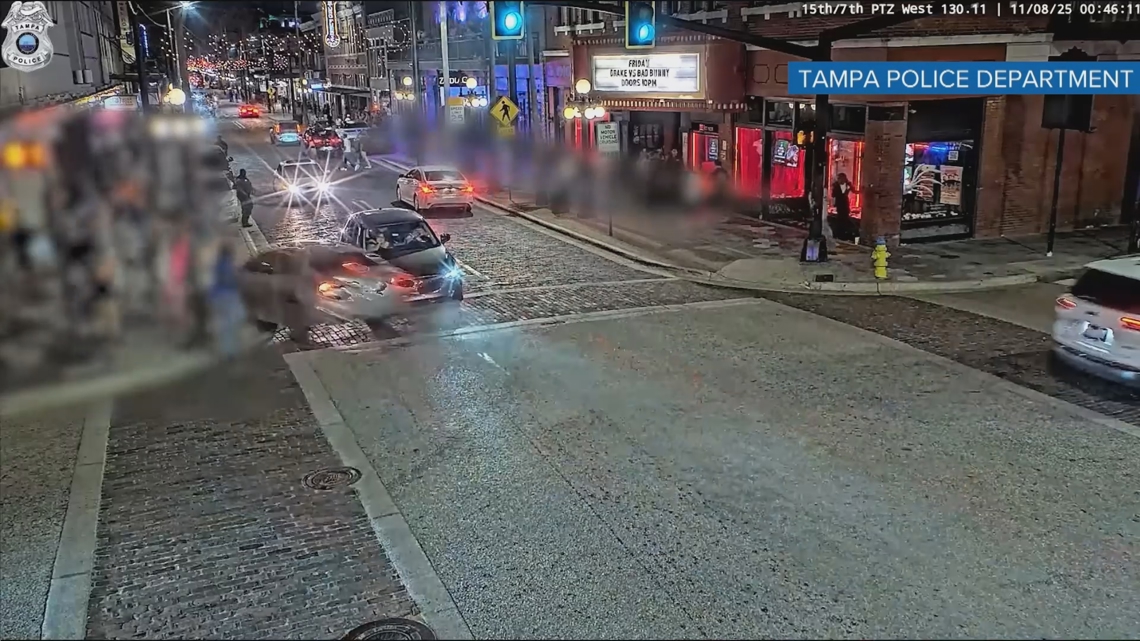
TAMPA, Fla. — The Tampa Police Department (TPD) is changing its pursuit policy following a deadly crash in Ybor City last November that killed four people and injured 13 others.
The department confirmed to 10 Tampa Bay News that officers can no longer ask another law enforcement agency to conduct a pursuit that Tampa police officers themselves would not be allowed to initiate under department policy.

This story continues below.
The change comes after an internal review into the Nov. 8 crash involving 22-year-old Silas Sampson of Dade City. Investigators say Sampson was driving recklessly before Florida Highway Patrol (FHP) initiated a pursuit moments before he crashed into a crowd near Bradley’s on 7th Avenue in Ybor City.
Sampson now faces multiple charges, including vehicular homicide and DUI manslaughter. He has pleaded not guilty and remains held without bond ahead of a scheduled Aug. 31 court hearing.
TPD policy has restricted pursuits to forcible felonies and certain burglaries since 2022, with officers also needing approval to continue a chase.
However, some departments with strict chase policies will ask FHP — which has significantly less restrictive pursuit guidelines — to pursue drivers instead.
“I have spoken to people that work for agencies that said, ‘Well, we can’t pursue, so we just get FHP to come and pursue them,’” said Thomas Gleason, a retired captain, who teaches law enforcement safety issues through PursuitSAFETY after losing his son who was a police officer in Louisiana during a chase.
This policy change prevents that from happening in the future.
The internal review found Tampa police officers followed department protocol during the Ybor City incident and did not request FHP to pursue Sampson. Investigators also found Tampa police had not requested FHP involvement in any fleeing-to-elude incidents since February 2024.
As part of the policy changes, Tampa police also removed department portable radios previously provided to FHP during joint enforcement operations.
Gleason said limiting pursuits for lower-level offenses can reduce the danger to the public.
“When we pursue for minor violations, we are creating a situation where we’re causing more harm — or could cause more harm — to the general public,” Gleason said.
While this policy change may not have changed the outcome in Ybor, he still praised TPD for proactively tightening the policy.
“If we see that there’s something that we can do internally that can save lives rather than cost lives, then we do it,” Gleason said. “My hat’s off for them for taking a proactive approach.”
FHP did not respond to requests for comment from 10 Tampa Bay News. TPD declined our request for an interview.
10 Investigates has also found wide differences in pursuit policies across the Tampa Bay area. For example, the Bradenton Police Department generally prohibits pursuits unless absolutely necessary, while the Sarasota Police Department allows pursuits as long as officers do not unnecessarily endanger lives.