
Florida is in one of its worst droughts in decades. The Tampa Bay area is under state-mandated “extreme water shortage restrictions.”
It’s serious enough for emergency declarations and conservation warnings.
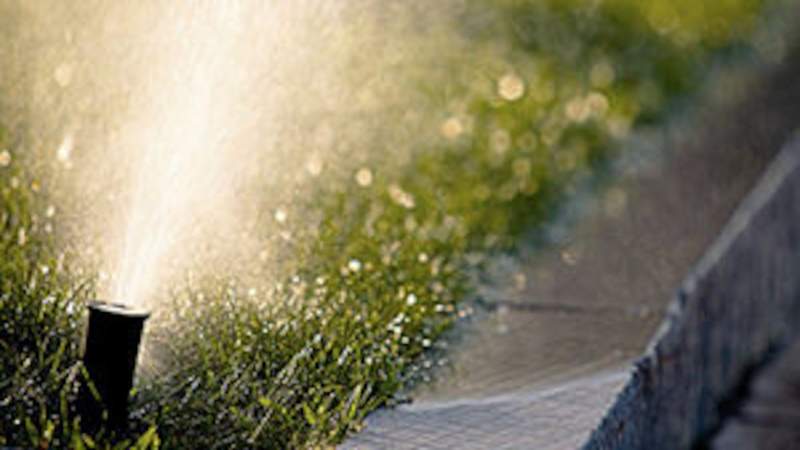
Yet residents are still allowed to spray hundreds or even thousands of gallons of drinking water onto their lawns.
That doesn’t sound like scarcity, even if the scarcity is real. It seems more like a contradiction — or an absurdity. At a minimum, it creates a credibility problem. “Take shorter showers” loses its punch when a single morning of lawn irrigation can consume more water than dozens of showers.
For now, we get away with the inconsistency. But as the area grows and scarcity increases, water managers will have to dispense more tough love, and we’ll have to accept it. We’ll have to embrace browner lawns or no lawns — or be willing to see our water bills spike to maintain our current ways.
This wouldn’t matter much if yard watering didn’t account for such a large share of residential potable water use — 40% in some areas. Reclaimed water, which is partially treated and not suitable for drinking, helps preserve the supply, but many homes in the Tampa Bay area aren’t connected to a reclaimed water system.
Too much drinking water is wasted through overwatering, runoff and evaporation. Some sprinklers water the sidewalk instead of the yard. None of which helps make lawns any lusher.
Admittedly, the issue is more nuanced than the idea that we can’t have a water problem if we allow water to be wasted sprinkling lawns. The drought is a temporary pain, not a long-term disaster, as my Times colleagues Michaela Mulligan and Rebecca Liebson outlined in an interesting article earlier this month.
Our drought is a stress test that reveals whether our system can handle demand. Right now, we’re passing the test, even with the lawn watering. But our rapid growth will apply more pressure. Hillsborough County’s population alone is expected to soar more than 20% in the next 15 years. Pasco could grow even faster. That’s a lot more thirsty people tapping into a limited water supply.
Water managers are balancing what’s best for our drinking supply against real-world realities. The rainy season is coming. Until then, people don’t want their lawns to die. So we thread the needle between resource sustainability — by limiting lawn watering — and avoiding political backlash — by not limiting it too much.
Florida specializes in these kinds of policy gymnastics. We support low-density zoning and lament sprawl. We subsidize rebuilding in flood zones and wonder why insurance costs soar. We tolerate ornamental lawn watering during droughts and then spend hundreds of millions of dollars to expand the water infrastructure.
The contradictions persist because the costs are diffuse and arrive years from now, while the benefits — a beachfront home, a new subdivision, a green lawn — are immediate and personal.
In the meantime, the inconsistent message about water use risks weakening public buy-in when more conservation actually becomes necessary. It can also program us to think that building new water plants and reservoirs is the only way forward.
Often, what’s politically workable trumps our long-term best interests, though that calculation often depends on one’s perspective. If you love a lush lawn, your priorities will likely be different from that of someone who installed Florida-friendly landscaping or lives in a condo tower.
No matter your view, our current lawn watering paradox has an upside. Our system currently has enough capacity to allow lawn watering and keep the kitchen taps flowing and the toilets flushing — during a drought.
Parched Western cities have been forced to respond much more aggressively. Las Vegas pays homeowners to remove grass and bans non-functional turf in road medians, office parks and homeowner’s associations. Arizona encourages greywater reuse. Some New Mexico communities require rainwater harvesting. Cities including San Diego and Big Spring, Texas, recycle wastewater into drinking water, sometimes referred to as the terribly named “toilet-to-tap.”
Several places have enacted price incentives to make people think twice about installing grass, including charging more than $3,000 a month to keep a large lawn green during the hottest months.
The policies work: Las Vegas uses less water today than it did 20 years ago, despite more residents and tourists.
The point isn’t that Florida should copy all of those policies. It’s that conservation, including drastically cutting back on lawns, can materially reduce demand when governments treat it seriously and deploy a consistent message.
Florida’s comparatively rainy climate gives us more margin for error than the desert Southwest, where the water supply teeters on a knife’s edge. But the examples from those Western cities highlight the importance of making incremental but important changes before a crisis becomes irreversible. Small, consistent improvement now beats draconian measures later.
Western cities have shown that conservation works when governments align incentives with reality. They have also shown something else: Lawns are optional. Water security is not.