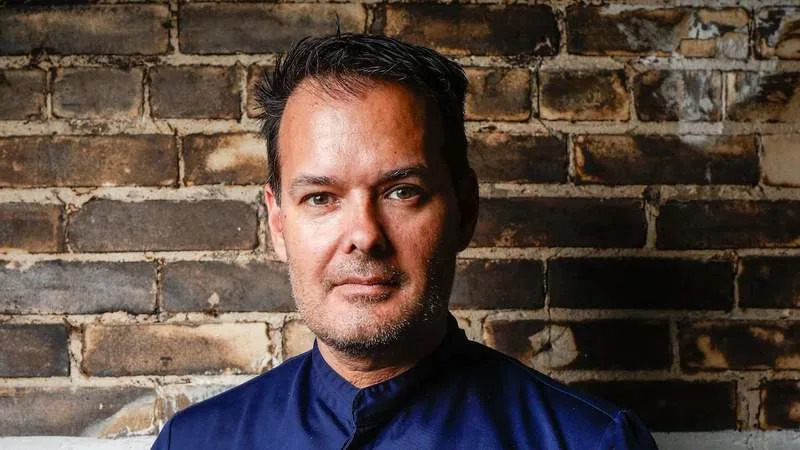
Two years ago, primetime reservations at the downtown Tampa restaurant Ebbe were in high demand.
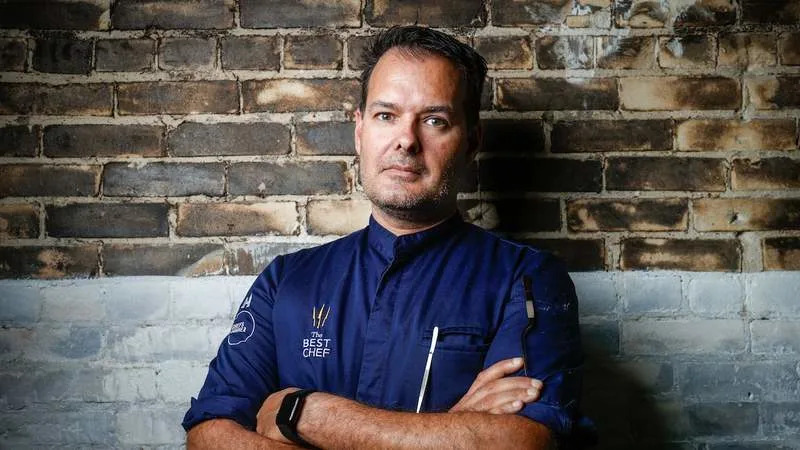
Diners shelled out nearly $400 a head for Scandinavian-inspired meals that included dishes like cantaloupe paired with trout roe, pheasant coated in bee pollen and Jerusalem artichoke eclairs.Under the vision of Swedish chef Ebbe Vollmer, the restaurant netted a coveted Michelin star within its first year. A few months later, the Tampa Bay Times included Ebbe on its list of Tampa Bay’s Top 30 Restaurants.
But inside the restaurant, a different story was unfolding.
The Times spoke with 11 former and current employees who portrayedVollmer in on-the-record interviews as a charismatic,mercurial boss who was often absent from the restaurant that bears his name. The workers,most of whom were trained chefs, detailed a hectic workplacewhere they were tasked with running all aspects of the restaurant — from cooking and serving customers to washing dishes, cleaning bathrooms, and dealing with administrative duties.
They described discrepancies and delays in their paychecksand constant staff turnover. The restaurant at timescould be in such disarray, employeessaid,they’d have to scramble for last-minute ingredient deliveries and pay with personal funds.
Sometimes, staff said, dishes that purportedly featured exotic fare would be composed of less glamorous, cheaper ingredients. A smoked creme fraiche that was sour cream. Sole that was billed as turbot. On a multicourse menu that highlighted seasonal gourmet cuisine, both from Florida and abroad, there were occasions when roughly half or more of the produce came from Walmart, five employees said. Vollmer acknowledged that the restaurant sometimessourced ingredients from Walmartbut disputed that it happened regularly.
The Times spoke with employees who worked at Ebbe from its first days in 2023 until early this year.Though their experiences and tenures varied, the accounts of former workers were consistent:The chaos left them disillusioned about the world of fine dining.
Vollmer declined an interview request for this story but provided answers to questions sent by the Times. He said that he was “surprised by the overall characterization”relayed by his former employees, which he said was “exaggerated, internally inconsistent, or disconnected from the operational reality” of running his restaurants.
Henotedthe challenging work environment but said he was “proud of what we’ve built in a relatively short period of time.”
“Working at this level isn’t for everyone,” he said. “The standards are very high, as is the pressure, and it requires a certain mindset and commitment. My role is to bring a team together that can work to those standards, in that environment. How each individual embraces the opportunity or meets that challenge is ultimately up to them.”
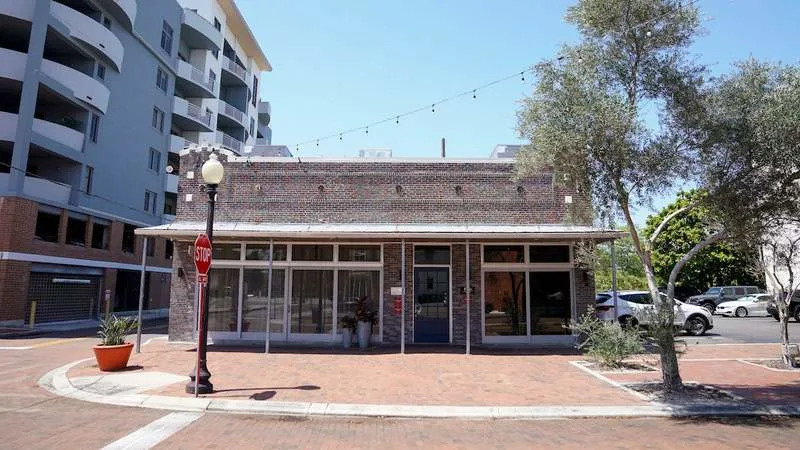
A night out at Ebbe now feels very different. During a Times visit last fall, service was harried, and while some dishes impressed, others fell well short of what one would expect at any fine dining restaurant, let alone one with a Michelin star. Two smaller concepts in the same space have opened and closed within the past year, the latter of which lasted barely three months.
And Vollmer? The celebrated chef, who is in the process of opening restaurants elsewhere in the world, is rarely there.
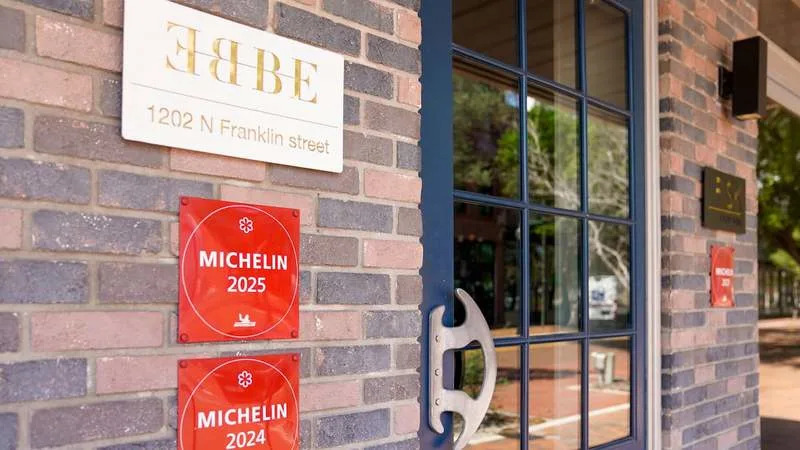
Outside of Ebbe, three cherry red Michelin plaques frame the restaurant’s cobalt door — the internationally recognized symbol denoting culinary excellence.Ebbe is just one of five restaurants with a star in Tampa Bay. But the rocky reality of fine dining hinges on precision and a certain element of showmanship.Often that comes at a steep cost — both to diners and those working behind the scenes.
Most employees the Times interviewed said they valued their time at Ebbe, and the clout that accompanied working at a Michelin-starred restaurant. But they left disheartened by the experience.
“We’re people that can handle and run a restaurant,” said Ryan Corbin, a chef who worked for Vollmer until quittinga few months ago. “But he didn’t give us the tools and didn’t support us. He did not sign us up for success.”
Ebbe’s trajectory highlights how easy it is to reach the breaking point: Stars and accolades can only take a restaurant so far.
When Ebbe opened in May 2023, it appeared perfectly poised to impress Michelin: The restaurant’s multicourse prestige menu was wildly expensive,the trendy New Nordic theme was heavily rooted in European fine dining, and the chef boasted impressive stints at Michelin-starred eateries across the world. These are qualities the esteemed guide has historically been known to favor.
Founded in 1900 as a 400-page bookletwith three-star ratings to help guide European travelers, the Michelin Guide has become the world’s leading restaurant ranking system. At first, the guide existed in just a few American cities,but in recent years, the company has rapidly expanded its footprint through pricey paid partnerships in the places where it lands. The practice has garnered a fair amount of criticism, as the guide does not appear to bestow stars to restaurants in new regions where tourism boards haven’t shelled out.
Michelin began its foray into Florida in 2022following a lucrative deal between the state’s tourism marketing agency, Visit Florida, and tourism boards in certain parts of the state. The launch included restaurants in Tampa, Orlando and Miami.Collectively, the agencies paid Michelin at least $1.5 million over three years to publish guides in these three cities.
For Tampa chefs and restaurateurs, Michelin’s arrival was huge. In May 2023, Rocca, Lilac and Koya earnedone-star ratings.
Send us a news tip
The Tampa Bay Times is committed to covering the local restaurant landscape from all angles, and that includes the experiences of service workers. Do you have a story you’d like to share? Reach out to senior food and dining critic Helen Freund at hfreund@tampabay.com or message her securely on Signal at helenfreund.23
Two weeks later, Vollmer opened Ebbe. The intention was clear: get a Michelin star.
Several employees said they took the job with Vollmer specifically because they shared the same aspiration.At least one chef relocated from another state,something that’s become increasingly common since the guide’s launch in Florida.

When the restaurant opened, employees said they were paid hourly rates but eventually became salaried, a pay structure that’s more common in European restaurants.Though they were paid based on a 40-hour week, employees said they worked closer to 50 to 65.
If there was work that needed to be done, they were expected to come in early and prep, often not leaving until the restaurant was cleanedafter service — sometimes as late as 1 a.m., threeformer employees said.
Nathanial Tims, a chef at the restaurant who quit in 2024, recalled sometimes working 14-hour shifts and said he “had no home life whatsoever.”
Working long hours isn’t novel in the world of fine dining. Star-chasing chefs and aspiring cooks have long accepted 15-hour days. Andemployeesat Ebbe said they accepted the culture as part of the deal.
Tims said he recalled thinking: “It’s gonna suck, the long hours, but if we get the star, it will be worth it.”

Vollmer was known to flatter and make big promises, sixex-employees said. In the lead-up to the guide’s star reveal in 2024, former employees said Vollmer promised robust raises if the restaurant received one. Vollmer, in his statement, said there were “early conversations with key team members about significantly improving compensation if the restaurant reached major milestones like Michelin recognition.”
The commitmentsappeared to vary from person to person.
“They were handshake agreements,” said Greg Emerson, a pastry chef at the time who said he and others were told they would get 50% raises.
Both current and former employees said that, after the star, there were times when their paychecks wouldarrive late. Vollmer would also sometimes hire short-term workers, three of whom told the Times they were never compensated.
Juan David Laguna and his girlfriend, Ariadne Herrera, said they were hired to work on Valentine’s Day this year. Laguna, who said he worked two days, including the February holiday, said neither he nor Herrera was paid.
Another short-term hire, Sundiata Soulbefree, said he worked three days for Vollmer on a special chef’s dinner in 2024 and was notpaid.
“To my understanding, employees wereremunerated based on the agreed structure,” Vollmer said. “If there were discrepancies, they were not raised formally and would be taken seriously.”
Vollmer said there was “an isolated situation” around the holidays “where onboarding and payroll setup did not align as smoothly as it should have, which may have resulted in a delay.”
He said the issue was “administrative rather than systemic.”
There were other issues with compensation: Because the chefs were serving customers, unlike at most restaurants, they felt entitled to tips.
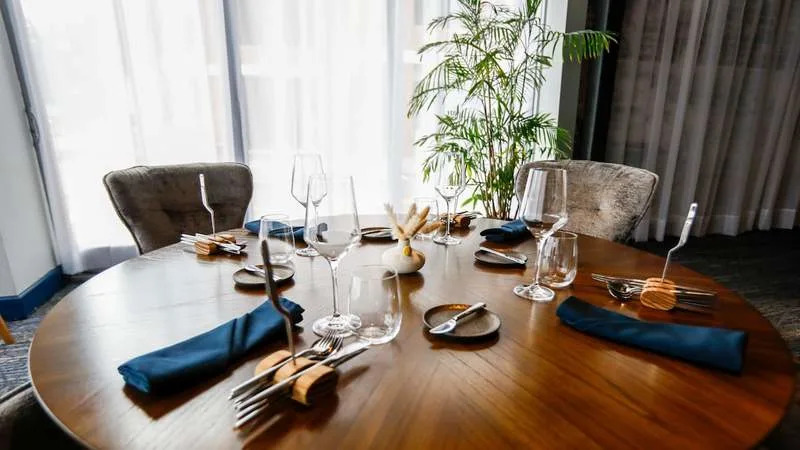
A dinner for two at Ebbe costs $761 for the 11-course “prestige menu,” which includes tax and a mandatory 20% service fee. That does not, however, include tip or drinks (an eight-glass beverage pairing costs an additional $185).
The 20% service charge didn’t appear to go directly tothe staff, seven employees said. Under Florida law, it doesn’t have to: Service charges are considered part of the restaurant’s revenue, and owners are not required to share them with staff.Some restaurants do, but diners might be surprised to learn that to give their server a little something extra at Ebbe, they have to leave an additional tip.
Vollmer said the restaurant didn’t havea traditional tipping model.
“We initially operated without allowing tips,” he said, “instead using a structured compensation approach supported by a service charge.”
During a Times visit to Ebbe in October 2025, a receipt showed 20% had been added to the total but did not refer to it as a service charge.
“20% gratuity was automatically added,” the receipt read.
The payment slip also featureda separate line for an “additional tip.”
Even when guests opted to tip, eight employees said those tips didn’t appear to be allocated in an even or transparent manner when they worked there.
Also, they said, Vollmer would partake in the pool.
“It wasn’t really fairly distributed,” said John Robbio, who was part of Ebbe’s opening staff and left after the star. “He would take a handful of it himself.”
Vollmer said tips were “handled as a shared pool among the team working service, with the intention of keeping distribution simple and transparent.”
He added that “gratuities were processed digitally through Square and were not handled informally or off-record.”

Benjamin H. Yormak, a labor and disability attorney based in Bonita Springs, said tips must go to arestaurant’s employees, not the owner, even if the owner is serving customers.
One employee, Paul Gerhart, went so far as to file a lawsuit against Vollmer. In a 2023 complaint, Gerhart claimed he raised concerns that Vollmer was keeping tips for himself. Afterward, according to the lawsuit, Gerhart had hishours cut back so drastically that he was effectively fired.
In a motion to dismiss the case, Vollmer statedthat Gerhart’s accusations “lacked sufficient specificity” and that he failed to provide a “clear and concise description of the alleged wrongdoings,” including not proving his own eligibility to participate in the tip pool as a chef. Vollmer also said Gerhart failed to providea timeline for when his hours were allegedly cut. Court records show the case ended up getting dismissed after Gerhart’s lawyer withdrew from representationand Gerhart failed to continue litigating it on his own.
Daniel DeVino, who is currently the lead chef at Ebbe, said the complaints from previous employees are overblown.
DeVino worked at several esteemed and Michelin-starred restaurants before coming to Ebbe, including California’s The Restaurant at Meadowood and New York’s Del Posto and Eleven Madison Park.
“This is just the way it is,” DeVino said. “You just shut up and work. If I have to clean the bathrooms, I clean the bathrooms. If I have to polish silverware, I polish silverware. This is how it is in Michelin kitchens — we’re a community.”
DeVino said his paychecks have been late occasionally. He said he believed Vollmer to be a “good guy” who just happened to be “shitty with his finances.”
In April 2024, one month shy of the restaurant’s first anniversary, Ebbe got a Michelin star.
Vollmer‘s employees were ecstatic. But the thrill was short-lived: Thepromised raises went unaddressed, fouremployees said.
“To get the star and not have him follow through on his end, it sort of ruined the whole thing,” Tims said.
Within a few months, several membersof Ebbe’s opening staff, including Emerson and Tims, had quit.
Vollmer’s entry into the Tampa Bay dining scene was anything but smooth.
In June 2022, he moved to Tampa for a job with Ten Rooms, an upscale restaurant inside Centro Ybor. The owners had Michelin aspirations and paid Vollmer a $100,000 salary as executive chef.
About six months later, Vollmer was fired. In a lawsuit, Ten Rooms’ owners asserted that Vollmer was in breach of his contract and had done only the “minimum requirements” while delaying the restaurant’s opening. They contended thatthe chef had been planning his own concept while employed and that he interfered with the restaurant’s “vendors, investors, employees and customers,” costing them hundreds of thousands of dollars. According to court records, the case was settled and later dismissed.
In February 2023, Vollmer became executive souschef at Boulon, Water Street’s buzzy French brasserie from Next Level Brands.
Less than two months later, he left.
Next Level Brands founder Jeff Gigante confirmed Vollmer’s departure and, while he didn’t elaborate, said the chef was “not eligible for rehire.”
Once Vollmer opened his own restaurant, employees there had their own set of complaints.
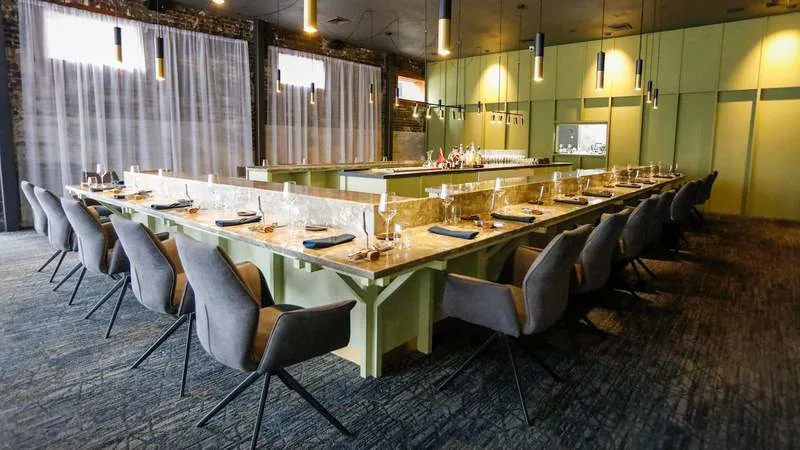
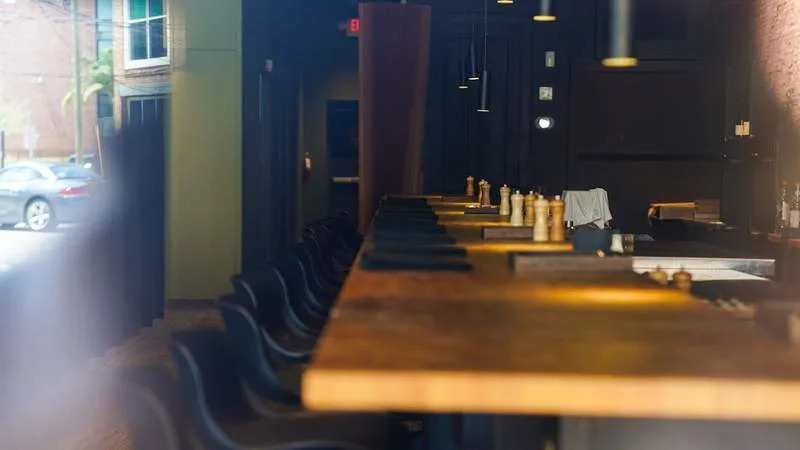
Ebbe operated differently: There was no host and no dishwasher. Chefs did double-duty as servers, and most nights, just a fewpeople ran the entire space, which could seat up to 40 people but was mostly occupied by a 26-seat bar. On busy evenings, they’d serve more than 400 plates.
Employees dealt with vendors, cleaned bathrooms and washed dishes. Some were given administrative duties. Others, like Robbio, did routine plumbing or construction work for Vollmer. Often, staffhad to scramble to get ingredients when shipments were delayed. Sometimes when it rained, DeVino said he had to apologize to diners about the leaky ceiling.
The turmoil wasn’t limited to Ebbe.
In the same dining room, partitioned by a thin makeshift wall, Vollmer opened two casual concepts. The first, a seafood-centric Nordic spot called Fisk, lasted about a year. The second, Thai restaurant Stop-BKK, barely made it three months.
Though Fisk garnered its own accolades, including swift inclusion on Michelin’s “recommended” list, the scene at Stop-BKK was harried from the start.
On one particular evening in February, during a Times visit to the restaurant, the spot seemed less like a place vying for Michelin recognition and more like a scene out of “Hell’s Kitchen.” Electrical cords hung exposed, and orders were forgotten. Wine and water glasses sat empty. And the food, though fine, was confounding: Described as “Americanized” Thai, the dishes were absent of things like chilies and fish sauce, hallmarks of the Southeast Asian cuisine.
Corbin was tasked with running both Fisk and Stop-BKK. He said things began going south when Vollmer started traveling abroad, sometimes spendingmonths in Bangkok, where he was opening a restaurant. On one occasion, the staff had to cancel reservations for the evening because a food delivery didn’t arrive. Earlier this year, the one employee who knew how to bartend quit.The entire cocktail program was scrapped.
“It was just a mess in there,” Corbin said. “He was setting us up to fail.”
Eventually, the chaos trickledout to the front of the house.
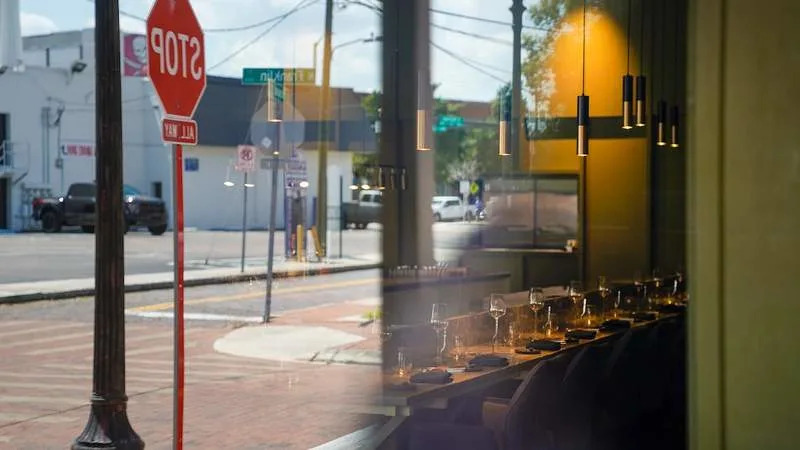
A sampling of Google and OpenTable reviewsfor Stop-BKKbeginning in December 2025 shows a bit of the diner’s perspective. The negative reviews note lackluster service and shoddy decor, long waits for food, and reservations that were canceled at the last minute.
On Jan. 3, a diner wrote: “The server couldn’t answer basic questions about menu items and the decor felt like we were in a supply closet that was undergoing renovation. The food was fair for the price point, but everything felt like it was missing one element. It’s mind-boggling that a place that is tied to a Michelin one-star restaurant is so uninspired and provides sub-standard service.”
On Feb. 10, “Benjamin” from Chicago wrote: “Unfortunate experience at BKK. When we arrived we were told they would not be able to serve any drinks except wine because they did not have employees…One of the stranger experiences I have had. We were told the owner/chef has been out of town for the past few months, so that is why the place is falling apart. Fisk was one of our favorite places but no longer. Sad.”
Some mentioned the absence of liquor service, wine or both, with one reviewer noting they had to Uber Eats their own bottle of wine to the restaurant.
When asked about his absence from the restaurant, Vollmer told the Times he has “led and contributed to the opening and development of restaurant concepts and private dining experiences across multiple international markets, including Sweden, Greece, Jordan, Tokyo, Bangkok, Mexico, Ecuador, Washington DC, and Denver, with further projects underway in Vietnam, Gabon, Tampa, and New York.”
He said he’s remained involved in Ebbe’s operations “through the team on the ground and ongoing oversight.”
Vollmer’s approach — described on the restaurant’s website as utilizing “the best seasonal ingredients refined in the kitchen by Chef Ebbe and his team” — sets a high bar.
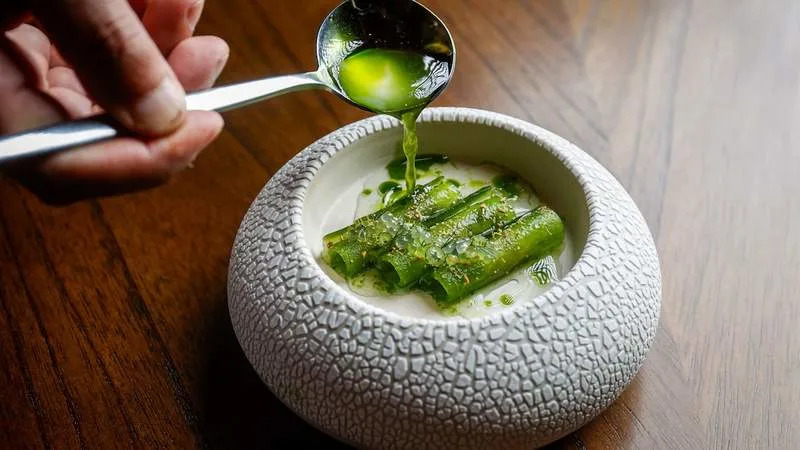
The menu boasts a list of pedigreed ingredients: “barbecued” peas with horseradish cream; Norwegian Vendace caviar; oysters paired with kohlrabi and elderflower; foie gras served with raspberries and licorice.
In Tampa Bay, there is simply nothing like it. But ex-employees saynot everything has always been asit was described.
Robbio recalled having touse his own money to pay for orders from places like Walmart.
“Half the time, he wasn’t ordering any of the food,” Robbio said of his boss.
Robbio said he sometimes wasn’t repaid in full for the orders — or at all.
Vollmer said it wasn’t standard practice for his staff to pay for ingredients out of their own pockets and that he wasn’t “aware of any consistent issues.”
Tims estimated more than half of the restaurant’s produce was regularly purchased at Walmart. Corbin guessed it was as high as 75% to 80%.
Vollmer said accounts that suggest the majority of the menu’s ingredients regularly came from Walmart are “simply not accurate and do not reflect how we sourced or operated.”
“Ingredient integrity is central to how we cook,” he said. “We work with high-quality products that can vary with availability and season. In terms of sourcing, we used a range of suppliers depending on the product, including local farms, specialty purveyors, and retail stores like Walmart, Publix and Whole Foods when appropriate.”
There wasalsothe time they served “Iberico pork that was pork from Publix,” Tims recalled.
“Numerous times, he would state one thing, and it would not be that,” Tims said. “He was just like, ‘They’re never going to know,’ that type of deal.”
Other employees had similar complaints.
Emerson, who worked at the restaurant for a little over a year and quit in late 2024, recalled a smoked creme fraiche that “was literally just sour cream.”
“It was just straight out of the Daisy (container),” he said.
Emerson said this would happen even before the restaurant received its Michelin star.
“Sometimes we would get Iberico, and sometimes it would just be straight-up pork belly. When we couldn’t get it, we would just substitute it out,” he said.
“He would sell sole as turbot,” said Robbio, who worked at the restaurant in 2023. “A lot of the fish we would get wouldn’t be right, and he would just say, ‘They won’t know the difference.’”
The menus at Ebbe often don’t include an ingredient’s provenance and are described in basic terms like “beets,” “garden peas” or “oysters.”
Corbin, who worked at Fisk but shared a kitchen with the Ebbe chefs, said the peas used were usually from frozen bags. He said he doesn’t believe Vollmer was purposefully duping diners, but rather that the chef’s practice of using ingredients from places like Walmart was part of his overall culinary ethos of taking “low-brow ingredients” and turning them into “high-quality” dishes.
But, Corbin also said, “there’s nothing that would justify the high price of what people paid.”
DeVino, the head chef at Ebbe, said there was no misrepresentation on the menu.
“He’s not falsely selling it,” DeVino said. “If we’re getting oranges from Walmart, we’re not pitching it as locally sourced.”
In his statement, Vollmer said that accuracy on the menu was “non-negotiable.”
“Simple ingredients do not necessarily mean simplistic cooking,” Vollmer said. “I think there can sometimes be a misunderstanding that using humble or familiar ingredients means there is less technique or thought involved. In many ways, the opposite is true, and that philosophy has always been central to my cooking across different restaurants and countries, whether in Sweden, Greece, Bangkok, Hong Kong, or Tampa.”