
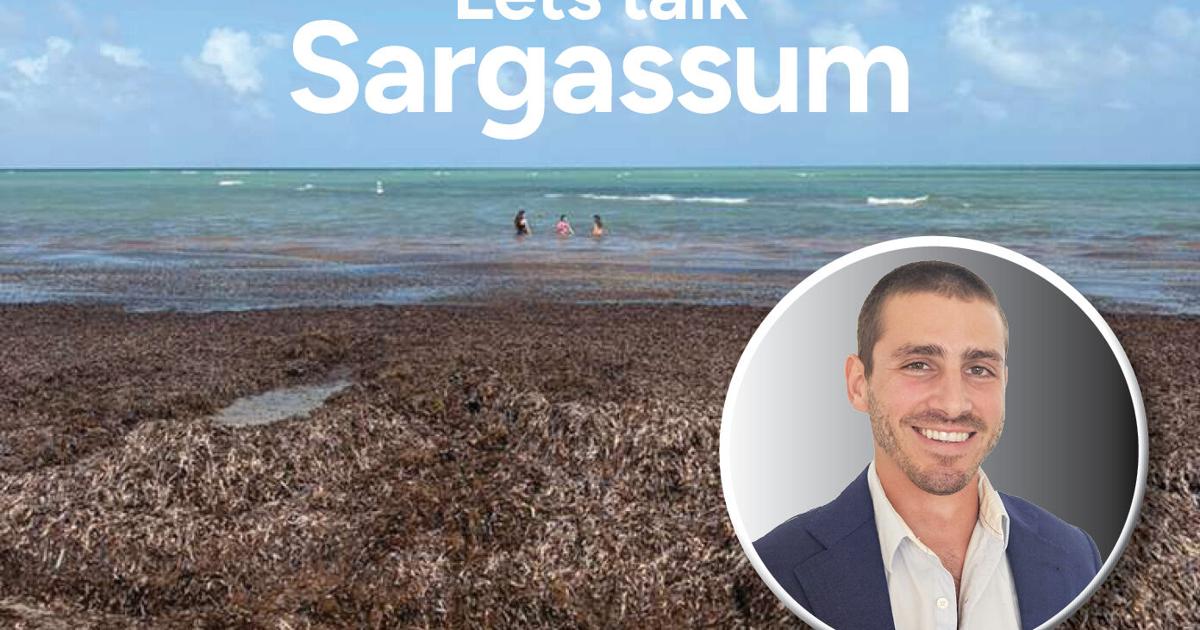
The Rotary Club of Key Biscayne will host guest speaker Julio Camperio, a research associate at the University of Miami Aquaculture Program, for a presentation on innovative coastal management solutions for a problem impacting Key Biscayne beaches; sargassum.
The talk, titled “Utilizing Black Soldier Fly Larvae Biotechnology to Upcycle Sargassum for Sustainable Aquafeed Production and Coastal Impact Mitigation in Florida,” addresses a persistent environmental challenge for local beaches.
Camperio’s presentation will explore how black soldier fly larvae can break down harvested sargassum seaweed, transforming a costly coastal nuisance into a high-value, sustainable nutrient source for aquaculture feed.
Camperio holds a PhD in marine biology and ecology from UM’s Rosenstiel School. His extensive background spans commercial farming operations across four continents, peer-reviewed research, and competitive grant funding focused on aquafeed innovation and sustainable marine ecosystems.
Black soldier fly larvae (BSFL) biotechnology is a rapidly growing field in sustainable agriculture and waste management that uses the larvae of the black soldier fly (Hermetia illucens) to recycle organic waste into valuable, high-quality products. Black soldier fly larvae are voracious eaters. In their larval stage, they can consume up to twice their body weight in organic waste every day.
The hybrid meeting takes place on Friday, May 22, at 7:30 a.m.
Attendees can join in person at the Village Hall Community Room, located by the turtle fountain at 88 W. McIntyre St., Key Biscayne, or participate virtually via Zoom (meeting ID: 819 3183 7406, passcode: 660027).
A full breakfast is served for in-person guests at $22 per person. Those interested should RSVP to kasaromano@me.com.
Visit rotaryclubofkeybiscayne.org for more information on the Rotary Club of Key Biscayne.