
Fire Chief Barbara Tripp said growing development throughout downtown Tampa, Ybor and the GasWorx district is driving increased emergency calls in the urban core.
TAMPA, Fla. — A decision by Tampa Fire Rescue to move a ladder truck out of New Tampa is drawing criticism from firefighters, residents and city leaders who say the area already struggles with some of the city’s longest emergency response times.
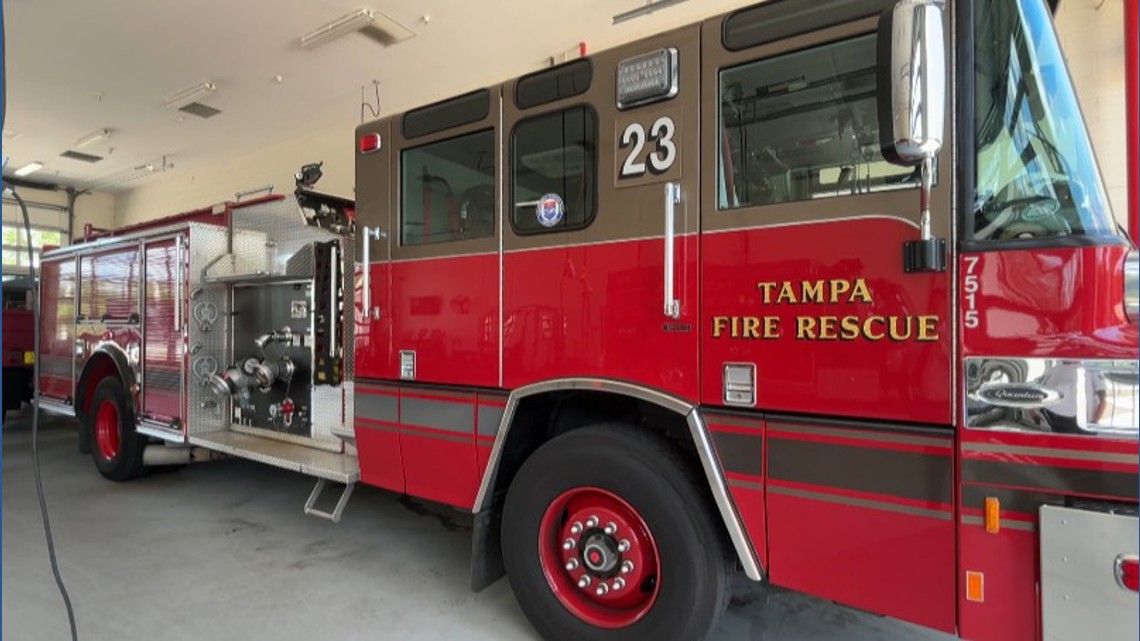
Fire Chief Barbara Tripp recently reassigned a ladder truck from Station 23 in New Tampa to Station 4 near Ybor City and the rapidly growing downtown core.
Tripp defended the move during a Tampa City Council discussion Thursday, saying the department relied on call-volume data and shifting demand patterns when making the decision.
“Me and my administration, staff, looked at some of the data to see what we can do,” Tripp said.
She said growing development in and around downtown Tampa, Ybor City and the GasWorx district is driving increased emergency calls in the urban core.
“Wherever the heat is, that’s where we need to put those vehicles,” Tripp said. “We can put fire stations on every corner, but if it’s not needed, if it’s not being utilized, what are we doing for the taxpayers?”
Tripp emphasized that public safety is not being compromised and noted the ladder truck was officially relocated May 17.
Still, Tampa Firefighters Local 754 argues the issue is not simply the number of calls, but how long it takes crews to reach emergencies in sprawling suburban areas like New Tampa.
“The call volume should not drive the allocation of units,” union president Nick Stocco said. “It should be response times and how quickly they can respond to you.”
According to data shared by the union, Stations 20 through 23 in and around New Tampa have some of the longest travel times in the city, in some cases exceeding 10 minutes — well above national standards.
“Volume doesn’t necessarily drive the necessity of fire suppression or emergency services,” Stocco said. “We should not be re-allocating units, especially in our area where we are seeing geographical challenges.”
Stocco also questioned why the department moved the truck after recently receiving accreditation.
“That unit has been in service at this station since 2019,” he said. “We’ve asked for the data to be able to prove how this decision was made.”
Neighbors living near Station 23 said they are worried about losing resources as New Tampa continues to grow rapidly.
“It does concern me,” resident Emily Yvonne said. “It seems like we need more resources locally. We need faster response time. And I think that pulling it further is going to be detrimental.”
Neighbor Nicholas James said population growth and traffic congestion are already stretching emergency services.
“It’s a shame that we are losing those resources,” James said. “New Tampa is growing. I mean major concerns if we’re losing a resource like that,” he added. “What if there’s a major catastrophe?”
Tampa City Council member Luis Viera, who represents New Tampa and has long advocated for additional fire resources in the area, also criticized the move.
“Why are we pulling out a ladder truck that has a diversity of uses out of a part of Tampa that has four out of the five fire stations with the longest response times?” Viera asked.
Viera said the debate points to a larger funding and staffing issue citywide.
“I think the biggest issue is making sure that our fire chief has the right amount of dollars and budget so that we can properly budget throughout the City of Tampa for Tampa Fire Rescue,” he said.
Viera stressed that the issue is not about opposing investment downtown.
“It’s nothing about Channelside or Ybor,” he said. “It’s about ensuring that all of Tampa is properly served.”
Tampa Fire Rescue recently added several new rescue vehicles to its fleet, many already assigned to high-growth areas around the city. Officials on all sides of the debate agree Tampa’s rapid growth is placing increasing pressure on fire rescue resources.
Council members voted Thursday to hold a workshop June 25 to further discuss fire coverage, response times and future resource needs across the city.