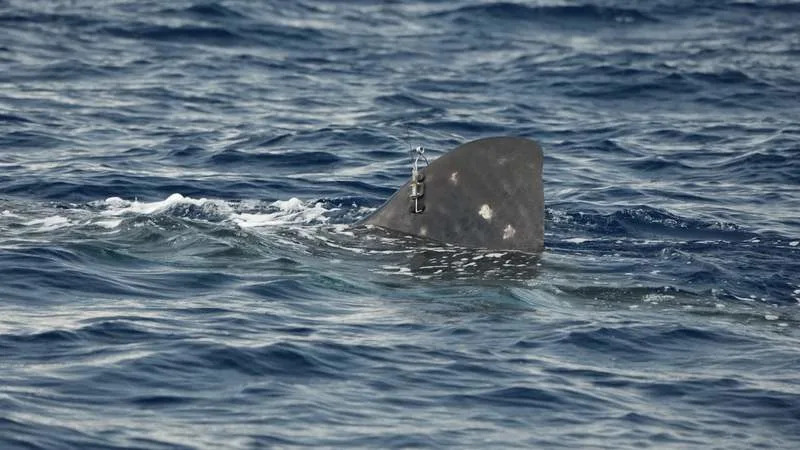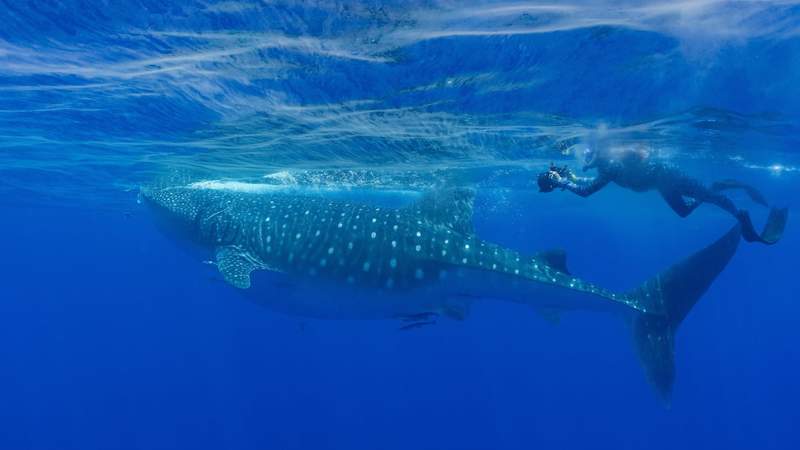
Researchers were more than 25 miles offshore Anna Maria Island last summer when they first met Larry.
The weather was fair, the seas calm, and the whale shark cruising toward them? The size of a delivery truck, measuring 26 feet long.
They hurriedly donned their masks and snorkels, grabbed a satellite tracker and jumped into the Gulf of Mexico. Nobody could know just how remarkable Larry’s story would soon become.
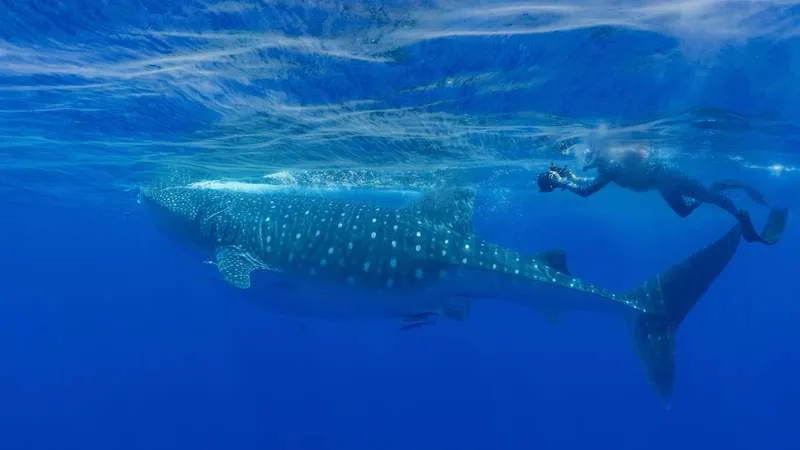
For years, scientists had been receiving reports of whale shark sightings offshore of Tampa Bay. But most of their research efforts had been focused on the Ewing Bank, a site off the coast of Louisiana where whale sharks historically gathered.
That changed last May, when a team of federal, state and university scientists tagged a series of whale sharks — and Larry in particular — that have since advanced their understanding of where the animals travel and why.
When experts sampled the waters offshore Tampa, they found it loaded with Spanish sardine eggs that whale sharks feast on.The waters may be prime feeding grounds for whale sharks, a species that gulps thousands of gallons of ocean water as they filter for food.
And there was no shortage of it last summer. The day Larry was tagged, whale sharks around his size were seen feeding for over 10 hours and could take in a whopping 330 pounds of food in just one day.
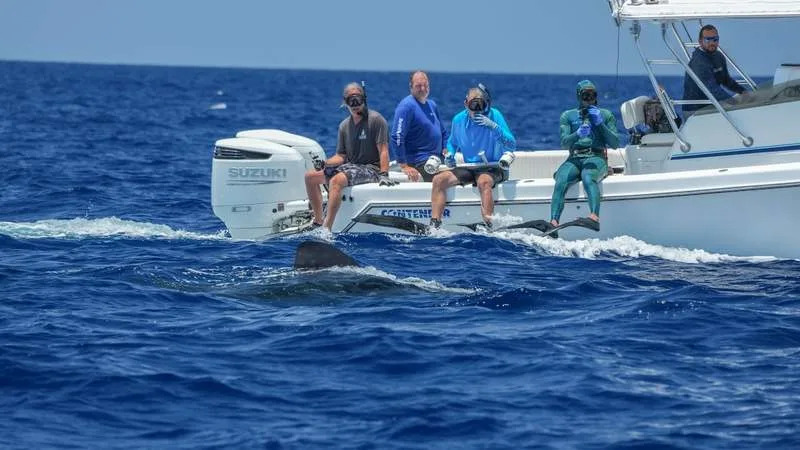
“Last year really opened our eyes to the importance of these areas,” said Eric Hoffmayer, a whale shark expert and research fishery biologist with the National Oceanic and Atmospheric Administration. “The animals were all at the surface, feeding on what seemed like an infinite amount of fish eggs.”
Researchers have deployed 15 tags on whale sharks in waters off Tampa Bay so far, Hoffmayer said.
But questions remain, and researchers are asking Tampa Bay locals to help answer them: If you’re offshore this summer — fishing, diving, sailing — and you spot a whale shark, report it to the University of Southern Mississippi, which is part of the ongoing collaboration to track the animals.
Experts are asking for some specifics: the general location of the whale shark, its estimated size, water depth and, crucially, any photos or videos.
“We’re just trying to get word out,” Hoffmayer said. “If people are out there on the water and see a whale shark, they can report that information that helps direct our research efforts.”