
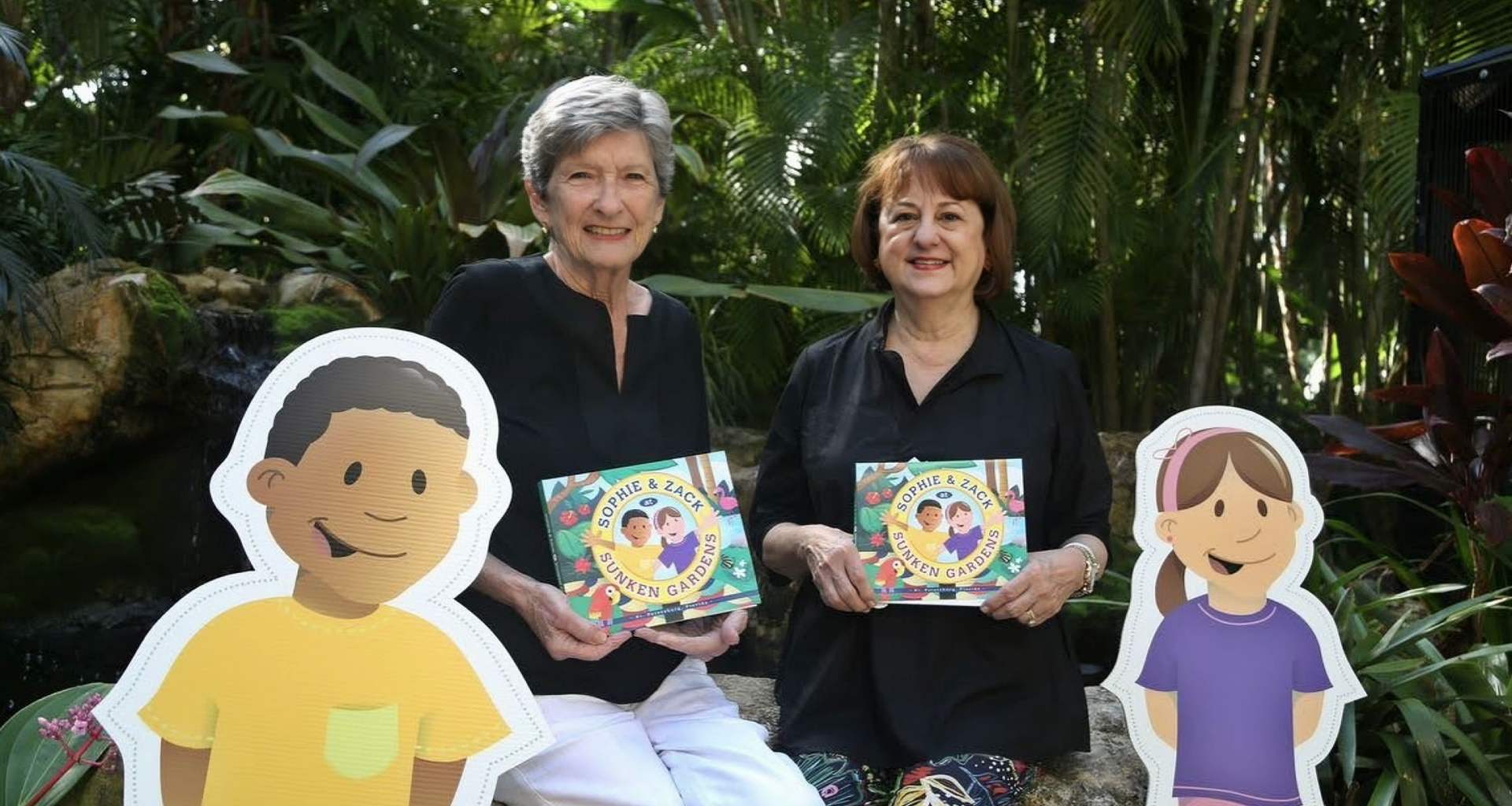
Passionate about preservation efforts, Robin Reed held many community positions in St. Petersburg.
Reed, who died March 24 at 81, was honored at the St. Petersburg City Council’s Thursday meeting.
She served two-terms as a commissioner on the City of St. Petersburg’s Community Planning and Preservation Commission. Reed also was the board president of nonprofit Preserve the ‘Burg for multiple years. The organization focuses on protecting and celebrating St. Petersburg’s history.
Additionally, she was a board member of the Historic Old Northeast Neighborhood Association and the St. Petersburg Museum of History.
Reed had a direct role in a variety of projects, including revitalizing the Sunken Gardens botanical attraction, which opened officially in 1936, and co-founding the Sunken Gardens Forever Foundation. She helped the organization restore the flamingo population through fundraising efforts. More than 18 Chilean birds from the San Antonio Zoo were acquired in 2016.
“Robin was a beautiful, intelligent and caring founder,” said Sunken Gardens Forever Foundation president Ted Mallin. “She started it with a passion to see that Sunken Gardens would have a legacy that preserved its historic qualities as an original Florida roadside attraction.”
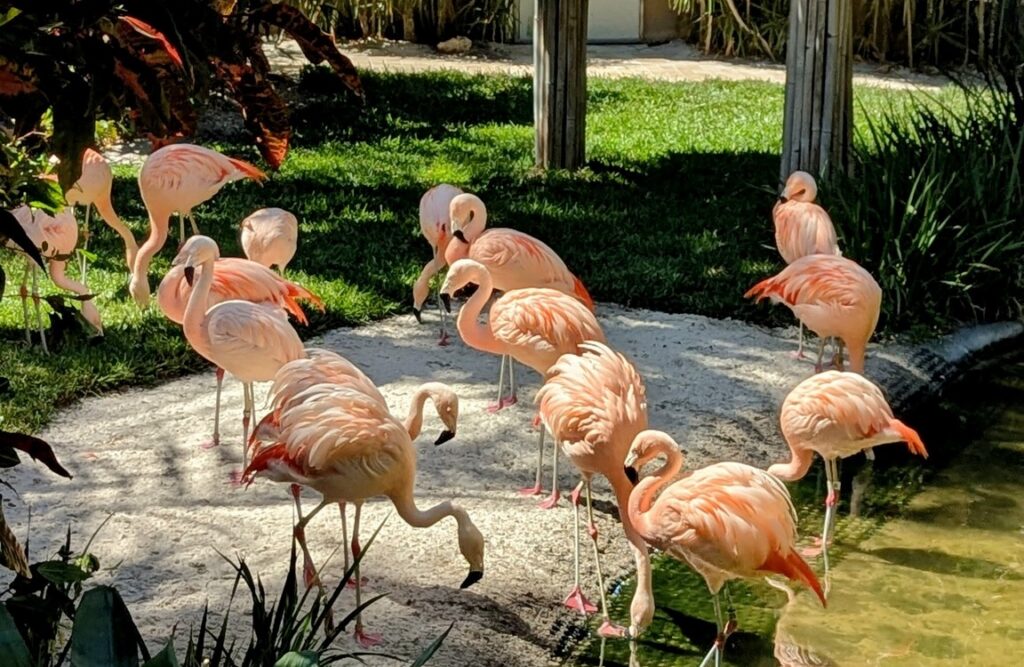
Flamingos at Sunken Gardens in St. Petersburg.
He added that her goal was to ensure that Sunken Gardens “would evolve to be an asset to the community that was educational, cultural and beautiful.”
The “Restock the Flock” campaign was the Sunken Gardens Forever Foundation’s first project. According to its website, the organization helped fund the construction of a History Center on the property.
Additionally, the nonprofit worked with author and board member Robin Gonzalez to publish a children’s book, Sophie & Zack at Sunken Gardens, which has been distributed to Title I third graders in St. Petersburg.
Preserve the ‘Burg executive director Manny Leto explained that Reed preferred an active approach as board president.
“Robin was really my introduction to Preserve the ‘Burg and St. Petersburg,” he said. “We worked hand in hand and talked at least once a week if not more.”
Leto added that the “time that she committed was substantial.” Reed did not just provide guidance. She actually “did the work” to ensure that the organization moved forward. “I think advocacy like hers is pretty rare.”
He argued that Reed played an “instrumental” role in multiple Preserve the ‘Burg projects, including raising funds for the organization’s Keeping the Vibe Alive: The Impact of Historic Preservation in St. Petersburg economics report. She also was very supportive of establishing a Mirror Lake Historic District.
“Simply put, Robin Reed could be called a preservation titan,” said Maureen Stafford, who is a local preservationist and former colleague of Reed’s, “and I say that without reservation.”
Preservation, she argued, is about keeping the history of the city “alive.” When older buildings are destroyed, the “story is diluted and often gone.” Reed understood this.
Stafford explained that Reed was a “taskmaster” and “did not lose her focus” on projects even when there were disagreements with the City government. She “had a deep knowledge of the codes.”
Reed and her husband Joe were also key funders for the Centennial Sundial in Flora Wylie Park, according to a pamphlet that was handed out at the City Council memorial. The artwork, which reflects on St. Petersburg’s history, was dedicated in November 2010.
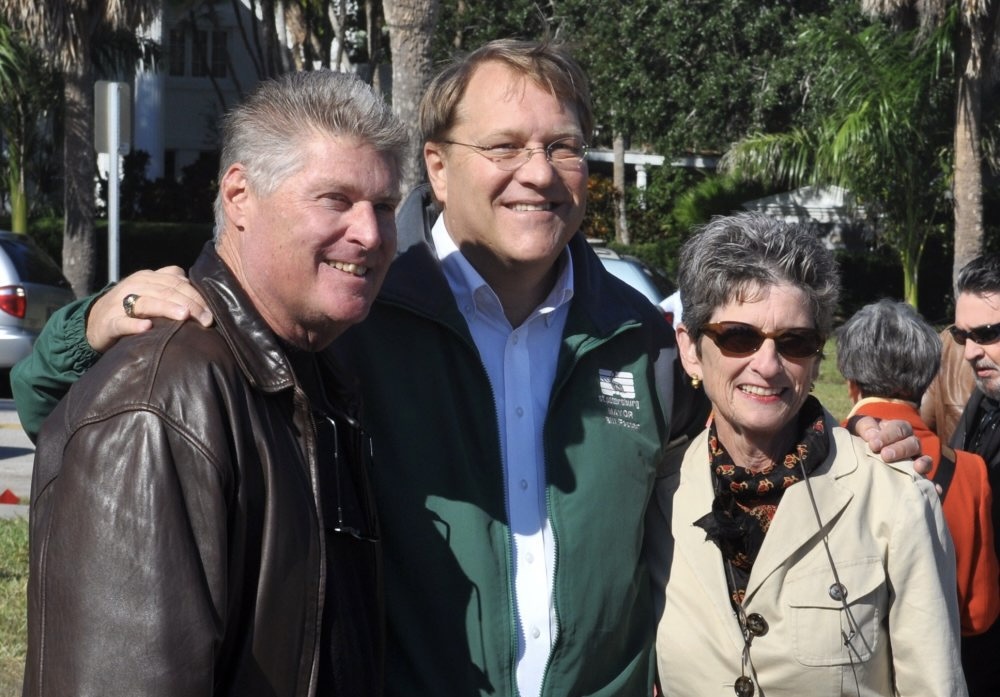
From left, Joe Reed, former St. Petersburg Mayor Bill Foster and Robin Reed at the Centennial Sundial dedication in 2010.
Historic Old Northeast Neighborhood Association president Nick Bell said that while Reed was “small in stature,” she was “big in effect.” He explained that Reed “took the time to understand where people were coming from.”
She had a “quiet way of making herself known.” Bell added that Reed would offer rational and fact-based opinions on projects and preservation efforts. “Robin would take on developers and city officials,” he said, and “quoted codes” when necessary.
“She wasn’t the type of person to be vengeful or to do things that had bad motivation,” Bell explained. “She just wanted to do things that made this city and this neighborhood a better place to live.”
Reed, born July 10, 1944 in Lakeland, Florida, was the daughter of a military officer and spent her childhood living around the country. After graduating high school, she attended Ohio Wesleyan University and the University of Massachusetts Amherst.
Before moving to St. Petersburg, Reed lived in New Jersey and served as the president of the Reeves-Reed Arboretum, a 19th century estate. Reed (no relation to the property’s former owners) oversaw restoration efforts.
“Robin understood that preserving history is not simply about protecting buildings or landscapes,” council chair Lisset Hanewicz said at the Thursday meeting. “It’s about protecting identity, memory and the character of a place that we call home.”