
There were some interesting stories on the front page of The Miami News on May 16, 1965. A huge avalanche killed six skiers in Germany. Civil war raged in the Dominican Republic. A record appropriations bill had landed on the desk of Florida Governor Haydon Burns. But most noteworthy for local residents was an open letter from the paper’s editor, William Calhoun “Bill” Baggs, addressed to Mrs. Elena Santeiro Garcia.
Mrs. Garcia, the widow of Jose Aleman, owned nearly 500 acres at the southern tip of Key Biscayne and Mr. Baggs wanted the state to buy it. In the 1950s, while the Mackle Brothers were developing the center third of the island, a large tract of houses and resort properties was also planned for the southern third. After at least two sales fell though following defaults by the would-be developers, Mr. Baggs stepped up his campaign to create a park there.
As editor of The Miami News from 1957 to 1969, Mr. Baggs frequently used the paper to champion causes he believed in. He loved to fish off Cape Florida and was a fierce advocate for environmental protection.
In his front-page letter to Mrs. Garcia, he wrote, “The public, especially the children, should have that land, the long and sloping beaches, the old lighthouse which is one of the few remnants of our history, the trails which wander beneath the old palms.”
Recognizing the state’s lack of cash for an outright purchase, Mr. Baggs posed a key question. Would Mrs. Garcia be willing to accept bonds for the sale?
He appealed to Mrs. Garcia’s conscience. “If you sell your land to speculators, hotels and homes and shops will come and stay on it,” he wrote. “And the people in the hotels and homes and shops will have a lovely environment.”
He asked her to consider a different future: “But if you sell to the people, children, all the children, long after we are gone from this world will have the freedom of that beach and the sights of the unspoiled subtropics.”
His letter paid off. A few days later, the paper published Mrs. Garcia’s response. “Nothing would please me more than to effect a sale of this property to a public authority to be preserved in all its natural beauty as a public park,” she wrote. The letter went on to indicate that, subject to the approval of her banker and attorney, payment through bonds would be fine.
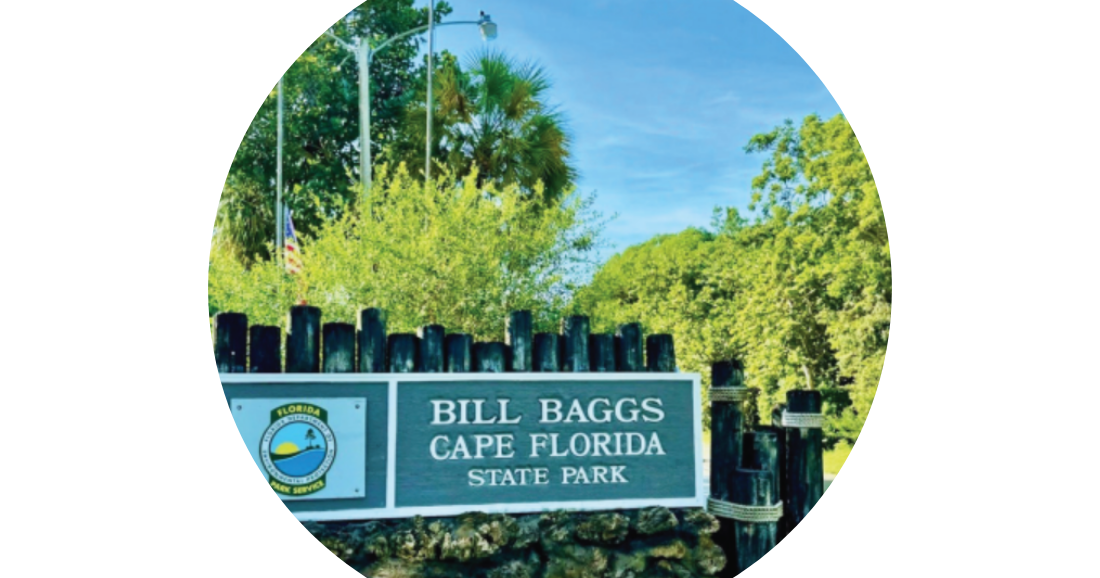
The state began purchasing the land the next year, and the park officially opened on January 1, 1967. Two years later it was renamed Bill Baggs Cape Florida State Park in honor of the man who poured his heart into its creation.
Today, thousands of people from all over the world visit the park each year, touring the lighthouse, enjoying the clear blue waters and beaches, and biking and hiking its trails. The park also provides critical habitat for migratory songbirds and abundant marine life, including nesting sea turtles. We should all be thankful for Bill Baggs’ unrelenting efforts.