
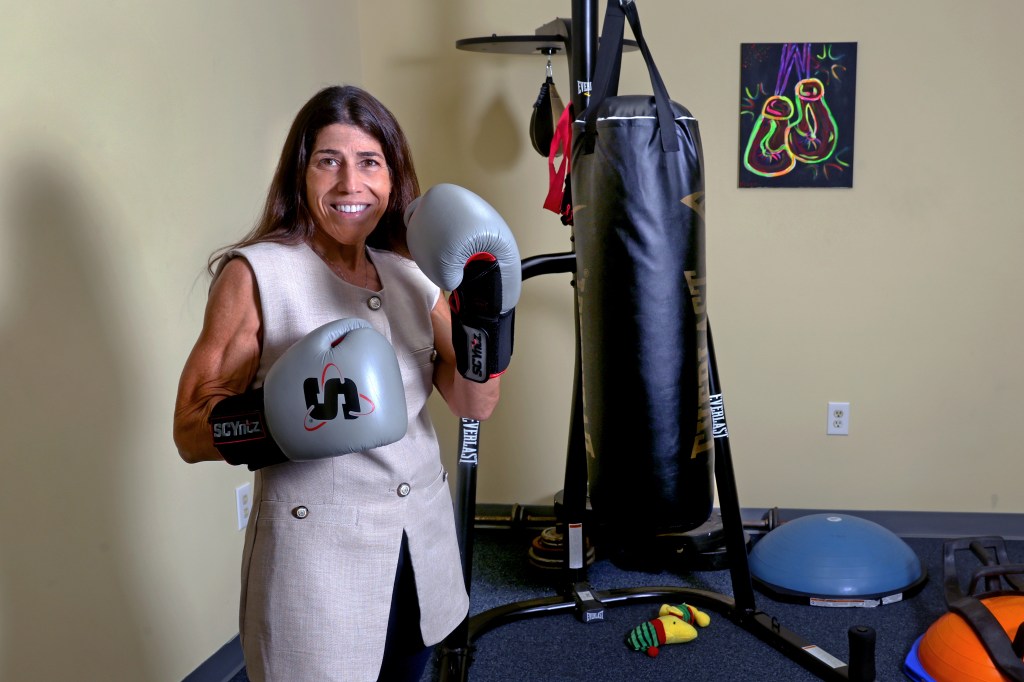
Anna Fusco is known as a fighter, often pulling out a pair of boxing gloves inside the Tamarac office of the Broward Teachers Union, the group she has led for the past decade.
She’s now preparing for one of the biggest fights facing teachers unions in Florida: the fight for survival.
This year, the state Legislature passed, and Gov. Ron DeSantis signed, a tough, new state law that makes it far harder for unions representing teachers, bus drivers, cafeteria workers and many others to remain active, forcing live-or-die votes as early as this summer.
When he signed the bill, DeSantis said the new law would “provide once and for all for the decertification of partisan teacher unions.”
It was a chilling message for unions and their supporters.
“They’re trying to get rid of us. They’ve said it loud and clear,” Fusco told the South Florida Sun Sentinel on Thursday. But Fusco said she has confidence the Broward Teachers Union will be here for the long haul.
“I reject any kind of insinuation that we are in danger of extinction,” she said.
The new law is the latest in a series of state moves that target unions. It started in 2018 when the state required most public sector unions to represent at least 50% of eligible members, or else go through a yearly recertification election.
In 2023, the Republican lawmakers raised that threshold to 60%, while also outlawing the public sector employees from using payroll deduction for membership dues. The law excluded unions representing police, fire and correctional officers, which are more supportive of Republican leaders.
Many smaller government employee unions dissolved, although most teachers unions survived, holding elections with overwhelming support.
This year, Republican lawmakers made it even more difficult for these same unions, requiring that at least 50% of employees in a union’s bargaining group vote in the election, and the majority of those must vote yes to keep the union. In the past, the unions only needed a majority of whoever turned out for the election, and there was no minimum.
If the turnout is below 50%, or if the majority of those voting cast a no vote, a union becomes decertified and will no longer represent the employees. School districts would decide on their own what kind of raises and health insurance to give teachers and other union employees.
“I do believe that the 50% voting rule is grossly hypocritical,” Gordan Longhofer, president of the Palm Beach County Classroom Teachers Association, told the Sun Sentinel. “It is a standard that few, if any, of our elected officials could ever meet in their own districts, and yet they see fit to put it on the backs of individuals, whose sole purpose is to enable and mentor and grow leaders for future generations.”
Antonio “Tony” White, president of United Teachers of Dade, agreed.
“The way they’ve set up elections for public sector units in general is a great concern, seeing that it’s unprecedented,” he said. “There’s not a democratic election anywhere that I know in the country that operates under these terms.”
While unions can still avoid the recertification election if 60% of eligible employees are members, none of the South Florida teachers unions currently meet that.
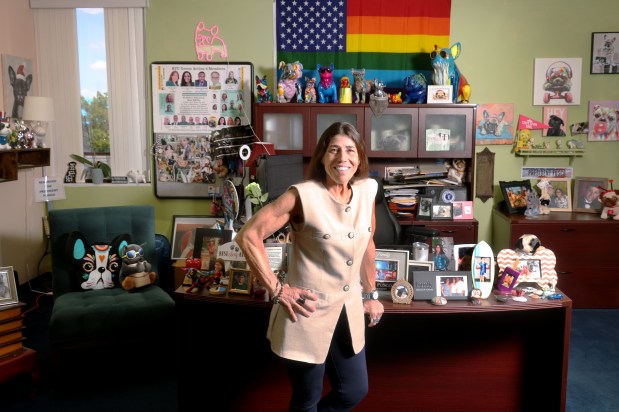 Anna Fusco, president of the Broward Teachers Union, stands in her Tamarac office on Thursday, May 21, 2026. (Mike Stocker/South Florida Sun Sentinel)
The Broward Teachers Union’s membership has about 55% of eligible members, the Palm Beach Classroom Teachers Association has about 51% and United Teachers of Dade has 45%, according to union leaders.
“I’m optimistic we can meet the (recertification) requirements, because of the strength of our union, but time will tell,” Longhofer said.
In Central Florida, the Seminole Education Association now counts 33% of the county’s teachers as members.
“Even if everybody, 100% of our members, vote yes, we are decertified after the election,” said Thomas Bugos, the Seminole union’s president.
Bugos said the future looks “scary” for teachers unions, and the teachers they represent, because of the new law. He views the new rules as part of an ongoing state attack on public education.
“The teachers that have dedicated their lives to this — we’re forcing these hoops and obstacles in front of them to make their job even more difficult,” he said.
Fusco, the Broward Teachers Union president, showed no signs of defeat during the Thursday afternoon interview, which she conducted before showing off her skills at boxing, an activity she took up about two years ago to become more physically and mentally fit. A large punching bag sits in a room right outside her office.
“We have a great plan and a great campaign. Whenever the (recertification) election is going to be called, we’re ready. We know we are not going to fail,” Fusco said.
“We know that it’s important to have strong public schools, clean public schools, safe public schools, and having certified, real teachers in there teaching the students,” Fusco said. “And when you have a union that fights for those rights, it’s important. And I believe the community backs us.”
Union leaders say that while many people don’t join unions due to financial reasons, they still don’t want unions to go away and will likely support them in recertification elections.
“People who don’t pay dues still would not want to lose the benefits of working under a contract,” White said. “Union contracts uplift those that are members as well as those that are not.”
But the unions also have plenty of criticism, particularly among conservatives, who argue that union bargaining has delayed teacher raises and that unions often support liberal causes and oppose Republican-backed school choice efforts, such as charter schools and private school vouchers.
Sen. Jonathan Martin, the Fort Myers Republican who sponsored the bill, said during the legislative session that the changes would hold teachers unions more accountable to the people they claim to represent.
“These unions are all over the state of Florida, these collective bargaining groups, where the class that they represent doesn’t want to be a member of that class. They don’t. They’re not voting. They don’t care,” Martin said.
The conservative Freedom Foundation, an organization that played a role in the law’s creation, celebrated its passage.
The changes were “long overdue” to combat “zombie unions” that do not really represent most of a district’s teachers, said Aaron Withe, the group’s CEO, in a statement.
“A handful of activists shouldn’t control workplace representation for hundreds of employees who never asked for it,” Withe said.
Andrew Spar, the president of the Florida Education Association, a statewide union, told the Orlando Sentinel that teachers unions in Florida have gained 4,000 new members since the bill passed the Legislature. But he said there’s still “great concern” about the new law.
“The Governor and his activist administration are being clear that they do not care about the workers of this state,” Spar said.
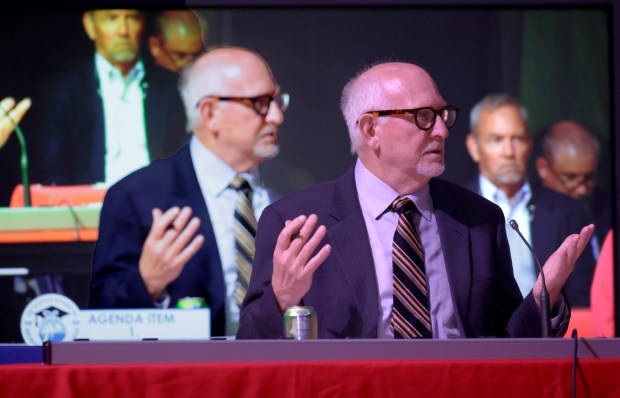 Dan Reynolds, president of the Federation of Public Employees, speaks to the Broward County School Board during a meeting at Plantation High School on Thursday, May 21, 2026, to discuss the pay and benefits of employees represented by his union. (Mike Stocker/South Florida Sun Sentinel)
While teachers unions have gotten the most attention, the law also affects many other public sector unions, including those that represent bus drivers, janitors, cafeteria workers and maintenance workers.
In Broward, many of those are represented by the Federation of Public Employees.
The union and the Broward School District held an impasse hearing after the union rejected the district’s proposed contract that included more expensive insurance and no raises.
Federation President Dan Reynolds referred to the new law when urging the district to provide a more favorable contract.
“For the last four years, we’ve had the Legislature try to put us out of business,” Reynolds told the School Board. “We’re up against some challenges in the state of Florida.”
Orlando Sentinel Steven Walker contributed to this news article.
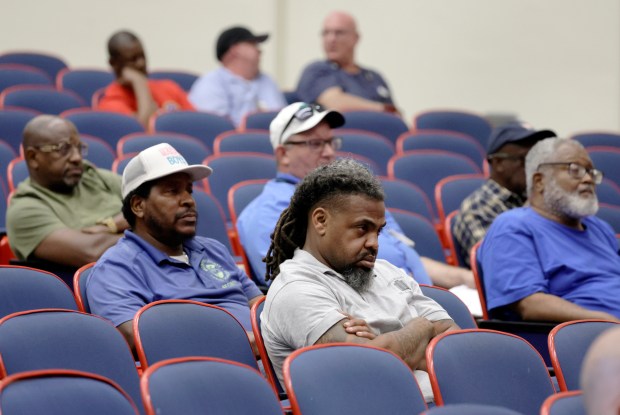 Audience members listen as Dan Reynolds, president of the Federation of Public Employees, speaks to the Broward County School Board during a meeting at Plantation High School on Thursday to discuss employee’s pay and benefits. (Mike Stocker/South Florida Sun Sentinel)