
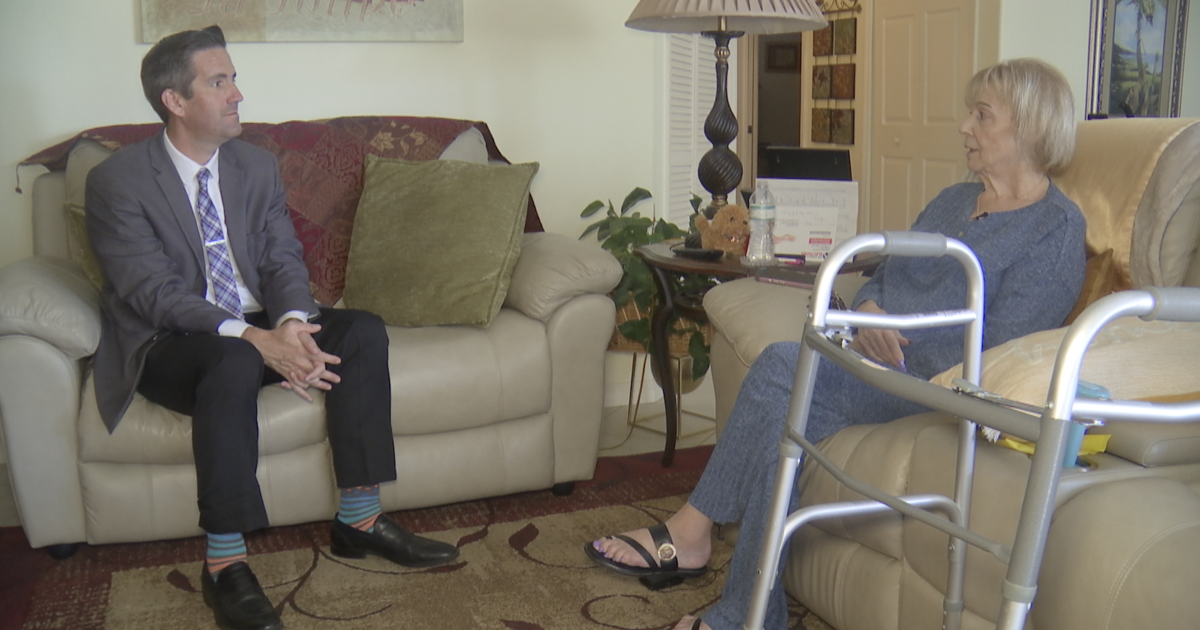
CAPE CORAL, Fla. (WINK)—A Cape Coral woman says she lost thousands of dollars to a bank imposter scheme.
Florida seniors lost more than $700 million to criminals last year, according to the latest numbers from the FBI.
Alida Sinatra in Cape Coral was worried she was about to become one of those victims, then she called WINK Investigates.
WINK Investigates reporter Ryan Kruger got involved, and Sinatra quickly got that money back.
Now, she has a warning to all seniors in Southwest Florida.
“I just don’t want this to happen to anyone else,” Sinatra said. “Because this is definitely elder abuse.”
Sinatra doesn’t mince words about what she says happened to her two months ago. She woke up one morning to an alert on her phone, saying there was an issue with her checking account and she called the number.
“They asked me information,” Sinatra said. “I thought it was the bank.”
It wasn’t until the next day she realized she was missing almost $4,000; all sent to strangers on Zelle.
“They took advantage of me,” Sinatra said. “My mind is not like what it used to be. I might have given them information that was wrong. But I don’t know.”
Sinatra and her kids filed complaints with the FBI and her bank, to no avail.
“They keep sending me (letters) we looked into this transaction and they’re denying me,” Sinatra said.
But when WINK Investigates reached out to her bank, they refunded her money.
“That’s my life savings,” Sinatra said. “What else do I have?”
Sinatra is part of a growing statistic.
More than 17,000 seniors in Florida told the FBI they were defrauded last year, losing more than $700 million. Imposter schemes, fake charities and romantic schemes were among the common tactics, according to the FBI.
“We know that part of the major reason why the criminals are targeting senior people is the fact that they simply have more money,” said Dr. David Maimom, head of fraud insights with the fraud prevention company Sentilink.
Maimom says artificial intelligence is making it easier for crooks to defraud people out of money. He recommends freezing all lines of credit and constantly monitoring your accounts.
“We need to be vigilant, we need to be aware of that fact, and make sure that we are very careful with respect to the click the link we clicks, as well as the phone numbers we are answering,” Maimom said.
For Sinatra, she’s hoping others her age understand how quickly you can become a victim.
“Just be careful of what you do and what you say on the phone,” Sinatra said. “You don’t know who is legitimate and who isn’t.”
The FBI says some red flags to look out for include a demand for secrecy, a sense of urgency and requests to wire money or pay with gift cards or cryptocurrency. Those are usually signs of fraud.