
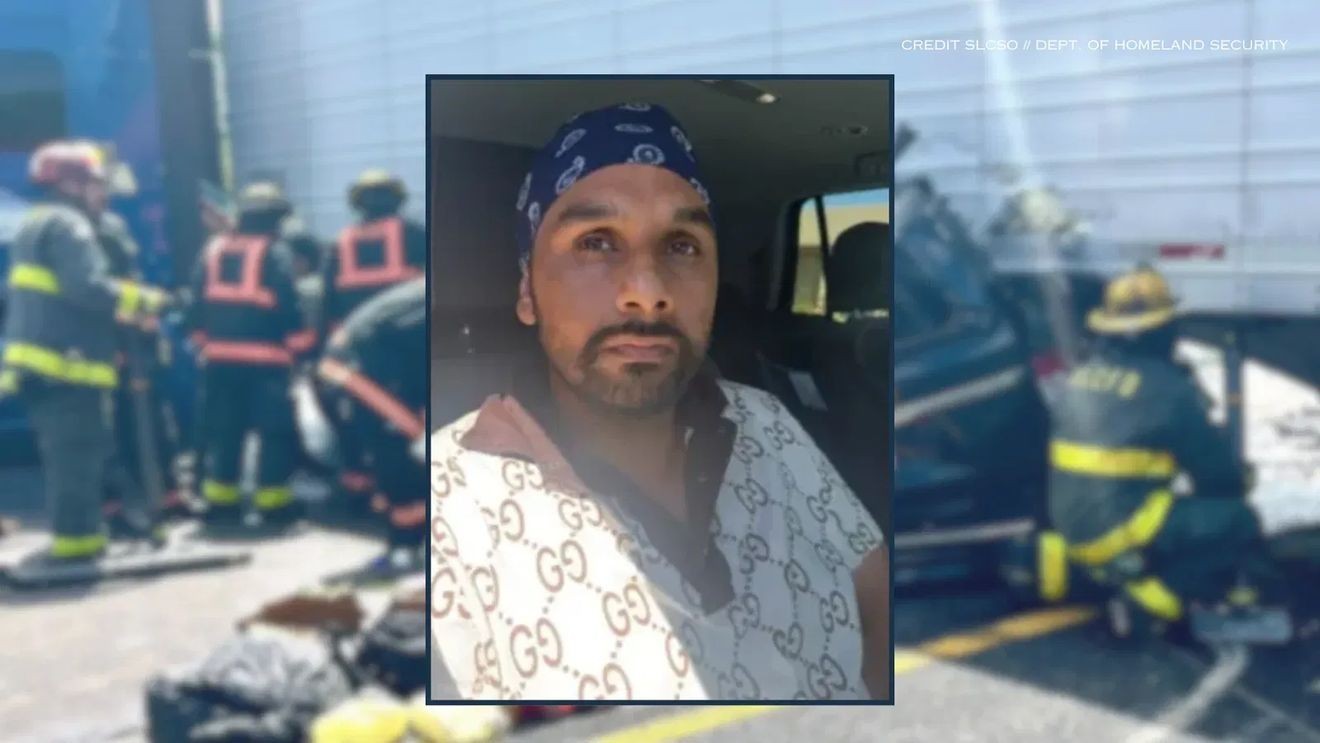
The U.S. Supreme Court on Tuesday rejected Florida’s attempt to block California and Washington from issuing commercial driver’s licenses to truck drivers who are not legally in the United States.
The court did not explain its decision. But Justice Clarence Thomas, joined by Justice Samuel Alito, dissented, arguing the court should have heard Florida’s case because disputes between states fall directly under the Supreme Court’s jurisdiction. Thomas wrote that Florida had “nowhere else to bring” its claims.
Florida filed the lawsuit after a deadly crash on Florida’s Turnpike that drew national attention and renewed scrutiny of how states issue commercial driver’s licenses.
The crash happened on August 12, 2025, near Fort Pierce in St. Lucie County. Florida Highway Patrol investigators said Harjinder Singh, a 28-year-old semi-truck driver from India, attempted an illegal U-turn using an “Official Use Only” access point near mile marker 171. Troopers said his tractor-trailer stretched across all northbound lanes, leaving a minivan with no time to stop. Three people inside the minivan were killed. Singh and a passenger in the semi-truck were not injured.
The victims were identified as Herby Dufresne, 30, of Florida City; Rodrigue Dor, 54, of Miami; and Faniola Joseph, 37, of Pompano Beach. CBS12 reported that Dufresne, a Haitian father, had entered the United States legally through a humanitarian parole program and was working to support family members abroad, including a young daughter in the Dominican Republic.
See also: Bicyclist killed in Brightline train collision in Stuart
Singh was later charged with three counts of vehicular homicide and three counts of manslaughter. CBS12 reported that he remained held without bond at the St. Lucie County Jail as of a November court hearing, where he appeared virtually with the help of a Punjabi interpreter. His attorneys said discovery was still underway and asked for independent testing of victims’ blood samples, as well as time for experts to inspect the vehicles involved in the crash.
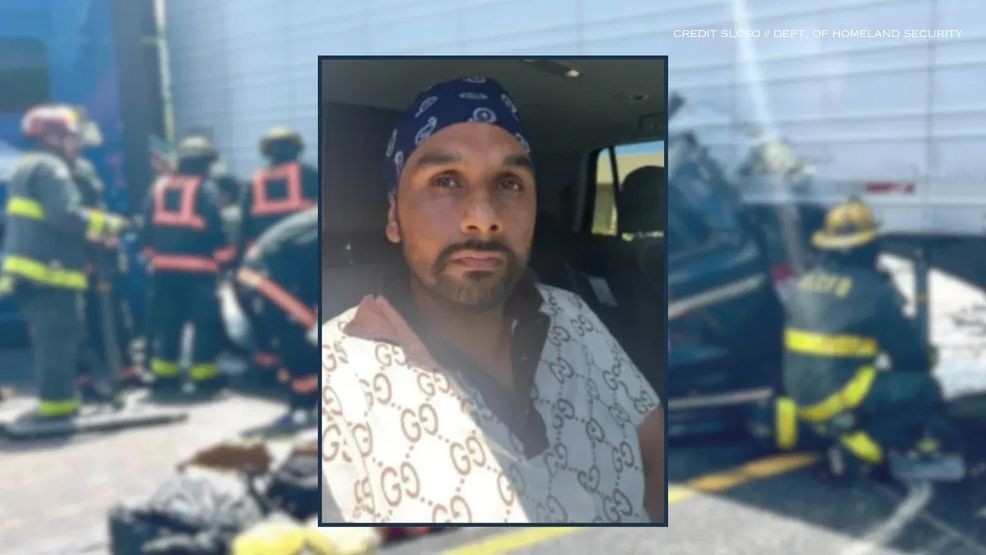
Troopers say Harjinder Singh, 28, cut across the highway using an “Official Use Only” access point near mile marker 171 in Fort Pierce on August 12. His tractor-trailer stretched across all northbound lanes, leaving the minivan with no time to brake.(Credit DHS, St. Lucie Co. Sheriff’s Office)
The case quickly became part of a broader political fight over immigration, highway safety and commercial licensing rules. Florida officials said Singh was in the country illegally and had received commercial driver’s licenses from both Washington and California. They also raised questions about his English proficiency and whether he should have been allowed to operate a commercial vehicle. Singh reportedly scored two out of 12 on an English proficiency test after the crash, though California officials said they followed applicable state and federal rules when issuing his license.
Florida Attorney General James Uthmeier also issued criminal and civil subpoenas to White Hawk Carriers, Singh’s employer, and sent legal demands to Washington and California seeking information about how Singh obtained his commercial licenses and whether other undocumented drivers had received similar credentials.
In its lawsuit at the Supreme Court, Florida accused California and Washington of failing to comply with federal safety and immigration-status requirements for commercial drivers. The state argued that the two states had “chosen to ignore” federal standards and allowed undocumented immigrants without proper training or the ability to read road signs to drive commercial motor vehicles.
Florida also argued that the issue was not limited to California and Washington because commercial truck drivers routinely cross state lines, potentially putting drivers and passengers in other states at risk.
See also: VIDEO: Police chase wrong-way driver in Jupiter before fatal Martin County crash
The crash also prompted federal action. In September, U.S. Transportation Secretary Sean Duffy cited the Florida crash and other deadly crashes while announcing emergency changes to rules for non-domiciled commercial driver’s licenses. Under the new federal rules described by CBS12, eligibility was narrowed to certain visa holders; general employment authorization alone was no longer enough, licenses would expire after one year or when the visa ends, and renewals would have to be completed in person.
The case has also drawn concern from Sikh advocacy groups, who have urged officials not to use the crash to stigmatize Sikh truck drivers or immigrant drivers more broadly. CBS12 reported that members of Sikh organizations held prayers for both the victims and Singh and called for due process as the criminal case moves forward.
Separately, Florida has moved to tighten driver testing rules. On February 6, the state Department of Highway Safety and Motor Vehicles began administering driver’s license tests only in English. Previously, exams for most non-commercial driver classifications had been offered in English, Spanish, and Haitian Creole.
During the regular legislative session, Florida lawmakers also considered but did not pass bills that would have required law enforcement officers to take undocumented truck drivers into custody and transfer them to federal immigration authorities. The proposals also called for impounding trucks and imposing a $50,000 fine on vehicle owners.