
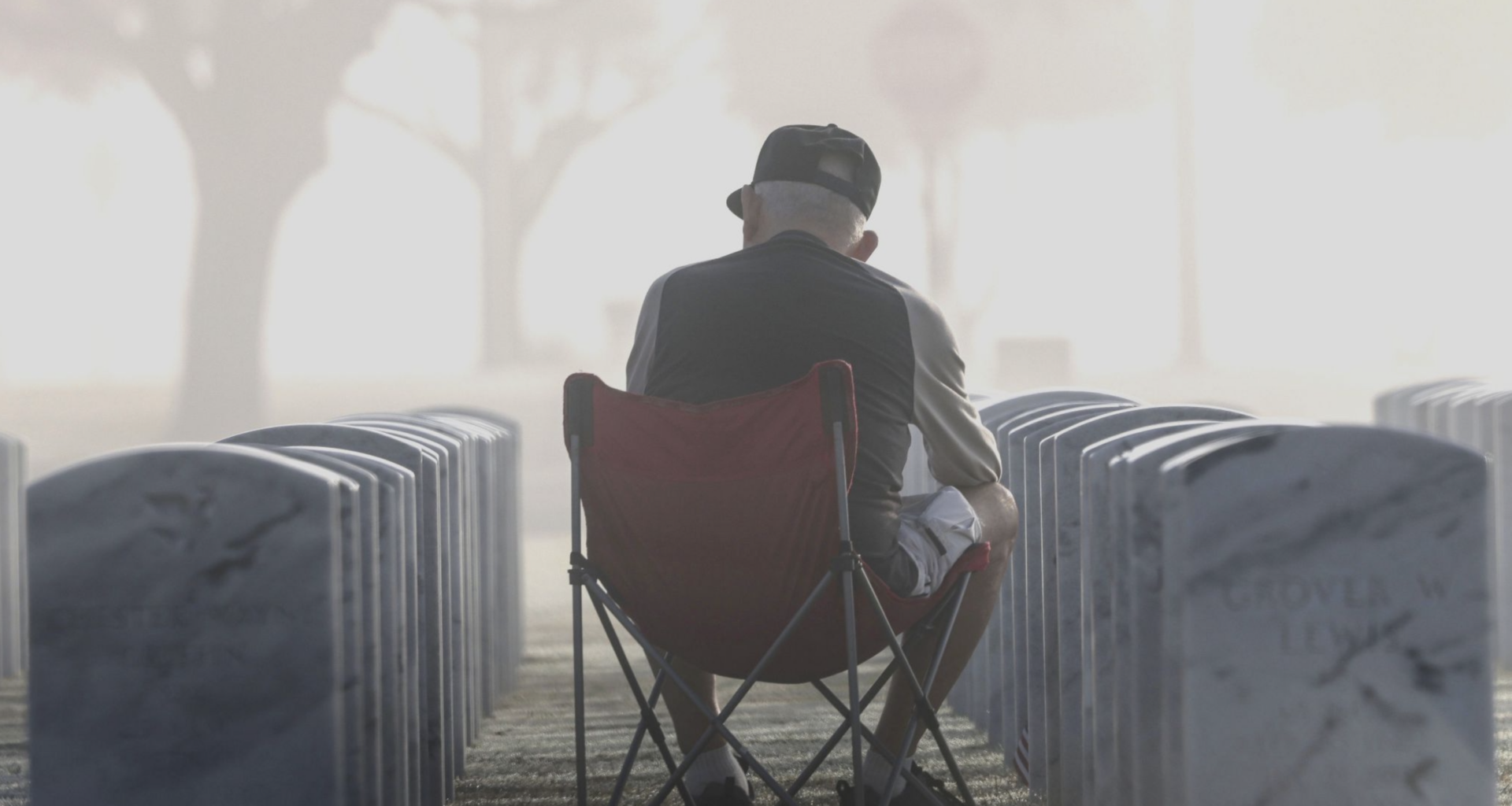

A retired, disabled Air Force veteran and nature photographer of Naples visited the 295-acre national cemetery in Sarasota County to see another man in a moment of solitude among the tombstones of veterans. -CHIP STAYTON / COURTESY PHOTO
Memorial Day is a time when veterans discover, again, that service doesn’t end for those who shed their uniforms to become civilians. Instead, it continues in memory, in mourning and in reverence for those lost in American wars, a fact Memorial Day makes abundantly clear for the rest of us as well.
First observed on May 30, 1868, to remember the Civil War dead — about 360,000 Union dead and another 258,000 dead Confederates — it was called Decoration Day for roughly a century. Then Congress renamed it and formally established Memorial Day as the last Monday in the merry month, falling this year on May 25.
For some — for many, perhaps — the day is painful and personal.
Jerry Weis, a retired chiropractor, set aside the weariness that may typify 91 years of living, and departed the Fort Myers airport at 3:30 a.m. on a recent Saturday, and flew to Washington, D.C. then back to Southwest Florida—in that one long day in late April, to find the man he could only save twice.
Capt. Clifford Schneeman, his best friend in boyhood.
It was an Honors Flight, sponsored by the national non-profit organization that transports military veterans to Washington for the exclusive purpose of remembering and being honored — at the memorials.
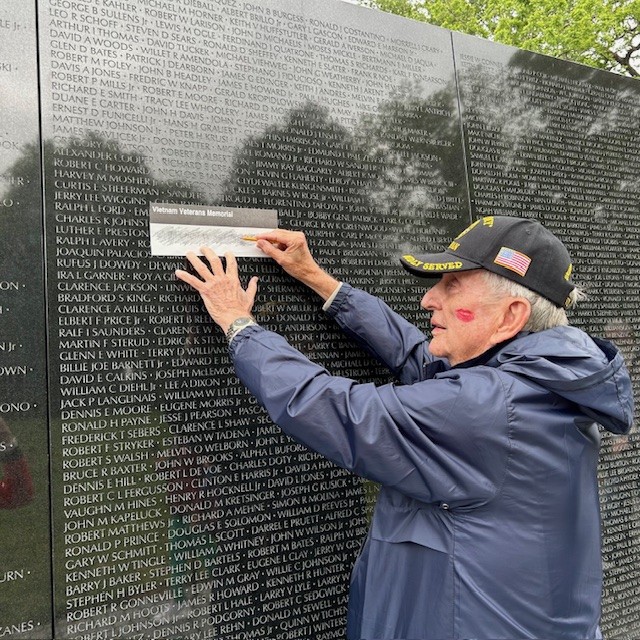
Jerry Weis took home one name in a memorial rubbing from the Wall in Washington and remembered the friend he could save twice, but not that third time. -PAMELA FULTZ / COURTESY PHOTO
Weis, an Army veteran of the Cold War years that fell between long costly American shootouts in Korea and Vietnam, had to be talked into making the flight since he never saw combat. He joined a company of veterans and their escorts from Collier and Lee counties that included four others from his home in Vi at Bentley Village, in Naples.
Like his friend, the United States has lost about 1.31 million other young Americans in combat through our 250-year history, and a total of more than 2.82 million as a result of wounds, illness and accidents in wartime, government statistics show. Grievous injuries linger long after, not to mention the emotional devastation to family, friends and communities, and the economic cost.
A scrupulously undertaken Brown University study from the Watson School published in 2021 and still considered the analytical gold-standard estimated the total cost for our wars on terror and interventions between 9/11 and roughly mid-century likely to run about $8.8 trillion.
Almost $2.2 trillion of that is set aside for the future care of long-term wounded veterans.
The U.S. War on Terror, now 25 years old, has included almost a million deaths by bombs, bullets or fire worldwide, the study said, among them more than 6,800 Americans killed in Iraq, Afghanistan and now Iran (15 dead, to date).
All that becomes personal, not political, for many individuals on Memorial Day, Americans who remember the dead from every war dating back to World War II. Of the 16.4 million Americans who served in uniform then, less than 45,000 remain alive in the world, and probably less than 5,000 of those in Florida.
Only some are combat veterans like Robert Hilliard, 100, a professor emeritus from Emerson College and author of 50 books of fiction, non fiction, and poetry, along with a number of plays.
A resident of south Lee County, last week Hilliard shared his view of Memorial Day — this will be the 100th he’s experienced — with Florida Weekly.
“On May 30, 1945, scant weeks after the end of World War II in Europe, having survived the Battle of the Bulge, albeit with a Purple Heart, I was no longer in an immediate position to qualify for special recognition on future Memorial Days.”
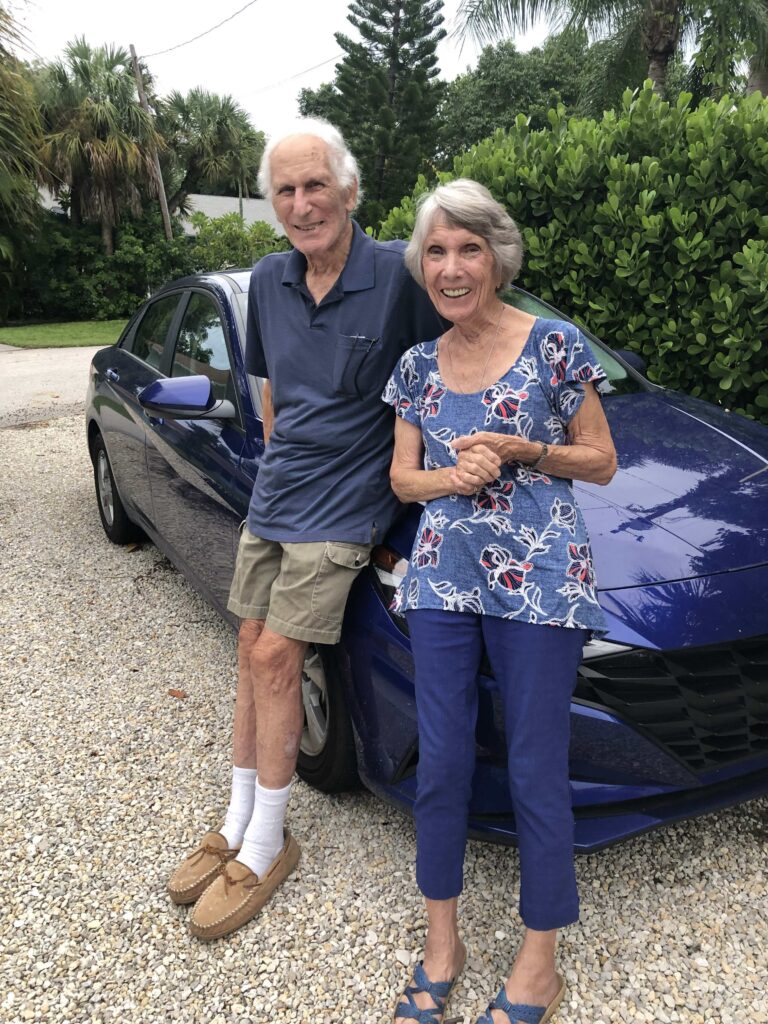
Robert Hilliard and his wife JoAnn Reece Hilliard. -ROGER WILLIAMS / FLORIDA WEEKLY
Fortunately for us, he carried on into an extraordinary American life. Some of his friends did not.
“At that time it was known as Decoration Day, in memory of Americans killed in our wars,” he said. “Many of us who had been in combat grieved for friends and buddies who had died. We felt guilty we had survived.”
In the 81 years since the end of World War II, he’s remained saddled with a difficult question that seems to have no American answer, he acknowledged.
“I wondered if and when we as human beings would evolve to a point when there would be no more Memorial Days. Someone in another galaxy, seeing the nations on earth literally meeting to agree to rules on how to kill each other (per the Geneva convention) would consider us to be stupidly insane. There is no excuse for war, although in our present state of evolution, there occasionally has been a necessary war for us, such as World War II.
“I am not alone in my feelings, as attested by the growing number of American veterans joining Veterans for Peace branches.”
His question remains: “How long will it be before Memorial Day will be relegated to some long forgotten historical archive?”
“Never start something…”
It can’t be soon enough in Weis’s view, either.
Clifford Schneeman was his best friend growing up in Cincinnati. The boys played “Army” and “Cowboys and Indians” in a city park adjoining their neighborhood, Weis recalled. Once they dug a deep tunnel that collapsed on Schneeman — but Weis got him out before he stopped breathing. The next year Schneeman fell through ice on a big pond and was going down to stay when Weis managed to get him out with a tree branch, saving his life again.
Then after high school they both joined the Army. Weis completed his service and returned to civilian life. But Schneeman stayed in, becoming a pilot. He spent a tour in Vietnam, returned home, then volunteered to go back.
Weis couldn’t save his friend a third time. On Nov. 5, 1967, Capt. Schneeman was shot down and killed flying a reconnaissance plane, leaving behind a wife and three small children.
And now Weis, like many other veterans, distinguishes between wars the country could have and should have avoided started by politicians, in their view, and the young Americans either drafted or volunteering to serve.
These men and women aren’t political leaders. They trust the country’s leaders, however, to make choices about bloodshed not only practical but ethical, Weis says.
Thus, he reasons, their service is sacred, as the rubbing that now newly adorns Weis’s home attests.
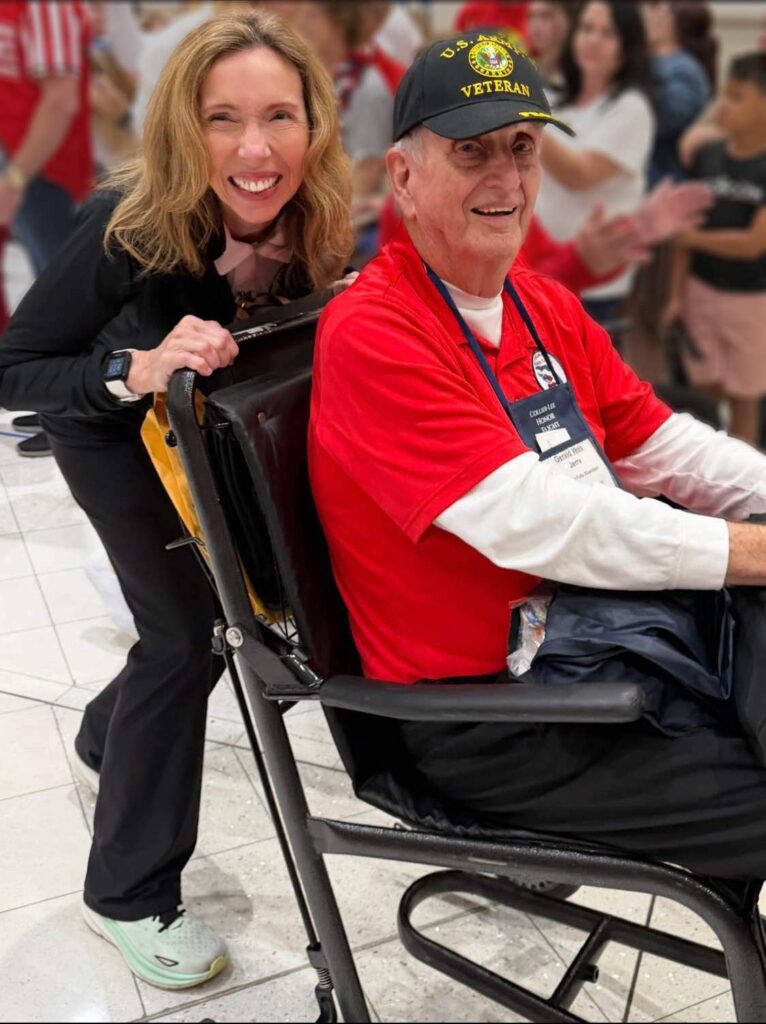
Pam Fultz escorts Army veteran Jerry Weis back home from a journey of remembrance on the recent Collier-Lee Honor Flight. -COURTESY PHOTO
In Washington, escorted by Honors Flight volunteer Pamela Fultz, a Bentley staff member and fellow Ohioan, Weis found Schneeman’s name on The Wall, as the Vietnam memorial is called. With pencil and paper, he traced it, bringing Schneeman back with him one more time, alive in memory if not in breath, 75 or 80 years after first saving his friend’s life.
“It really was a wake-up call,” he said of the experience. “All the benefits we have in this country — these freedoms and opportunities — these are protected by those who serve.”
But he added this thought, distinguishing between World War II and others: “After World War II our country hasn’t stopped starting these wars. We have a history now of starting something with no end point in time, no well-defined goal or outcome.”
He paused before he completed the thought. “Never start something you don’t know how to finish.”
The American experience
Weis’s friends and fellow veterans making the journey all shared his fundamental view, shaped individually by their own experiences.
Robert Drum, 84, was drafted into the Army during the Vietnam War, in 1966, and brought his college industrial engineering degree and a Missouri boyhood into Officer Candidates School, where he was badly injured two-thirds the way through, he says. After five months in and out of hospitals, he decided not to repeat OCS but to finish a two-year tour in the enlisted ranks — without going to Vietnam.
His younger brother, meanwhile, Bill Drum, had started college and dropped a course. As a result, he was drafted too, and ended up in Vietnam, surviving a long bloody tour in infantry units, his brother remembers. Later, Bill Drum went back to school, earned a master’s degree, and became a vice president in a big corporation, while Robert found himself in charge of various manufacturing plants around the country.
“We visited all the memorials in Washington,” he said of the Honors Flight. “When you start, you’re feeling a little sad. Then you start feeling hopeful. Then you feel honored just to be there. It’s such a wonderful l experience.”
Reflecting on Vietnam and the names on the wall, he put it this way: “My parents never understood that war. Why we had it, what we were doing. They never complained about it, though. But I don’t think we achieved much. We lost more than 58,000 people. Everybody in that war went there to do their job…and we didn’t achieve much.”
But they deserve to be revered for doing what they were asked, he said.
For Drum, though, you serve when you’re needed, and he wasn’t through. So along came 9/11, a bloody attack on our soil. He was about 60, but it didn’t matter.
“I was so pissed off. I checked with the Army, but they said, ‘You can’t do that.’ So they started the Transportation Security Administration, and I applied there. They hired me. I didn’t have to work, but I wanted to serve. I was in Maine, so I spent two years as a transportation security officer in Portland.”
Portland, where two of the 9/11 terrorists came through on their way to Boston.
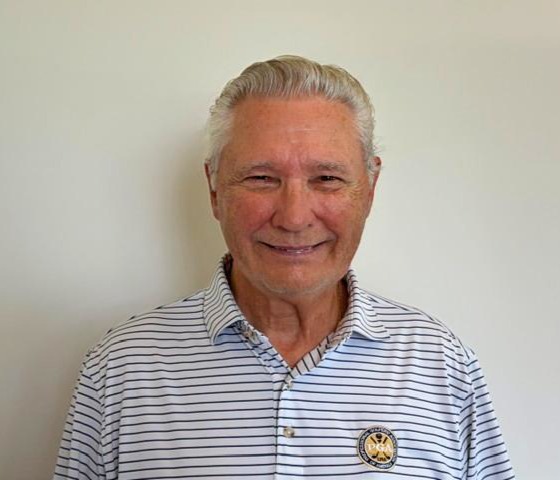
Veteran Rich Jenkins, 83, is now a resident of Vi at Bentley in Naples. -COURTESY PHOTO
Rich Jenkins, meanwhile, at 83 also a Bentley veteran, spent a 23-year career in military service, the first six in the Navy where his father and two brothers had served, and the last 17 in the Air Force including one tour in Vietnam. He retired as a Chief Master Sergeant, an E-9, before going back to school and becoming a civil engineer hired into the Civil Service.
“As far as I’m concerned,” he said following the Honor Flight, “Memorial Day is about those who served, not about those who sent them to war. I never really knew what the mission was supposed to be (in Vietnam), and there didn’t ever seem to be an end-game.”
No one in Jenkins’s family was killed in combat, but they endured significant suffering on our behalf. One of his brothers died of brain cancer from Agent Orange, he says, and he’s lost his son, too.
Jenkins happens to be a bugler, and every Memorial Day at 3 p.m. wherever he is, he joins other buglers in the country and the world to blow taps — at 3 p.m. wherever they are.
“If I’m in my car somewhere, I stop the car and step out. People are remembering,” he said.
“From the four stars to the privates, including those drafted whose high school senior trip was Vietnam, for the most part the ones I’ve known served out of pride.”
And as Memorial Day underscores, some of them died out of pride too.
For Paul Rivera, 89, his Army service following his enlistment after high school became a model of reverent remembrance in 1956, when he was dispatched to France as a member of a military honor guard.
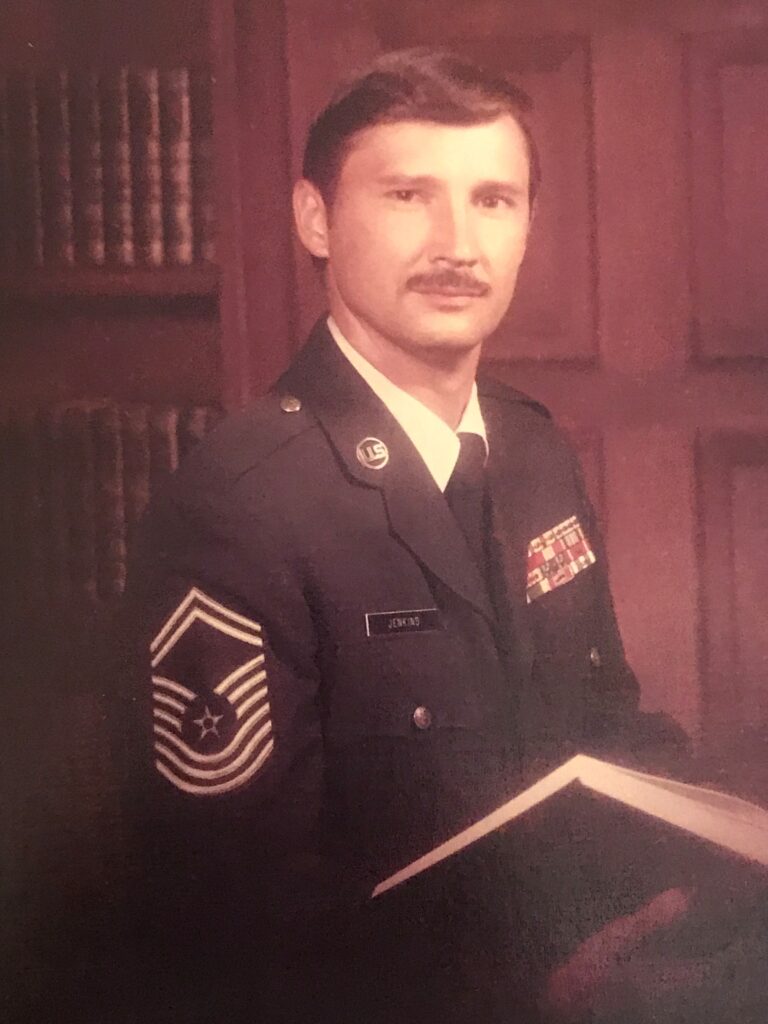
Rich Jenkins, 83, of Vi at Bentley in Naples, spent a 23-year career in military service, the first six in the Navy where his father and two brothers had served, and the last 17 in the Air Force, retiring as a Chief Master Sergeant, an E-9, before becoming a civil engineer with the Civil Service. -COURTESY PHOTOS
Rivera was one of seven soldiers who fired three shots in the first ever 21-gun salute consecrating the Normandy American Cemetery overlooking Omaha Beach, in France, where 9,389 American war dead lie buried beneath white crosses and stars of David.
Returning from military life three years later, Rivera went on to earn a Ph.D. at the University of Maryland and become a public school educator. But the beauty and haunting melancholy of that first memorial remembrance over Omaha Beach remains with him.
“We fired the ceremonial three volleys,” he said.
“And then a bugler played taps.”
Total American battle deaths from our costliest engagements in living memory:
WWII: 405,399
Korea: 36,574
Vietnam: 58,220
First Gulf War: 294
Afghanistan: 2,325
Iraq: 4,492
Iran: 15