
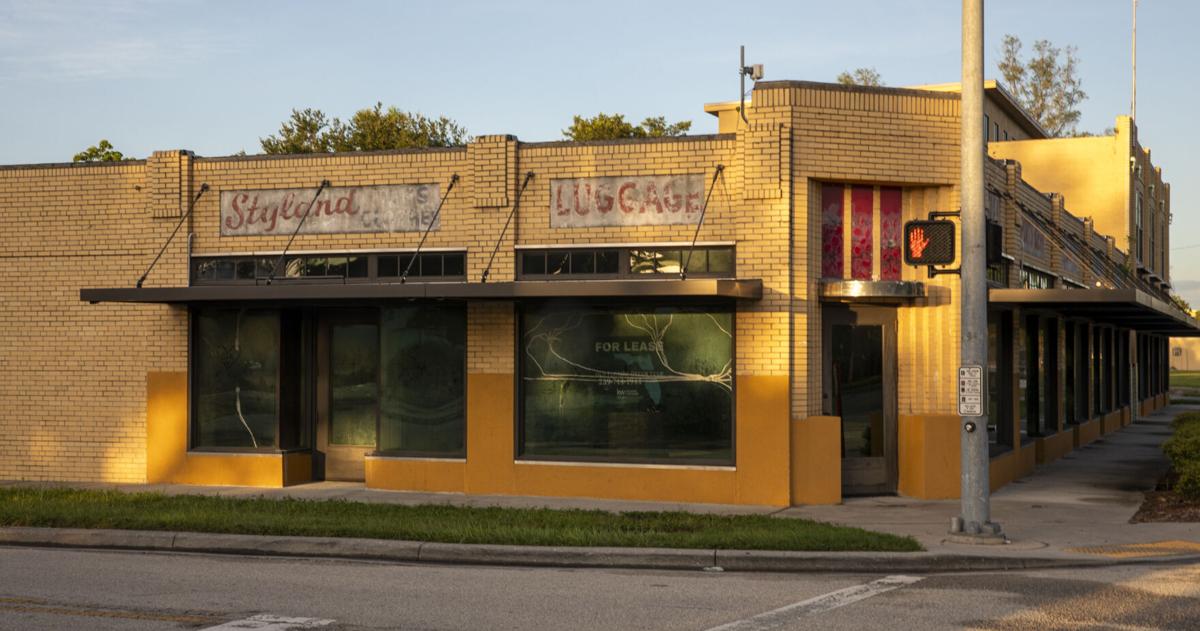

McCollum Hall, built in 1938 in the Dunbar community, is set for a new chapter blending cultural preservation with modern redevelopment.
Evan Williams
Fort Myers officials approved new architectural plans to restore historic McCollum Hall as a two-story music and performing arts center with a restaurant and adjoining commercial space.
Parker Mudgett Smith Architects completed the conceptual design for the 1938 Art Deco landmark based on community feedback sessions hosted last year by the Fort Myers Community Redevelopment Agency.
Jeff Mudgett, the firm’s president, presented the design to the CRA Board at its regular meeting May 27. The board is made up of the same members as City Council.
The board voted in favor of moving forward with the next stage of design planning. Members also authorized CRA staff to advertise the search for a restaurant operator and a performing arts hall operator for McCollum. CRA staff plans to accept proposals for both through June 29, with public hearings on potential candidates set for July 22.
The board delayed a vote on creating a new nonprofit McCollum Hall Foundation until a future meeting. The CRA recommends establishing the foundation with an independent 11-member board to oversee long-term preservation, fundraising and programming efforts.
The restoration of McCollum has been a CRA priority since the agency acquired the building in 2008 and completed improvements to stabilize the structure. In 2022, it was placed on the National Register of Historic Places. But officials and community members have been frustrated over the years by a series of failed attempts to bring the project to fruition.
Built by local businessman Clifford “Buck” McCollum Sr., the building has been vacant since the early 1970s.
“It’s not an exaggeration to say this will be one of the most important projects that might happen in the city over the course of the next 10 years,” Mudgett said.
The new design plan was guided by McCollum’s history as a center of music and commerce in Dunbar, the traditionally Black neighborhood where it once hosted jazz greats, such as Duke Ellington, and later operated as a USO during World War II.
It also is more realistic than past plans, Mudgett added.
“What you’re going to see today might be a little more humble than previous schemes, but it’s how you get things done,” he told the CRA Board. “It has to be realistic, it has to be buildable, it has to be rentable. It has to make for excitement in the community.”
On the ground floor, a 160-seat restaurant would overlook Dr. Martin Luther King Jr. Boulevard and Cranford Avenue. Alongside it, a music and performing arts stage with room for 200 seated or 300 standing guests — plus a small second-floor balcony — would host musical groups, small “black box”-style theater productions and other events.
On the second floor, a recording studio would be available alongside a multipurpose community room for up to 100 people.
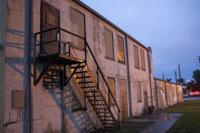
An elevator would lead to a rooftop deck where Mudgett envisions special restaurant events or live music performances.
Outside the building, a shaded courtyard and covered entryway would provide additional space.
A 0.68-acre lot next to McCollum, which the CRA recently purchased, also would be used to construct a parking lot and a two-story, 24,000-square-foot office and retail center with room for six to eight tenants. The CRA also plans to host a public hearing July 22 to acquire a lot west of McCollum on Cranford Avenue.
Mudgett said newer elements of the restoration, such as the kitchen and technical parts of the stage, would be placed on the back side of McCollum, allowing its signature brick facade to remain relatively unchanged.
A timeline, construction costs and a business plan have not been established. Mudgett said the project could be built in phases.
Funding for the project is expected to come from the CRA’s Dr. Martin Luther King Jr. Boulevard Trust Fund, grants, gifts, loans, New Markets Tax Credits and other sources.
Fort Myers City Council also voted in June 2025 to commit $4.2 million toward necessary repairs to McCollum.
“We need to move forward and whatever it takes to get this done I’m hoping that this city will support it, will continue to support this project, and that the CRA can move forward in making sure this gets done,” said Teresa Watkins Brown, CRA Board chair and Ward 1 City Council member.