
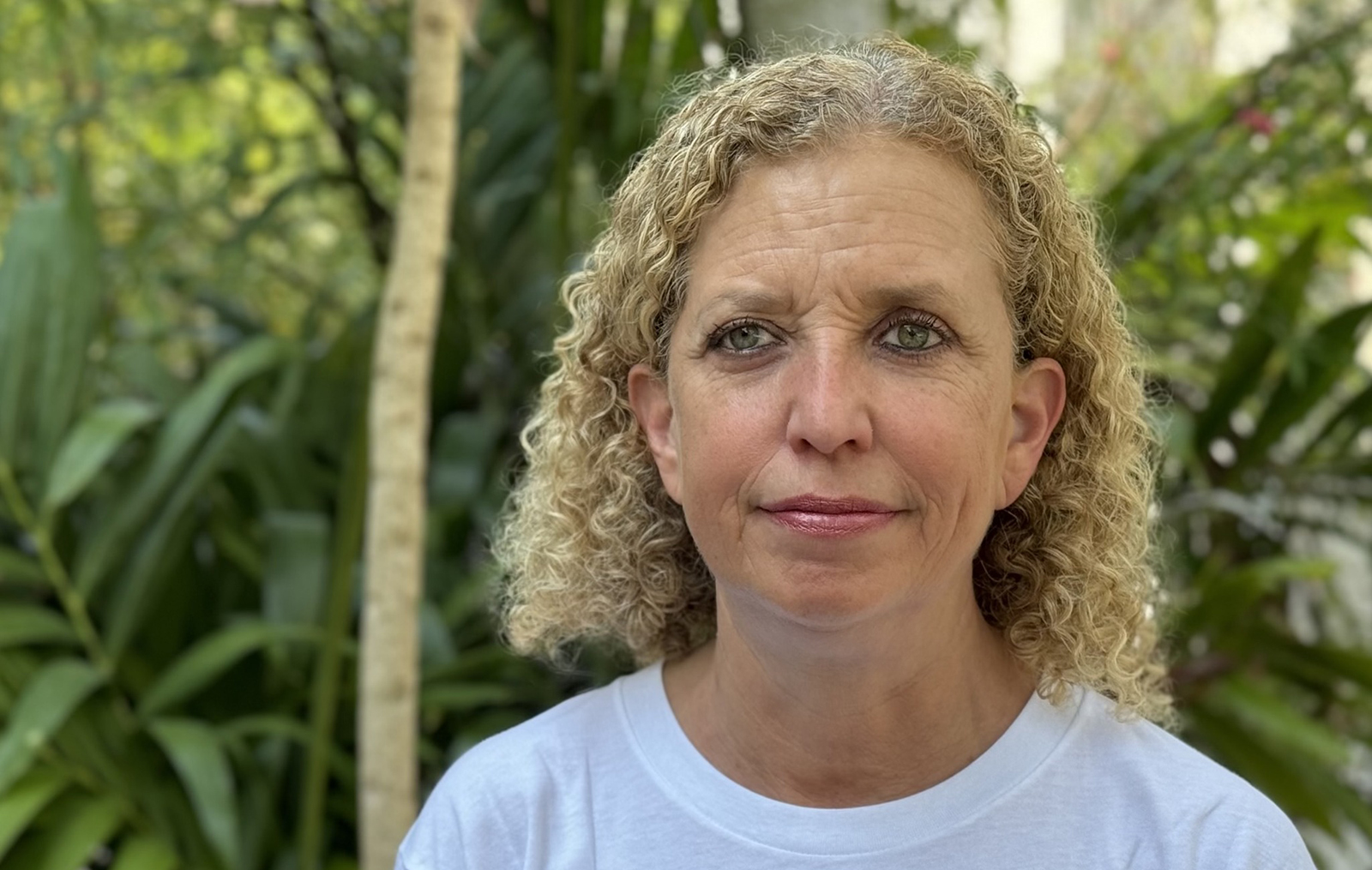
Another Black organization is urging U.S. Rep. Debbie Wasserman Schultz not to run in Florida’s 20th Congressional District.
In a three-page statement shared with media outlets, the Democratic Black Caucus of Florida urged Wasserman Schultz to stay out of CD 20 and instead run in the newly drawn Florida’s 22nd Congressional District — a competitive seat the organization says she is well-positioned to win.
“At a time when aggressive redistricting has already weakened minority voting strength across Florida, the preservation of Black political representation is not optional. It is essential,” the group said.
“We do not need the easy win. We need the meaningful win. … And let there be no confusion about what is at stake in this moment: Black political representation in Florida is now on the line.”
The caucus, led by President Armando Grundy-Gomes, stopped short of condemning Wasserman Schultz, a longtime federal lawmaker, instead framing its position as an appeal to her record as an ally.

“Congresswoman Debbie Wasserman Schultz has consistently stood alongside Black communities through her advocacy, coalition building, legislative leadership, and public service. Because of that history, we believe she understands why preserving the integrity and representation of Congressional District 20 matters so deeply to Black Floridians across this state,” the group said.
“This is not about political convenience. This is about political responsibility. We are asking Congresswoman Debbie Wasserman Schultz to once again stand with Black communities by helping preserve the integrity, history, and representation of (CD 20) while leading the fight for Democratic victory in (CD 22).”
The statement, published Wednesday, adds the caucus — a statewide political and civic organization affiliated with the Florida Democratic Party — to a growing chorus of Black leaders and organizations opposing Wasserman Schultz’s entry into a district that has sent a Black member to Congress for more than three decades.
The controversy stems from a mid-decade redistricting plan drafted by Gov. Ron DeSantis’ Office, passed by the Legislature in late April, and signed in early May.
The new map reshaped Florida’s 25th Congressional District, a Democratic stronghold in Broward County that Wasserman Schultz has long represented, into a coastal seat running from Delray Beach in Palm Beach County, through Broward County and into Miami-Dade’s barrier island communities, including Miami Beach and Sunny Isles Beach.

It also reshaped CD 20 — previously a majority-Black, safely Democratic seat most recently represented by former U.S. Rep. Sheila Cherfilus-McCormick — into a plurality-Black district where about 42% of voting-age residents are Black, 23% are Hispanic and 30% are White.
DeSantis’ Office said the map, designed two years after GOP-led decennial redistricting halved the number of Black-performing districts from four to two, was drawn in a “race-neutral” fashion in anticipation of a Supreme Court ruling weakening the Voting Rights Act.
Three separate lawsuits now challenge the map as a partisan gerrymander.
With her own seat gone, Wasserman Schultz announced last Friday that she would seek re-election in CD 20 rather than run in either CD 25 or remapped CD 22, which stretches inland from Florida’s southeastern coast to span parts of Palm Beach and Broward counties while extending deep into heavily Republican Hendry and Collier counties.
Wasserman Schultz lives in CD 22.
In an interview with Florida Politics this week, she said her priority is preserving Broward’s clout and power in Congress, citing her seniority and committee assignments — including her role as the No. 2 Democrat on the House Appropriations Committee.
“Making sure that I would run in the place where I could make the most difference and have the most impact, that was critical in my decision,” she said. “They chopped and put good chunks of my district in five different congressional districts, including in this one. I represent a majority-minority district now, and I know how to represent diverse communities.”
Several notable Black leaders and organizations blasted the move.
The Florida Legislative Black Caucus called her decision “disheartening” and complained Wasserman Schultz had been less than communicative with the group, noting its Chair, state Rep. Felicia Robinson, had sought a pre-announcement meeting that went unanswered.
Two-thirds of Florida’s Democratic National Committee members condemned the move, saying the party “cannot credibly denounce the dismantling of Black political power by Republicans while treating one of Florida’s few remaining majority-Black districts as a political opportunity.”
State Sen. Shevrin Jones, a former Miami-Dade County Democratic Party Chair, longtime Wasserman Schultz ally and potential front-runner to succeed U.S. Rep. Frederica Wilson, if she retires, said he will not support Wasserman Schultz if she stays in CD 20.
“Black representation is a non-negotiable for me,” he said.
Sen. Rosalind Osgood of Tamarac Democrat, told Florida Politics she’d discouraged Wasserman Schultz from running in CD 20 and called Democrats’ post-redistricting position “really unfortunate.”
Black CD 20 candidates Luther “Uncle Luke” Campbell, Dale Holness and Elijah Manley, along with candidate Rudy Moise — who switched to the CD 24 race this week — shared similar disapproval.
“Divide the Black community and conquer them?” Campbell said in a video warning Wasserman Schultz against running in the district. “Debbie, I know you’re not going to try to do that, because if you do, you got to deal with me, sweetie boogie.”
Holness, a former Broward Mayor, suggested Wasserman Schultz is taking an easier route to victory. CD 20 is almost guaranteed to go to a Democrat, he said, but CD 22 — an R+10 district — is still winnable for a candidate with her clout and war chest.
“With proper funding and support, we can win that district,” he said.
Manley, who feuded with Cherfilus-McCormick before her April resignation amid corruption and campaign finance allegations, called Wasserman Schultz a “carpetbagger” who was “abandoning her own district and constituents.”
“She is not different than the Republicans that are eviscerating Black representation across the South,” he said. “She is everything that’s wrong with the broken unpopular Democratic establishment.”
Moise, a doctor, Air Force veteran and repeat congressional candidate, endorsed Campbell and Holness before departing the CD 20 fray. He said he “strongly” disagreed with Wasserman Schultz running in the district, which he argued “should never be a political fallback plan or a vehicle for political survival while the very communities it was created to empower risk being pushed aside.”
In terms of polling, the picture is fuzzy. A survey that Wasserman Schultz’s campaign commissioned in early May, before the district switch, found her leading with 52% support among likely Democratic Primary voters, with 80% overall favorability and about 85% among Black and Caribbean American voters.
But polling Manley’s campaign commissioned last month found 81% of likely Democratic Primary voters — including 93% of Black voters — believe it is “extremely” or “very” important that CD 20 be represented by a Black member of Congress.
Meanwhile, the GOP is touting Wasserman Schultz’s candidacy in the plurality Black district as a sign that Democrats are on the backfoot less than six months from the Midterms.
The Democratic Primary also includes Cherfilus-McCormick and Maisha Williams, stepdaughter of the late U.S. Rep. Alcee Hastings.
Republican Brent Andersen, independent Maxime Kedner and write-in candidate Kevin McClellan have also filed for the contest.
CD 20 covers an inland portion of Broward spanning all or part of Coconut Creek, Deerfield Beach, Lauderdale Lakes, Lauderhill, North Lauderdale, Oakland Park, Plantation, Sunrise, Tamarac and Wilton Manors.
The Primary is Aug. 18, followed by the General Election on Nov. 3.
___
Jacob Ogles of Florida Politics contributed to this report.