
TAMPA, Fla. — EDITOR’S NOTE: A previous version of this story stated that hurricane evacuation zones were changing in Pinellas County. This was incorrect as zones are not changing in Pinellas County. The article has been updated. (5/29/2026)
Emergency managers say one of the biggest dangers during a hurricane isn’t just the storm itself — it’s people waiting too long to leave, or choosing not to evacuate at all.
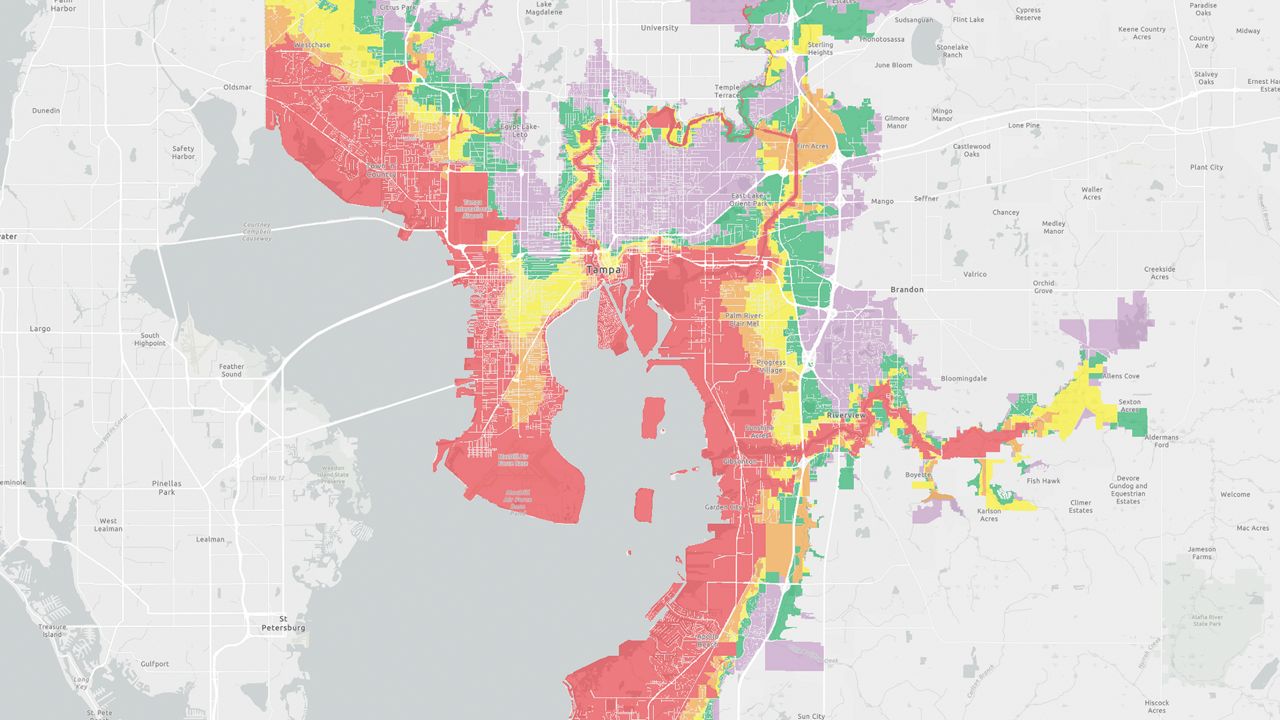
This season, some evacuation zones are changing across Hillsborough County — a shift that could mean more residents are asked to leave, and sooner, when a storm threatens the Tampa Bay area.
A storm that changed everything
After living in Tampa her entire life, homeowner April Self says Hurricane Milton is a storm she will never forget.
“The anticipation, or the waiting and not knowing what the storm was going to do? And then at the last minute, when it decided to make that turn, it was kind of like, okay, let’s start watching things a little bit closer,” she said. “And before you knew it, the next morning or late evening, early morning, the power went out.”
Soon after, water started coming into her home — from both inside and out.
“Considering we’re not really near the water. Yes, Hillsborough River is a few miles up the road, but we’re not close enough to it that it would have affected — not like living on the coast,” Self said.
But it did.
Flooding forced Self out of her home for six months. She lived in Zone X — considered lower risk — but officials stress that “lower risk” does not mean “no risk.”
Flood zone vs. evacuation zone
Emergency managers say many residents misunderstand the difference between flood zones and evacuation zones — a distinction that can have life-or-death consequences.
“Flood zones are going to be more to do with your floodplain, right?,” said Katja Miller, Operations Section Chief for Hillsborough County Emergency Management. “Those are things that we saw in the 2024 season during Milton, with the heavy rainfall and things that we experienced here in Hillsborough County.”
“Another thing to consider is that with evacuation zones and with these models that we talked about, they don’t necessarily account for rainfall, right? And so that’s why it’s important for folks to know both. They need to know their evacuation zones. And they also need to know their flood risks as well.”
What’s changing this hurricane season
While evacuation routes remain the same, some evacuation zones are being updated based on new storm surge modeling.
“So some folks may see that their zone did change. So we really are encouraging folks to take this time, you know, prepping for hurricane season to make sure that they’re rechecking their evacuation zones and see if those have changed and then utilizing that within their family plans,” Miller said.
In parts of Hillsborough County:
Zone A has expanded
Some areas moved from Zone D to Zone C
Some previously unzoned areas are now in Zone E
Officials say concern typically rises when storm surge predictions reach several feet.
“When we usually start seeing things around 4 or 5, 6 feet of storm surge predictions — that’s now when we start getting a bit worried,” Miller said.
That’s often when evacuation orders are issued — sometimes with only about 24 hours’ notice.
The challenge of leaving
For many residents, evacuating is not an easy decision.
“Take it serious. Take it very, very serious. Your house can be replaced. You as a human can’t be,” Self said.
Still, emotional attachment can make it difficult.
“That’s a natural instinct — you don’t want to leave what you have worked so hard for,” she added.
Pinellas County Emergency Management Director Cathie Perkins says cost and logistics are also barriers.
“We also have evacuation shelters in the county. So if people don’t have a place to stay outside of the evacuation zone, I want them to know they don’t have to travel hundreds of miles. They can travel tens of miles to get to a safe place,” Perkins said.
Water: the deadliest threat
Emergency officials emphasize that while many people focus on wind, water is often the most dangerous part of a hurricane.
“You know, we’ve heard a lot from the hurricane center. They’re like, close your eyes and envision what you think a hurricane looks like. And what most people think about are the winds. They’re not thinking about that water coming in — but that storm surge truly is the most life-threatening portion of the storm,” Perkins said.
Avoiding gridlock
The goal of updated zones and improved planning is to get people out earlier — and avoid last-minute traffic chaos.
“We’re integrating some new tools and technologies so we can actually monitor not only what’s happening in our streets in Pinellas County but also across the state,” Perkins said.
“We certainly are looking at what’s happening across the state. You know, we won’t be the only county that is evacuating. You know, I think even if you go back and you look at Hurricane Irma, right where the southern portions of the state were starting to evacuate first, so roadways were already congested, hotels were already booked up.”
A lesson learned
For Self, the experience has permanently changed how she prepares.
“It can happen to you. And I’ve lived here for 55, going on 56 years. And this is — Milton definitely opened my eyes to a whole different level of hurricanes,” she said.
She says leaving early didn’t save her home — but it likely saved her life.
How to check your evacuation zone
Officials urge residents not to wait until a storm is approaching. You can check your evacuation zone right now:
You can also find updates and alerts through the Spectrum News App.

STORM SEASON 2026
Hurricane season is here and we want to help you get prepared. In this guide, we will be talking with the Spectrum Bay News 9 meteorologists, local emergency officials and residents who are preparing themselves to be ready for whatever this season brings us.
Stories: