
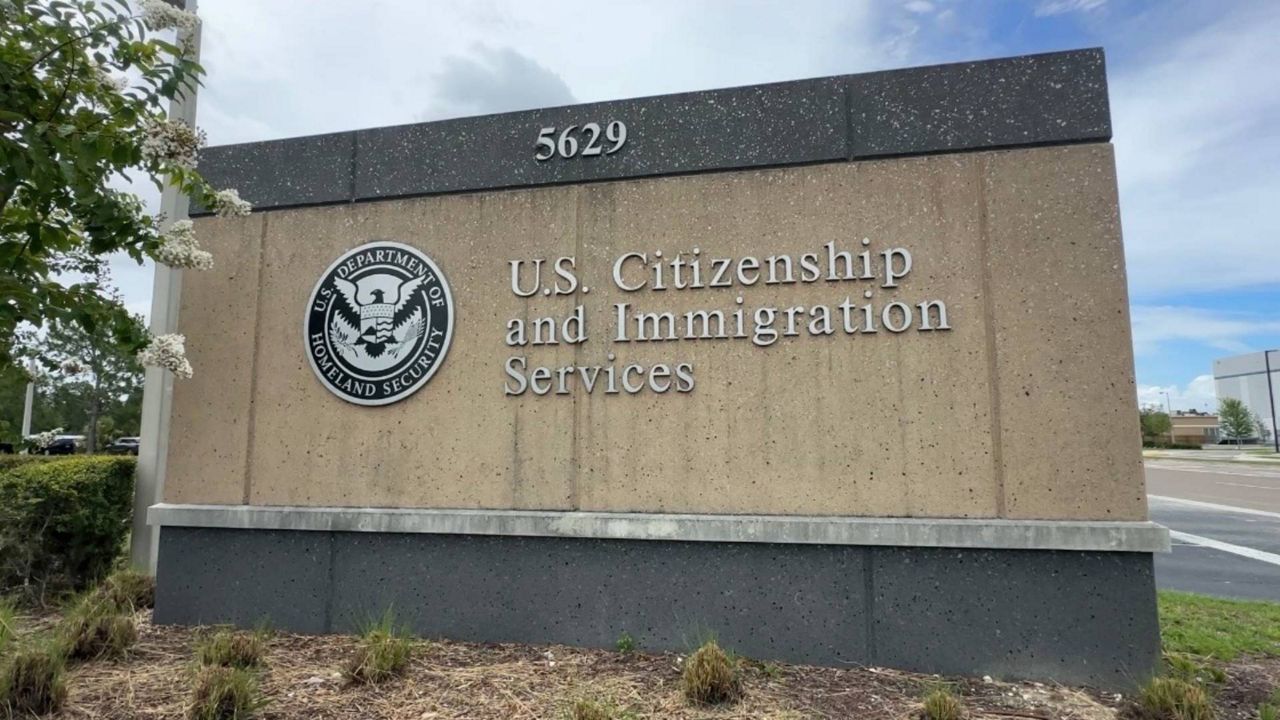
TAMPA, Fla. — There are growing questions from immigrants seeking to become permanent residents. This comes as U.S. Citizenship and Immigration Services (USCIS) issued a shift in policy that involves applying for a green card from within the U.S. It states that most foreign nationals must return to their home country while they wait for an “adjustment of status.”
The memo says people seeking an adjustment of status should generally leave the country and apply at a consulate abroad. It also says immigrants seeking permanent residency may be required to wait in their home country while their applications are processed, unless extraordinary circumstances apply.
For Anthony Infante, who immigrated from Venezuela in 2022 and is in the U.S. under asylum status, the policy has created uncertainty as he works to become a permanent resident.
Infante said that photos remind him of the life he had in Venezuela, where he was a civil engineer.
“I just received my degree, and after just four months, the situation was untenable,” he said.
Infante said he started the process to become a permanent resident nine months ago.
That decision was driven by the stability it could provide for his family.
“The stability that it offers us, and I have a child who is special needs, he’s autistic level 2, non-verbal,” Infante said.
Infante said the possibility of having to return to Venezuela while his case is processed has caused concern.
“Panic again, because I am in the process and now you’re going to send me back to the country that I am fleeing,” he said.
Infante said he is relying on guidance from his immigration attorney, Milton Toro Marquez, owner of Acevedo Law Firm, to understand what the policy could mean for his case.
Toro Marquez said about 20% of his cases could be affected by the stricter enforcement. He said the typical wait to adjust status could take eight months to a year.
“What’s happening now is basically USCIS is going to look at everything with more detail, make sure there’s no marriage fraud, make sure there’s no other types of fraud,” Toro Marquez said.
Toro Marquez said one of his biggest concerns is that the renewed enforcement could significantly lengthen the process for immigrants seeking legal residency.
“Just the thought of somebody having to go back to their country to do that, the first question is, ‘Oh my God, what if they don’t let me back in?’” he said.
Infante said those concerns are weighing on him as he continues navigating the immigration system.
“I am the emotional and economic support for my family, and it’s complicated. I just don’t think me leaving will help my family,” he said.
In its release, USCIS said the policy is “a way for the U.S. to return to the original intent of the law to ensure aliens navigate our nation’s immigration system properly.”